Sciatica vs. Lower Back Pain: How to Tell the Difference
- What is the difference between sciatica and lower back pain?
- What symptoms help you tell sciatica vs lower back pain quickly?
- What red flags mean you should seek urgent care today?
- What are the most common lower back pain causes and how do they compare with nerve pain?
- Could your tingling down leg be piriformis syndrome or something else?
- How do clinicians diagnose nerve pain vs muscle pain without over imaging?
- What sciatica treatment options and non surgical back pain relief are supported by evidence?
- When should you consider chiropractic care for sciatica and what can you expect?
- When should you see a chiropractor in Santa Ana CA or a back pain specialist in Santa Ana?
- How can you self care safely before your appointment without making things worse?
- How do California and federal rules guide your care and privacy at a chiropractic clinic?
- What questions should you ask during your visit so you feel confident in your plan?
- How can you prevent future flare ups with simple habits that protect your spine?
- What should you expect at OneAndOnlyChiro and how do we help you take next steps?
- Where can you find the research and resources used in this article?
What is the difference between sciatica and lower back pain?
If you are trying to sort out sciatica vs lower back pain, you are not alone. Low back pain is one of the most common reasons people seek care and is a leading cause of disability worldwide [7]. Sciatica is not the same as general low back pain. Sciatica usually refers to pain that starts in the low back or buttock and travels along the path of the sciatic nerve into the leg, often below the knee and sometimes into the foot [1]. Lower back pain can be localized to the spine and muscles in the low back without radiating nerve symptoms [2].
Think of sciatica as a pattern of nerve related pain, numbness, tingling, or weakness that follows a predictable route down the leg. By contrast, nonspecific lower back pain is often described as aching, stiffness, or tightness that stays mostly in the low back and sometimes the buttock or hip area without a sharp electric or burning quality into the leg [2]. Understanding this difference is the first step to choosing the right kind of evaluation and care.
What exactly is sciatica and where does it come from?
Sciatica is most often caused by irritation or compression of one of the lumbar nerve roots that form the sciatic nerve. A common cause is a herniated disc that presses on a nerve root, which can create sharp shooting pain down the leg, and may include tingling, numbness, or muscle weakness in a dermatomal pattern [1]. Less common causes include spinal stenosis, spondylolisthesis, or rarely tumors or infections. Many cases improve over weeks with conservative care as the inflammation calms and normal movement is restored [9].
What defines nonspecific lower back pain and how common is it?
Nonspecific lower back pain is pain that cannot be tied to a single serious cause such as fracture, cancer, infection, or a clear nerve root compression. It is usually mechanical, meaning it relates to how joints, discs, and muscles move and tolerate load [2]. Globally, low back pain is the leading cause of years lived with disability, which underscores how common and impactful it is across ages and occupations [7]. Clinical guidelines emphasize reassurance, staying active, and using non pharmacologic options first for most people [3] [6].
What symptoms help you tell sciatica vs lower back pain quickly?
If you are deciding between lower back pain vs sciatica, focus on where the pain travels and what other sensations you notice.
- Does the pain travel below the knee? Pain that radiates past the knee into the calf or foot is more suggestive of sciatica [1].
- Do you feel tingling or numbness in the leg? Pins and needles, burning, or numbness along a defined strip of the leg can indicate nerve involvement [1].
- Is there muscle weakness? Trouble lifting the foot, standing on toes, or a sense that the leg is giving way are concerning for nerve root compromise [1].
- Is the pain mainly in the low back with stiffness? A deep ache centered in the back without leg symptoms typically points to a muscular or joint source [2].
- Is sitting or bending worse? Sitting and forward flexion often aggravate disc related sciatica, while short walks may feel better [9].
- Is extension or standing worse? Spinal stenosis can cause leg pain or heaviness that improves with forward bending and worsens with standing or walking [2].
These patterns are helpful clues, yet they are not diagnostic by themselves. A proper evaluation can identify whether your pain is nerve related, muscular, joint based, or a combination, and can rule out rare but serious causes that need prompt medical attention [2] [4].
What red flags mean you should seek urgent care today?
Most back and leg pain improves with time and conservative care. Still, some symptoms require same day medical attention.
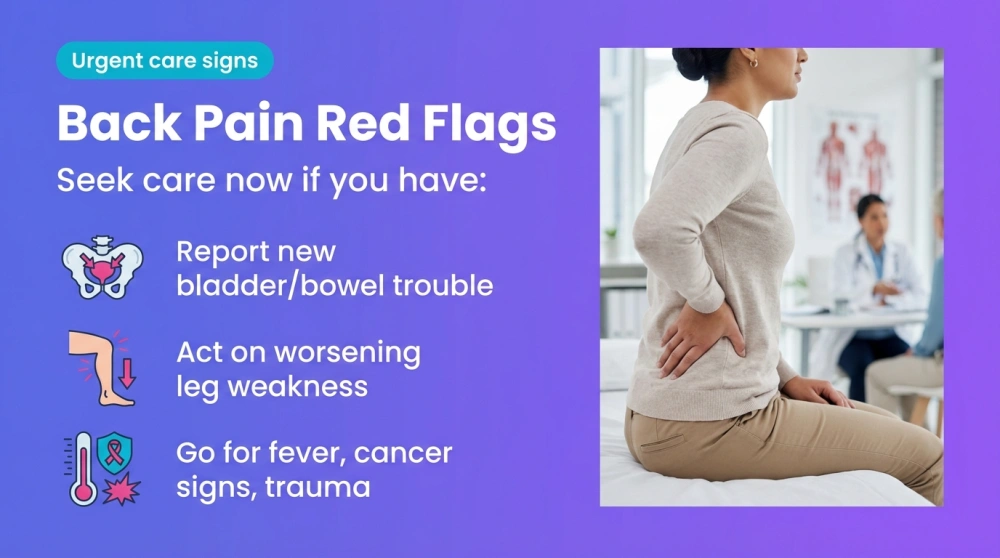
- New bowel or bladder trouble such as difficulty starting urination, loss of control, or saddle area numbness can indicate cauda equina involvement and needs urgent evaluation [4].
- Progressive or severe leg weakness that is getting worse suggests significant nerve compromise [1].
- Fever or chills with back pain could signal infection, especially with immune compromise or recent procedure [4].
- History of cancer, unexplained weight loss, or night pain raise concern for a less common but serious cause [4].
- Major trauma such as a fall or car collision may warrant imaging to rule out fracture [4].
If any of these apply, seek urgent care or emergency evaluation rather than waiting for a routine chiropractic or primary care visit [4].
What are the most common lower back pain causes and how do they compare with nerve pain?
Low back pain can arise from several pain generators. Understanding the differences helps you interpret your symptoms and choose next steps.
- Muscle or tendon strain can result from a sudden lift, twist, or deconditioning. Pain is often localized, sore with movement, and improves with gradual activity and time [2].
- Facet joint irritation involves the small joints at the back of the spine. Pain may be worse with arching backward or prolonged standing, and rarely causes leg tingling [2].
- Sacroiliac joint pain is felt near the dimple area of the low back and buttock, sometimes referring into the thigh but typically not past the knee [2].
- Disc related pain can present as a deep ache with sitting intolerance. When a disc herniation presses on a nerve root, herniated disc sciatica can occur with radiating pain, numbness, or weakness along the leg [1] [9].
- Spinal stenosis narrows the canal and can cause leg pain, heaviness, or numbness during walking that eases with sitting or bending forward [2].
With nerve pain vs muscle pain, nerve pain often has sharp shooting or electric quality, sensory changes, and sometimes motor weakness. Muscle and joint pain is more likely to be dull, achy, and movement dependent without neurologic deficits [2] [9].
Could your tingling down leg be piriformis syndrome or something else?
Not all leg tingling is caused by spinal nerve root irritation. Piriformis syndrome is one example where the piriformis muscle in the buttock irritates the sciatic nerve outside the spine. Symptoms may include buttock pain that can radiate into the back of the thigh, often worse with sitting or direct pressure, and sometimes with tenderness over the muscle itself [10]. Distinguishing piriformis syndrome vs sciatica from a disc herniation requires a careful history and physical exam that looks for provocation signs, strength and reflex changes, and nerve tension tests [9] [10].
Other mimics include hip joint disorders, hamstring tendon problems, and peripheral neuropathy. Each has clues on exam and history. Accurate identification guides the right mix of movement, manual therapy, and exercise rather than a one size approach [2] [9].
How do clinicians diagnose nerve pain vs muscle pain without over imaging?
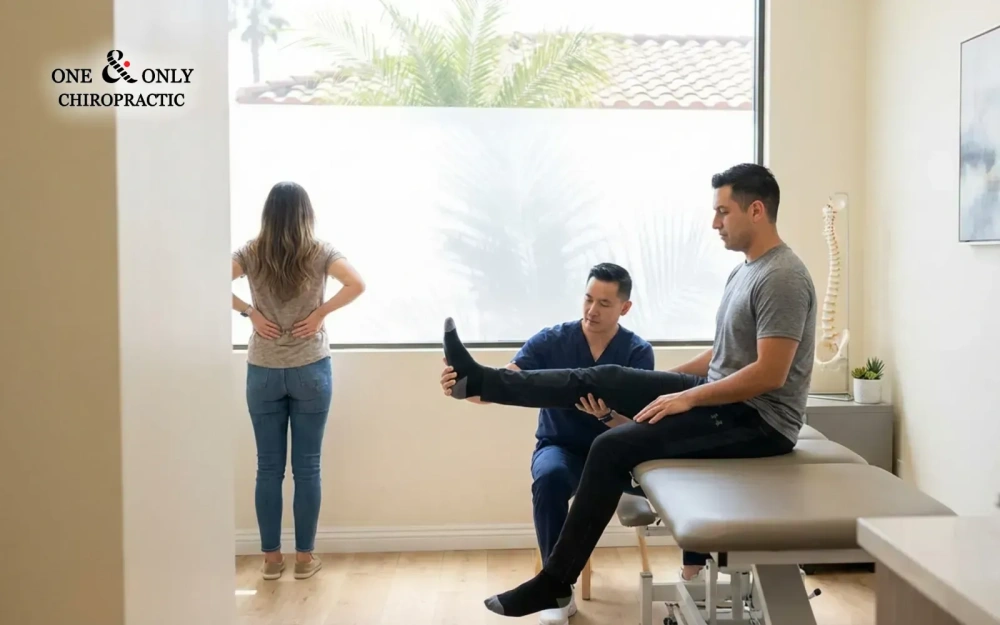
A thorough evaluation from a qualified clinician starts with your story. When did the pain start, what makes it better or worse, and what are the exact leg symptoms. The exam typically checks posture, gait, range of motion, palpation, and a focused neurologic screen with dermatomal sensation, myotome strength, and reflexes. Special tests such as the straight leg raise can help reproduce sciatica symptoms if a nerve root is sensitized [1] [9].
Imaging is not always needed right away. Guidelines recommend avoiding routine imaging in the first several weeks of uncomplicated low back pain or suspected sciatica unless red flags are present or there is progressive neurologic deficit. When imaging is indicated, MRI is usually preferred for nerve root evaluation, while X rays can be helpful if fracture is suspected [3] [4]. This approach reduces unnecessary tests, avoids incidental findings that do not change care, and focuses on function and recovery [3] [4].
What sciatica treatment options and non surgical back pain relief are supported by evidence?
Most people with acute sciatica or nonspecific low back pain improve over time with conservative care. High quality guidelines emphasize education, staying active, and non pharmacologic therapies as first line options, with medications considered thoughtfully and invasive procedures reserved for select cases [3] [6].
- Education and reassurance help reduce fear and encourage safe movement, which supports recovery and reduces the risk of chronicity [6].
- Activity modification means keeping up with light daily activities as tolerated and avoiding prolonged bed rest, which can slow recovery [3] [6].
- Spinal manipulation performed by trained professionals can provide small to moderate improvements in pain and function for some with back pain, particularly when combined with exercise and advice [8] [10].
- Exercise therapy such as targeted mobility, core endurance, and progressive loading helps restore tolerance and prevent recurrence [6].
- Heat and manual therapy can ease muscle guarding and pain in early phases, supporting movement and sleep [3].
- Cognitive functional approaches address pain related fear and unhelpful movement patterns to promote resilience [6].
- Medications such as nonsteroidal anti inflammatory drugs may be considered short term when appropriate. Discuss risks and benefits with your primary care clinician [3].
- Injections or surgery may be options in selected cases with persistent or severe sciatica, progressive weakness, or specific structural findings that match symptoms. Decisions should be individualized and informed by shared decision making [3] [5].
If you are searching for sciatica treatment options, remember that recovery is usually a process. Improvements often come from a blend of education, movement, and targeted manual care over several weeks [3] [6]. Many people ask about chiropractic adjustments and how they fit into care. The next section explains how they are used within an evidence based plan.
When should you consider chiropractic care for sciatica and what can you expect?
Chiropractic care for sciatica focuses on relieving irritation of the involved nerve root, improving spinal and hip movement, reducing muscle guarding, and restoring confident activity. Care often includes a combination of manual therapies, gentle spinal manipulation when appropriate, nerve mobility techniques, and progressive exercise tailored to your pain tolerance and goals. Current evidence suggests that spinal manipulation can offer modest benefits for low back related pain and function for some people, especially when paired with active care and education [8] [10].
During a visit, you can expect a history, exam, and a shared plan that fits your situation. Many care plans emphasize brief, more frequent sessions early on to build momentum, then taper as your self management improves. If your presentation suggests a need for imaging or referral, your chiropractor can coordinate with your primary care provider or a spine specialist in the Santa Ana community [3] [4]. If you have been looking for a sciatica chiropractor Santa Ana readers can access timely evaluations that help answer a common and important question. A proper evaluation can identify whether your pain is nerve related and guide your next safe step [3] [4].
When should you see a chiropractor in Santa Ana CA or a back pain specialist in Santa Ana?
Consider scheduling with a Santa Ana chiropractor or other musculoskeletal clinician if you notice any of the following:
- Leg pain with tingling down leg that extends below the knee, especially if it affects daily activities [1].
- Low back pain lasting longer than a few weeks without clear improvement despite basic self care [3].
- Pain that recurs in episodes and you want strategies to reduce flare ups and improve function [6].
- Uncertainty about diagnosis and you want a thorough evaluation to clarify sciatica vs lower back pain and to discuss a plan [2].
If you have severe or progressive weakness, new bowel or bladder issues, fever, or a history of cancer with new back pain, seek urgent medical assessment first as discussed earlier [4]. For everyone else, early guidance from a back pain specialist Santa Ana residents trust can reduce worry and help you return to meaningful activities with confidence [3] [6].
How can you self care safely before your appointment without making things worse?
While you are waiting to be seen, consider these practical steps. If any step aggravates symptoms significantly or you have red flags, stop and seek professional advice.
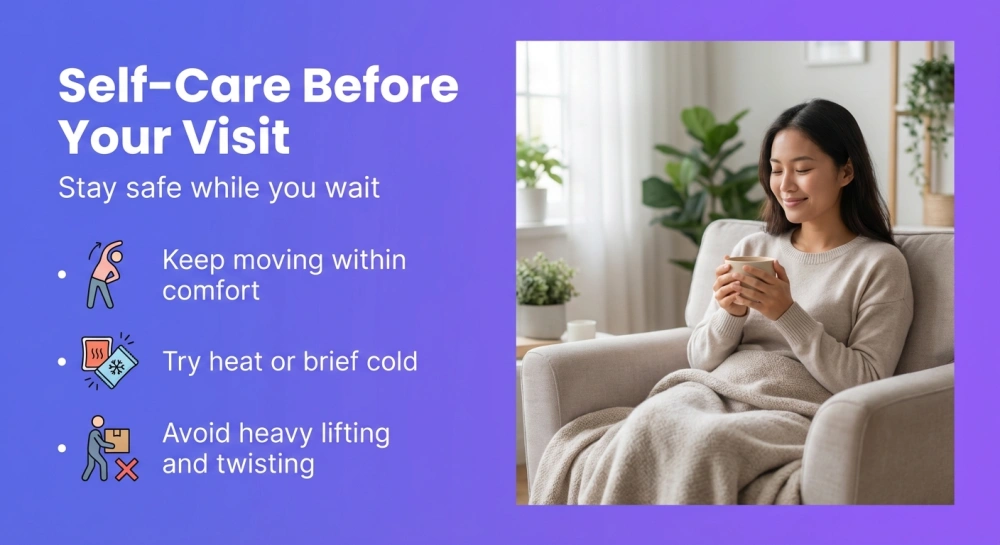
- Keep moving within comfort by taking short walks, changing positions often, and avoiding prolonged bed rest. Gentle motion supports circulation and healing [3] [6].
- Use relative rest to temporarily limit painful positions such as long sitting if that flares leg pain, while still doing light tasks as tolerated [3].
- Try heat or brief cold for comfort based on your preference. Heat can ease muscle guarding while cold may reduce sharp flare ups [3].
- Practice relaxed breathing to lower muscle tension and pain related stress. Gentle diaphragmatic breaths can pair well with light movement.
- Use supported positions such as a reclined posture with a small pillow under the knees if that reduces leg symptoms. Short periods can be helpful to calm irritable nerves [1].
- Avoid heavy lifting and twisting during the acute phase, then gradually reintroduce as your tolerance improves [2].
These steps are not a substitute for an evaluation. They are ways to stay comfortable and active while you arrange care, whether your goal is non surgical back pain relief or targeted leg pain from sciatica treatment under clinician guidance [3] [6].
How do California and federal rules guide your care and privacy at a chiropractic clinic?
In California, chiropractors are licensed by the California Board of Chiropractic Examiners, which defines scope of practice, continuing education, and standards for professional conduct. In general, California chiropractors may evaluate and manage conditions of the neuromusculoskeletal system, provide spinal manipulation and related therapies, and order imaging when clinically appropriate, while they do not prescribe drugs or perform surgery [13]. Clinics also follow state and federal privacy rules. Your health information is protected under the Health Insurance Portability and Accountability Act Privacy Rule, which sets national standards for the protection of individually identifiable health information [12].
In Santa Ana CA, what you can expect during your evaluation is a comprehensive history and physical examination. Your doctor will discuss the findings with you and discuss different treatment options. You’ll also need to give informed consent before any care is provided. If your case requires co-management or referral to another medical specialist, your chiropractor will coordinate that within the California regulatory framework and local professional network [13].
What questions should you ask during your visit so you feel confident in your plan?
Arriving prepared with a few key questions can help you understand your condition and next steps.
- What is my most likely diagnosis and what signs make you think it is sciatica vs lower back pain [2] [9]?
- Are there any red flags in my case that suggest imaging or a medical referral is needed now [4]?
- Which movements should I favor or limit in the short term, and how will we progress activity safely [3] [6]?
- What are the benefits and risks of the treatments you recommend, including chiropractic adjustments, exercise, and other options [8]?
- How will we track progress and decide when to change the plan if improvement stalls [6]?
- What can I do at home to support recovery and reduce the chances of future flare ups [6] [14]?
How can you prevent future flare ups with simple habits that protect your spine?
While not every episode can be prevented, consistent habits reduce risk and support resilience.
- Stay active most days by following national physical activity guidance for aerobic and strengthening work tailored to your health status. Even small bouts add up and support spine health [11].
- Build core and hip endurance with progressions that challenge your trunk and hips in standing and walking patterns rather than only floor exercises.
- Vary positions at work and home. Alternate sitting and standing, change postures regularly, and add micro breaks to reset tissue load [14].
- Use smart lifting strategies by holding loads close, using your legs, and planning the lift. For repetitive tasks, review ergonomics to reduce unnecessary stress [14].
- Sleep well with a routine that supports recovery. If side lying is more comfortable, place a small pillow between the knees to keep hips aligned.
- Manage stress and recovery with breathing, gentle mobility, and activities you enjoy. Pain and stress are linked, and balancing both can reduce flare frequency [6].
If you’ve been dealing with persistent bouts of pain and are unsure whether it’s lower back pain or sciatica, it’s a good idea to undergo a targeted assessment. Subtle adjustments in your daily routines, movement techniques, and workloads can yield considerable changes over time. Don’t forget to frequently consult [3] and [6].
What should you expect at OneAndOnlyChiro and how do we help you take next steps?
Here at OneAndOnlyChiro, we strive to help you comprehend your symptoms and advance towards progress with assurance. Serving people and families in Santa Ana CA as well as the neighboring areas within Orange County, our team is dedicated to delivering thorough evaluations that clearly explain our findings using simple language. We wholeheartedly believe that when you have a clear understanding of what’s happening to your body, you can make informed decisions that align with your goals and values.
Here is how we support you when you are comparing sciatica vs lower back pain and deciding on a plan:
- Thorough evaluation that includes a detailed history, movement and orthopedic testing, and a focused neurologic screen to differentiate nerve pain vs muscle pain. When indicated, we coordinate imaging or medical referral consistent with current guidelines.
- Evidence informed care that blends manual therapy, chiropractic adjustments when appropriate, exercise, and education. Each plan is tailored to your symptoms, tolerance, and day to day demands.
- Active progressions with simple home strategies, graded exposure to bending and lifting, and return to the activities you care about most.
- Outcome tracking using standardized measures and clear goal setting so you can see change over time. We use secure electronic records and shareable summaries to keep your circle of care aligned.
- Collaboration with primary care and specialty clinicians in Santa Ana when your case would benefit from co management. We can help you decide when to see a chiropractor, when to consider a medical consult, and how to sequence options such as physical therapy, injection, or surgical opinion if needed.
- Personal guidance that respects your preferences and schedule. We emphasize skills you keep for life so you can manage future flare ups more confidently.
Our clinic follows a patient-centered approach, prioritizing safety, open communication, and respect for all patients. We abide by both California Board of Chiropractic Examiners practice standards and federal privacy rules to protect your personal information and maintain your privacy throughout your time with us. If you are experiencing any leg symptoms, we will thoroughly evaluate whether they align with sciatica symptoms or if they suggest a different condition like piriformis involvement, hip referral, or peripheral nerve irritation. In situations where the extent of your requirements surpasses our capabilities, we will swiftly assist in connecting you to the appropriate resource to ensure timely and prompt care without delay.
We are excited to welcome patients from Santa Ana, Tustin, Orange, Garden Grove, Irvine, Costa Mesa, and surrounding areas. If you have any questions or would like to schedule an evaluation, please give us a call at (949) 800-8525. Whether you’re curious about sciatica vs lower back pain or interested in chiropractic care for sciatica but need clear next steps, our dedicated team is ready to help guide you through your treatment journey. We also offer an initial consultation where we can chat about what you’re experiencing and discuss the best approach to safely and effectively address your concerns.
Where can you find the research and resources used in this article?
- Sciatica Fact Sheet – National Institute of Neurological Disorders and Stroke
- Low Back Pain Fact Sheet – National Institute of Neurological Disorders and Stroke
- Noninvasive Treatments for Acute Subacute and Chronic Low Back Pain Clinical Practice Guideline – Annals of Internal Medicine
- Low Back Pain ACR Appropriateness Criteria – American College of Radiology
- WHO Guideline for Non Surgical Management of Chronic Primary Low Back Pain – World Health Organization
- Guidelines for Chronic Low Back Pain Press Summary – World Health Organization
- Low Back Pain Is Leading Cause of Disability Worldwide – Institute for Health Metrics and Evaluation
- Spinal Manipulative Therapy for Chronic Low Back Pain Review – Cochrane Library
- Sciatica – StatPearls NCBI Bookshelf
- Piriformis Syndrome – StatPearls NCBI Bookshelf
- Back Pain Overview – National Institute of Arthritis and Musculoskeletal and Skin Diseases
- Summary of the HIPAA Privacy Rule – U.S. Department of Health and Human Services
- Laws and Regulations – California Board of Chiropractic Examiners
- Ergonomics and Musculoskeletal Disorders – National Institute for Occupational Safety and Health
About the Author