Experience Faster Healing with Class IV Laser Therapy – Contact Us for a Complimentary Assessment
- What is Class IV laser therapy and how does it work?
- What conditions can laser therapy for pain relief address?
- How safe is Class IV laser therapy and what precautions matter?
- How many visits might be recommended and what outcomes should you realistically expect?
- What does the research say about sports injury recovery and performance?
- How is chiropractic laser treatment integrated with a comprehensive plan?
- What laws and standards apply to chiropractic laser treatment in California?
- How can you prepare for your first visit in Santa Ana, CA?
- What common myths should you avoid when considering deep tissue laser therapy?
- Why choose OneAndOnlyChiro in Santa Ana for Class IV laser therapy?
- Where can you find the sources referenced in this article?
What is Class IV laser therapy and how does it work?
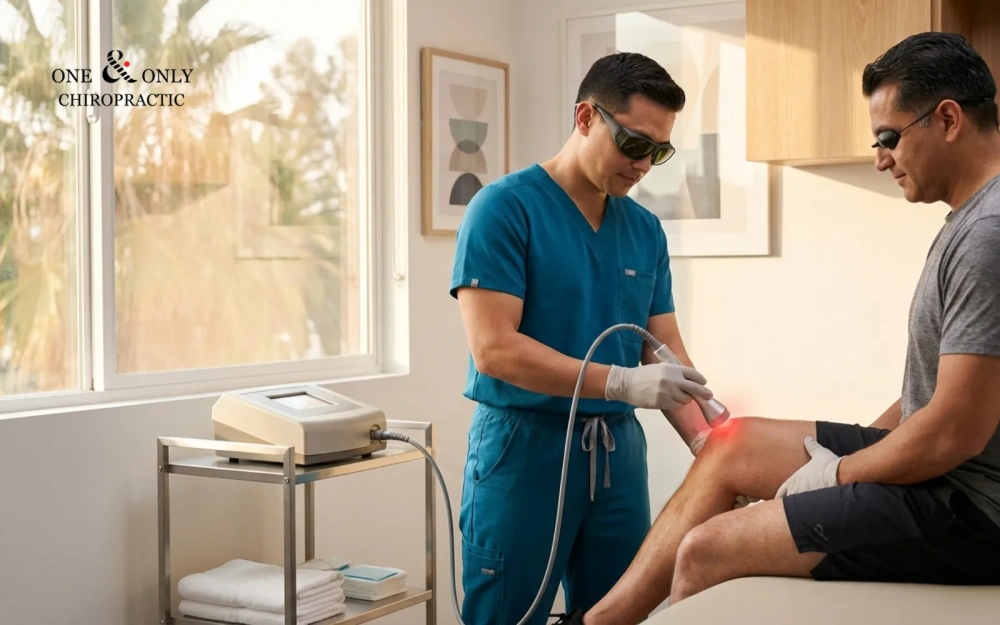
Class IV laser therapy is a form of photobiomodulation therapy that uses specific wavelengths of light to influence cellular processes in muscles, tendons, ligaments, nerves, and skin. The term Class IV refers to the laser safety classification defined by federal standards, indicating a higher power device that requires strict eye and skin safety protocols [1]. In chiropractic settings, clinicians use a scanning or stationary technique to deliver controlled light energy to targeted tissues with the goal of supporting pain relief, circulation, and tissue repair responses [5].
Unlike heat therapies that primarily warm tissue, photobiomodulation aims to trigger biochemical changes inside cells. When delivered with appropriate dose and technique, light photons can be absorbed by chromophores such as cytochrome c oxidase in mitochondria, which may help modulate oxidative stress, support ATP production, and influence inflammatory mediators [5]. These physiologic effects are the foundation of claims that laser therapy can reduce pain and swelling and support healing responses.
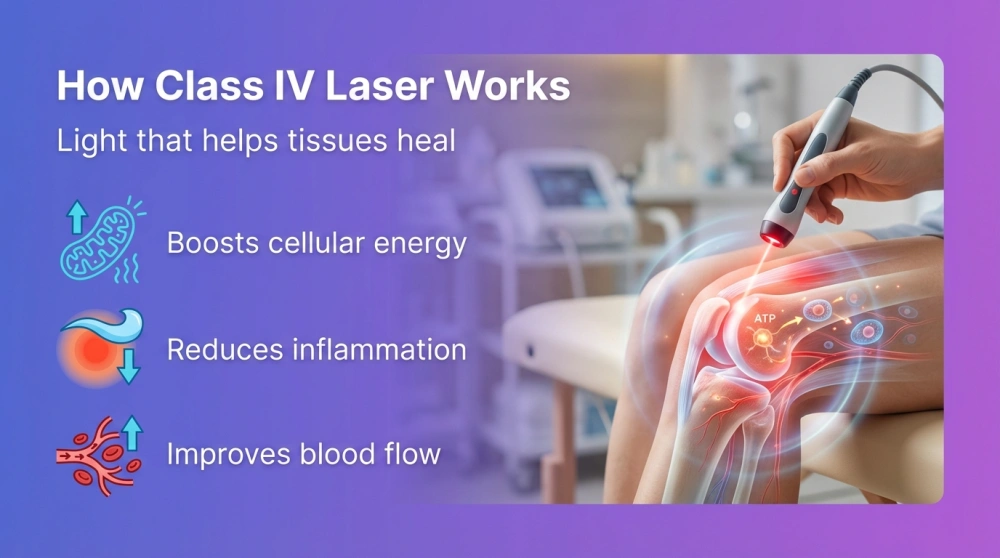
How does photobiomodulation change cellular activity?
Research suggests several complementary mechanisms. Light in the red and near infrared spectrum can interact with mitochondrial enzymes, shifting cellular energy metabolism and signaling cascades that influence nitric oxide availability, blood flow, and inflammatory gene expression [5]. Over time, this may translate into reduced local tenderness, improved range of motion, and enhanced tolerance for rehabilitative exercise. It is important to remember that outcomes vary by individual and condition, and proper dosing strategies matter for results [11].
Why do clinicians use higher power lasers for deep tissue therapy?
Deep tissue laser therapy describes the practical goal of reaching tissues below the skin surface, such as larger muscle groups or deeper tendons. Class IV devices can deliver higher irradiance, which allows trained providers to treat a larger area in a shorter time compared with lower power devices, while adhering to safety standards [1]. More power does not automatically mean better clinical outcomes for every condition. It simply offers another option to deliver clinically relevant doses within a session when used judiciously by a qualified provider [11].
What conditions can laser therapy for pain relief address?
Photobiomodulation therapy has been studied across a range of musculoskeletal and neurologic complaints. Evidence quality varies by condition and study design, and findings continue to evolve. As part of a comprehensive chiropractic plan, laser therapy for pain relief is often considered for soft tissue injuries, tendon related pain, neck and back discomfort, and certain neuropathic symptoms [6] [7] [12]. If you have a recent injury or long standing pain, a careful evaluation is the first step to determine if this approach fits your goals.
Which musculoskeletal and soft tissue injuries are commonly treated?
Clinicians commonly use chiropractic laser treatment to complement manual care and exercise for sprains, strains, tendonitis treatment, bursitis, plantar heel pain, and myofascial trigger points. Systematic reviews suggest that photobiomodulation can reduce pain intensity in neck pain populations and may improve function in several tendinopathies when delivered at evidence informed doses and schedules [6] [7]. Your plan may also include ergonomic advice, mobility training, and gradual loading to help tissues adapt.
Can it support post surgical healing timelines?
Post surgical healing is a frequent concern. Early rehabilitation focuses on safe movement, swelling control, and protection of the surgical site. Photobiomodulation has been examined as a supportive modality for wound healing and pain modulation in select contexts. Reviews note potential benefits for tissue repair and inflammation control, although protocols and outcomes vary by procedure and patient population [13] [5]. Coordination with your surgeon and adherence to post operative guidelines are essential before adding any modality.
What about neuropathy symptoms and circulation challenges?
In some cases, patients seek noninvasive pain management for burning, tingling, or numbness that may be consistent with peripheral neuropathy. Emerging evidence indicates that photobiomodulation may improve neuropathic pain scores and nerve function metrics in certain groups, including individuals with diabetic peripheral neuropathy, though study designs and parameters are heterogeneous and not all trials show benefit [12]. A qualified provider can help you weigh potential benefits and set realistic expectations.
How safe is Class IV laser therapy and what precautions matter?
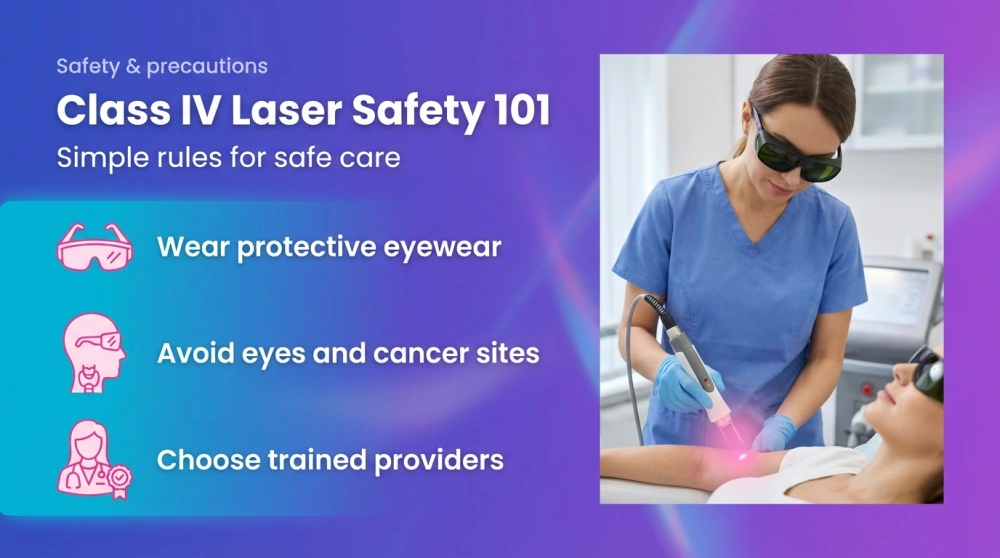
Safety is central with any laser. Class IV devices require protective eyewear for both patient and provider, adherence to controlled treatment areas, and documented training. Federal and workplace standards describe hazards such as potential eye injury with direct or reflected beam exposure and outline controls to mitigate risk [1] [3] [4]. When performed by a trained clinician using appropriate protocols, adverse events are uncommon and typically mild, such as transient warmth or temporary symptom flare that resolves within a day.
Who should avoid treatment or seek medical clearance?
Your provider will review your health history to determine suitability. In general, laser should not be directed into the eyes, and protective eyewear is mandatory [3]. Areas with known active malignancy are approached with caution and require coordination with your medical team. Individuals with photosensitivity disorders or who use photosensitizing medications may need modified settings or an alternative approach. Current clinical guidelines and dosing resources emphasize careful parameter selection and professional judgment [11]. Always disclose medical conditions, medications, and recent procedures during your intake to ensure safe care.
What happens during a typical session?
Most sessions begin with a brief check in to confirm your goals and any symptom changes since your last visit. The provider identifies target areas, confirms protective eyewear, selects wavelength and power settings, and then applies light in a gentle scanning or contact technique for several minutes per region. You may feel mild warmth or nothing at all during treatment. Afterward, you can usually return to normal activities, and your provider may guide you on hydration, gentle mobility, and activity pacing based on your plan.
How many visits might be recommended and what outcomes should you realistically expect?
Treatment frequency depends on condition type, severity, duration, and your overall plan. Acute soft tissue injuries may respond within a few sessions when combined with activity modification and graded exercise, while chronic pain often requires a longer plan. Dosing guidelines from professional organizations provide ranges for energy per area, frequency, and number of sessions, which clinicians tailor to the individual [11]. While many people report short term pain reduction and improved mobility, responses vary and lasting change typically involves a combination of modalities, exercise, and self management strategies.
How does dosing, wavelength, and time influence results?
Photobiomodulation is dose dependent. Light parameters such as wavelength, power, irradiance, spot size, and time influence how much energy reaches the target tissue. Appropriate dosing is linked to better outcomes in systematic reviews, particularly for tendon and neck pain populations [6] [7]. Clinicians reference dosing recommendations from professional organizations to guide choices for different body regions and conditions, adjusting based on tolerance and clinical response [11].
How does this compare with other noninvasive pain management options?
For spine pain, guidelines from professional societies recommend nondrug approaches that include exercise, spinal manipulation, and patient education, while noting that evidence for some modalities is mixed or condition specific [9]. Laser therapy can be one tool in a larger plan that emphasizes mobility, strength, and healthy routines. The best approach is typically the one you can safely follow and sustain, with clear milestones and regular reassessment.
What does the research say about sports injury recovery and performance?
Athletes often seek ways to support recovery after intense training or competition. Studies suggest that photobiomodulation can influence muscle performance and post exercise soreness when dosed within specific ranges, with some trials reporting improved recovery markers or performance metrics [8]. Evidence for sports injury recovery is growing in areas such as muscle strains and tendon related pain, though findings vary and training load management remains the cornerstone of safe return to sport.
How might PBM affect tendonitis treatment and muscle recovery?
Meta analyses indicate that properly dosed light therapy may reduce pain in several tendinopathies and support function as part of a rehab program [7]. For exercise induced soreness and muscle performance, some trials show benefits while others are neutral, likely reflecting differences in parameters and timing relative to training [8]. In practice, providers layer photobiomodulation therapy alongside progressive loading and movement quality work to help tissues adapt safely.
How is chiropractic laser treatment integrated with a comprehensive plan?
Laser is most helpful when it fits into a broader plan that addresses pain drivers, movement patterns, and day to day demands. In our experience, people feel more confident when their plan connects the dots between symptom relief and long term resilience. A typical pathway might include an initial assessment, targeted deep tissue laser therapy for symptom modulation, spinal or extremity joint care, and guided exercise that restores capacity for work, sport, or daily activities.
Which complementary therapies are often combined?
- Personalized exercise Build strength and mobility with a plan that matches your condition and goals, refined as your pain levels change [9].
- Spinal and extremity joint care Improve joint motion and tolerance for activity with hands on techniques matched to your comfort.
- Education and activity planning Learn pacing, posture, and load management so you can gradually return to the activities that matter most.
- Soft tissue techniques Address myofascial restriction and tenderness to complement photobiomodulation therapy.
What laws and standards apply to chiropractic laser treatment in California?
People in Santa Ana, CA often ask how this care is regulated. In California, chiropractic practice is regulated by the California Board of Chiropractic Examiners, which sets licensing requirements and enforces the state lawbook. Providers must work within the defined scope of practice and follow applicable standards of care [2]. At the federal level, the Food and Drug Administration sets performance standards for laser products and labeling, and workplaces must uphold safety controls to protect patients and staff [1] [3]. These safeguards help ensure that devices are used responsibly and that treatments prioritize safety.
How does California regulate chiropractic practice and devices?
California law outlines requirements for licensure, continuing education, and professional conduct for chiropractors, as well as enforcement processes handled by the Board of Chiropractic Examiners [2]. Clinics using therapeutic lasers incorporate these rules into their policies and procedures, including staff training, patient consent, and documentation. When you schedule care, you can ask how your clinic maintains compliance and monitors safety.
What federal safety requirements apply to therapeutic lasers?
Laser devices are regulated under federal performance standards that define labeling, classification, and safety features [1]. Workplace safety resources from OSHA and NIOSH provide guidance on hazard controls, eyewear, beam containment, signage, and training for laser work areas [3] [4]. These resources inform clinic protocols to reduce risk and support consistent, high quality care.
How can you prepare for your first visit in Santa Ana, CA?
Visiting a new clinic can feel like a lot to navigate. If you are considering laser therapy for pain relief in Santa Ana, CA, plan to bring a list of your current medications, prior imaging or test results if available, and details about what movements aggravate or ease your pain. Comfortable clothing that allows access to the treatment area is helpful. During your complimentary assessment, your provider will review your goals, examine the relevant regions, and discuss whether Class IV laser therapy may be appropriate for you based on your history and exam.
What should you ask during your complimentary assessment?
- Fit for your condition Ask whether photobiomodulation therapy is a reasonable option for your diagnosis and stage of healing.
- Plan and timeline Clarify how many visits may be recommended, what progress markers to watch, and how the plan adapts if pain changes.
- Dosing and safety Learn about wavelength, energy per area, and safety steps such as eyewear and treatment area controls [11] [3].
- Integration Explore how deep tissue laser therapy fits with manual care, exercise, and daily activity strategies.
What common myths should you avoid when considering deep tissue laser therapy?
It is easy to encounter conflicting information online. Sorting myth from evidence helps you make informed choices.
Does higher power always mean better outcomes?
Not necessarily. While higher power can reduce treatment time and increase coverage, evidence indicates that dose and delivery matter more than raw power. Too little energy may have limited effect, and too much may also fail to achieve the desired response. Clinicians use dose guidelines and clinical reasoning to balance parameters for each condition and body region [11]. The priority is appropriate dosing, not simply more intensity.
Is laser therapy a replacement for rehab or medical care?
No. Laser therapy is a tool that may help with pain modulation and inflammation reduction, but it does not replace comprehensive care. For spine pain, for example, guidelines emphasize staying active, education, and exercise based strategies, with manual care and other noninvasive options as needed [9]. If you have red flag symptoms such as unexplained weight loss, fever, night pain, or progressive weakness, seek medical evaluation promptly.
Why choose OneAndOnlyChiro in Santa Ana for Class IV laser therapy?
Choosing a provider is personal. Our goal is to help you feel heard, understand your options, and take confident next steps using a plan that fits your life and goals. We serve individuals and families in Santa Ana and nearby Orange County communities with chiropractic laser treatment integrated into evidence guided care.
How does our approach guide you from assessment to clear next steps?
- Complimentary assessment We start by listening. Together we clarify your goals, health history, and daily demands, then outline whether Class IV laser therapy may support your plan.
- Personalized protocols We select wavelengths and dosing strategies that reflect current research and your tolerance, adjusting based on your response and activity goals [11].
- Integrated care We combine photobiomodulation therapy with joint care, movement training, and education to support both immediate relief and long term resilience [9].
Where do we serve patients and how can you reach us?
We provide care for people in Santa Ana, CA and throughout greater Orange County. If you are exploring noninvasive pain management, neuropathy relief strategies, or support for sports injury recovery, our team would be glad to talk. You can reach OneAndOnlyChiro at 949 800 8525 to schedule a complimentary assessment and discuss whether deep tissue laser therapy aligns with your needs.
What experience, tools, and success stories inform our care?
- Experienced clinicians Our providers bring extensive combined experience in chiropractic and rehabilitative care with a focus on personalized, evidence guided decisions.
- Modern technology We use Class IV laser platforms and monitoring tools that support consistent dosing and comfortable delivery in line with safety guidance [1] [3].
- Real world outcomes Patients commonly describe improved tolerance for daily activities, better range of motion, and less soreness as part of a broader plan. Individual results vary and depend on diagnosis, adherence, and many personal factors.
- Team communication When needed, we coordinate with your other healthcare providers to align post surgical healing protocols and return to activity plans.
What should you do next if you are ready to talk?
If you are in Santa Ana and are curious about accelerated healing options, contact our team to request your complimentary assessment. We will review your history, examine the involved area, and outline a plan that may include Class IV laser therapy, movement guidance, and education. Whether your priority is back and neck pain relief, tendon related discomfort, or soft tissue injuries, we are here to help you move forward one step at a time.
Where can you find the sources referenced in this article?
We rely on recognized standards, peer reviewed research, and professional guidance. Explore the references below to learn more about photobiomodulation therapy, safety standards, and care guidelines.
What additional FAQs address common concerns?
Can Class IV laser therapy help with back and neck pain?
Evidence supports photobiomodulation for some neck pain presentations, with meta analyses reporting reductions in pain intensity and improvements in function at follow up [6]. For low back pain, guidelines recommend active approaches like exercise and education, and note that evidence for modalities can be mixed, so laser is usually part of a multimodal plan rather than a sole strategy [9].
Is laser therapy right for sports injury recovery in Santa Ana?
Active individuals in Santa Ana who are managing soft tissue injuries often benefit from a plan that blends graded loading, mobility, and symptom modulation. Photobiomodulation may help reduce exercise related soreness and support tendon comfort in select cases, ideally delivered within a structured rehab program [7] [8]. If you are unsure, schedule a conversation to determine if this approach fits your training calendar and return to play goals.
What does accelerated healing really mean in practice?
Healing is a biologic process that follows phases of inflammation, proliferation, and remodeling. The goal of photobiomodulation is not to skip steps, but to support healthier cellular signaling and local circulation that can make movement less painful and exercise more manageable [5] [13]. We will help you set practical milestones so that any improvements you experience translate into meaningful daily wins.
What if my condition is chronic and symptoms fluctuate?
Chronic pain often has multiple contributors. Laser therapy may provide episodes of relief that make it easier to engage in gentle strength and mobility work. Many people benefit from consistent routines that build capacity gradually. We will collaborate on pacing, sleep, stress management, and movement habits that support long term progress.
How do you measure progress during care?
- Pain and function scores Short questionnaires and pain scales track how you feel over time.
- Movement benchmarks Range of motion, strength, and activity tolerance guide safe progression.
- Goal alignment We revisit your goals to confirm that gains in the clinic translate to life outside the clinic.
References
- Performance Standards for Light Emitting Products Laser products 21 CFR 1040.10 – eCFR
- Laws and Regulations – California Board of Chiropractic Examiners
- Laser Hazards eTool – OSHA
- Lasers Topic Page – NIOSH CDC
- Mechanisms and applications of the anti inflammatory effects of photobiomodulation – AIMS Biophysics
- Efficacy of low level laser therapy in neck pain A systematic review and meta analysis – The Lancet
- A systematic review with meta analysis of low level laser therapy in lateral elbow tendinopathy and other tendinopathies – PubMed
- Immediate effects of red and infrared low level laser therapy on skeletal muscle performance and recovery – PubMed
- Noninvasive treatments for acute subacute and chronic low back pain Clinical Practice Guideline – Annals of Internal Medicine
- Low back pain Global Burden of Disease summary – IHME
- Dosage Recommendations for Photobiomodulation – WALT
- Low level laser therapy for diabetic peripheral neuropathy A systematic review and meta analysis – PubMed
- Photobiomodulation therapy in wound healing and tissue repair A review of the current evidence – PubMed
About the Author