Heel Pain vs. Plantar Fasciitis: When Should You See a Chiropractor?
- What is the difference between heel pain and plantar fasciitis?
- What are the most common causes of heel pain besides plantar fasciitis?
- How can you self screen heel pain at home without delaying care?
- When should you see a chiropractor in Santa Ana for heel pain?
- How do chiropractors evaluate heel pain during your first visit?
- Which red flags mean you should seek urgent medical care now?
- What evidence based treatments can help plantar fasciitis and heel pain?
- Can stretching exercises and activity changes reduce morning heel pain?
- Do orthotics footwear changes or taping help plantar fasciitis?
- Are imaging tests or injections necessary for heel pain?
- How long does recovery usually take and what can you expect?
- How can athletes manage heel pain and continue training safely?
- Does a heel spur cause pain and should you worry about it?
- What California rules guide chiropractic care and your privacy?
- Who is OneAndOnlyChiro and how do we help in Santa Ana?
- What are common questions people ask about heel pain and plantar fasciitis?
- Where can you find the references and resources used in this article?
What is the difference between heel pain and plantar fasciitis?
Heel pain is a general term that describes discomfort anywhere around the back, bottom, or sides of your heel. Plantar fasciitis is a specific diagnosis involving irritation and microtearing of the plantar fascia, a thick band of tissue that supports your foot arch and attaches to the bottom of the heel. Most people with plantar fasciitis feel sharp pain with the first steps in the morning or after sitting, and the pain often improves a bit as you warm up, then may return later in the day with longer activity [1]. It is one of the most common causes of foot pain in adults and is estimated to affect a large number of people across their lifespan [1].
Understanding heel pain vs plantar fasciitis starts with location and behavior of symptoms. Plantar fasciitis pain is usually on the bottom of the heel toward the inside edge where the fascia attaches. In contrast, pain behind the heel near the Achilles tendon suggests Achilles tendinopathy, and pain along the outer edge or the fat pad can point to other causes. A chiropractor can help you sort through these patterns and guide treatment that fits your specific diagnosis.
How do typical plantar fasciitis symptoms present during the day?
People often describe a stabbing or bruise like pain on the bottom of the heel when getting out of bed, called start up pain. After a few minutes, the discomfort may ease only to flare again after prolonged standing, walking, or sports. Tight calves, limited ankle motion, and tender points in the sole are common findings on exam [1]. Runners, workers who stand for many hours, and people with higher body mass index are at increased risk [8].
Why does plantar fasciitis happen in the first place?
Plantar fasciitis is often related to repetitive overload of the fascia where it anchors to the heel bone. Contributing factors include increased training volume, changes in footwear, limited ankle flexibility, reduced strength in the foot and calf, and prolonged time on hard surfaces. Over time, microtears and local inflammation can lead to pain and stiffness that are especially noticeable with morning heel pain [1].
What are the most common causes of heel pain besides plantar fasciitis?
While plantar fasciitis is common, several other conditions can produce heel pain. A careful history and exam help differentiate them so your plan targets the true problem.
- Achilles tendinopathy Can cause pain behind the heel where the tendon inserts, often worse with climbing stairs or running. The tendon may be tender or thickened on exam [9].
- Fat pad soreness Bruise like pain directly under the heel that feels better with cushioning and worse on very firm surfaces.
- Nerve related heel pain Irritation of branches of the tibial nerve can cause burning or tingling near the inner heel or arch. Tarsal tunnel syndrome can mimic plantar fasciitis and requires different management.
- Stress reaction or stress fracture Less common at the heel but possible with sudden training spikes. Pain can be more constant and focal. Imaging may be warranted if this is suspected [7].
- Arthritis or systemic conditions Inflammatory arthritides can present with heel pain and morning stiffness. A thorough review of systems helps rule out broader causes.
How can simple exam findings point to the right diagnosis?
Pain directly at the plantar fascia insertion that reproduces with toe extension suggests plantar fasciitis. Pain at the back of the heel with squeezing the tendon and with resisted plantarflexion points to Achilles tendinopathy [9]. Numbness or burning and a positive Tinel sign at the inner ankle raise suspicion for nerve entrapment. If pain is severe at night, persistent at rest, or accompanied by swelling or warmth, it warrants a careful medical review.
How can you self screen heel pain at home without delaying care?
You can try a brief self screen to help decide next steps, while keeping in mind that persistent or severe pain deserves a professional evaluation. These ideas are educational and not a substitute for care.
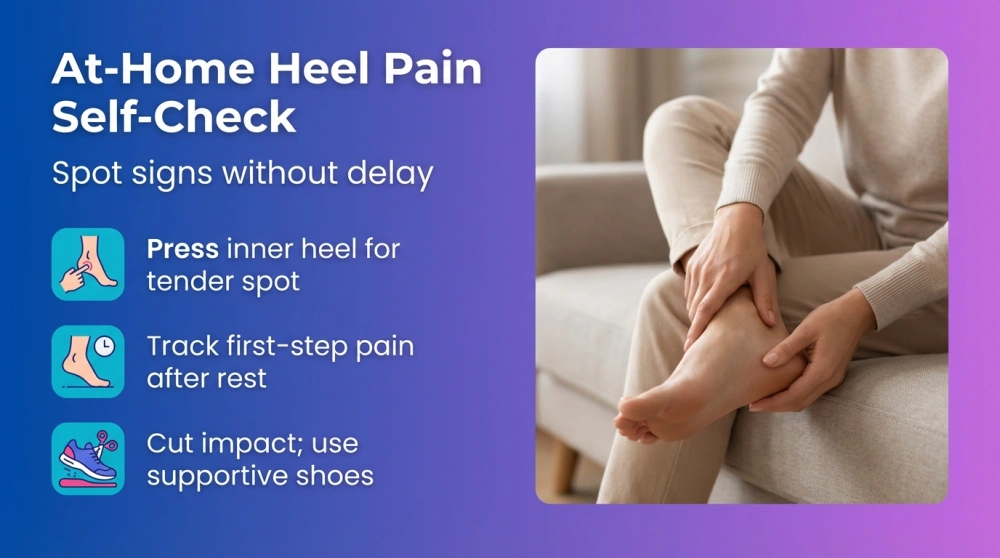
- Check the location Press gently along the bottom of the heel toward the inner edge. If this reproduces your typical pain, plantar fasciitis is possible [1].
- Observe morning symptoms Does it hurt with your first steps then ease within minutes, only to return after longer activity later in the day [1]?
- Test your calf flexibility Stand facing a wall with one leg behind and the knee straight. Lean forward to feel a calf stretch. Compare sides. Tightness is common in plantar fasciitis [3].
- Try short term load management Reduce high impact activity for a week and use supportive shoes indoors. If pain meaningfully settles, overuse likely contributed [3].
If pain limits daily life or lasts more than two to three weeks, reach out to a qualified professional such as a chiropractor or foot specialist. Timely guidance can reduce guesswork and help you move forward with confidence.
When should you see a chiropractor in Santa Ana for heel pain?
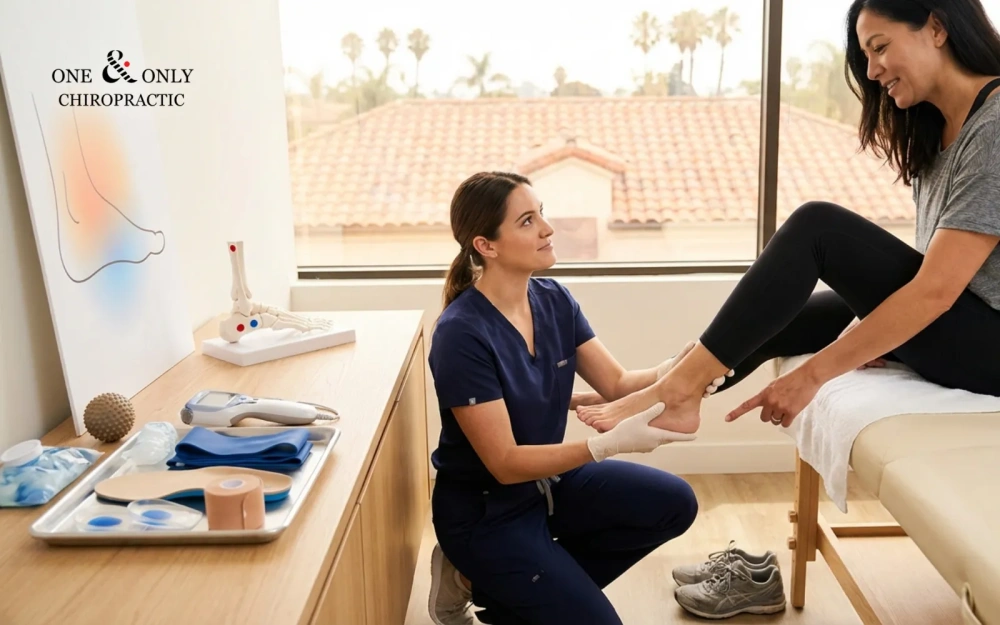
Consider seeing a chiropractor if you have recurrent morning heel pain, tenderness at the bottom of the heel, or foot pain that has not responded to simple home care. A chiropractor trained in musculoskeletal assessment can evaluate gait, joint mobility, strength, and flexibility and provide evidence based care such as manual therapy, exercise progression, and taping. If your symptoms suggest a condition that requires medical or surgical input, we will coordinate with your primary care clinician or a foot and ankle specialist for appropriate referral.
- See a chiropractor promptly If pain interferes with work, fitness, or sleep, or if you are unsure whether it is plantar fasciitis or something else.
- Choose local access If you live or work in Santa Ana or greater Orange County, timely evaluation can help you keep moving with fewer setbacks.
How do chiropractors evaluate heel pain during your first visit?
Your initial visit focuses on clarifying the diagnosis and mapping a plan you can follow. Expect a conversation about your health history, daily activities, footwear, and training changes, followed by a targeted exam.
- History focused on patterns Timing of pain, morning symptoms, training shifts, and jobs that require prolonged standing help differentiate causes [1].
- Movement and gait assessment We observe foot strike, ankle motion, and hip and knee mechanics that can load the heel.
- Palpation and special tests Gentle palpation identifies tender structures and reproduction of your pain. Toe extension may highlight plantar fascia involvement [1].
- Screen for red flags We watch for signs that warrant imaging or medical referral such as suspected stress injury, systemic symptoms, or nerve compromise [7].
Imaging is not routinely needed for typical plantar fasciitis. If symptoms or exam findings suggest a different process or if you are not improving after appropriate care, imaging can be considered based on guidelines [7].
Which red flags mean you should seek urgent medical care now?
Most heel pain is not an emergency. However, call your clinician or seek urgent care if you notice any of the following:
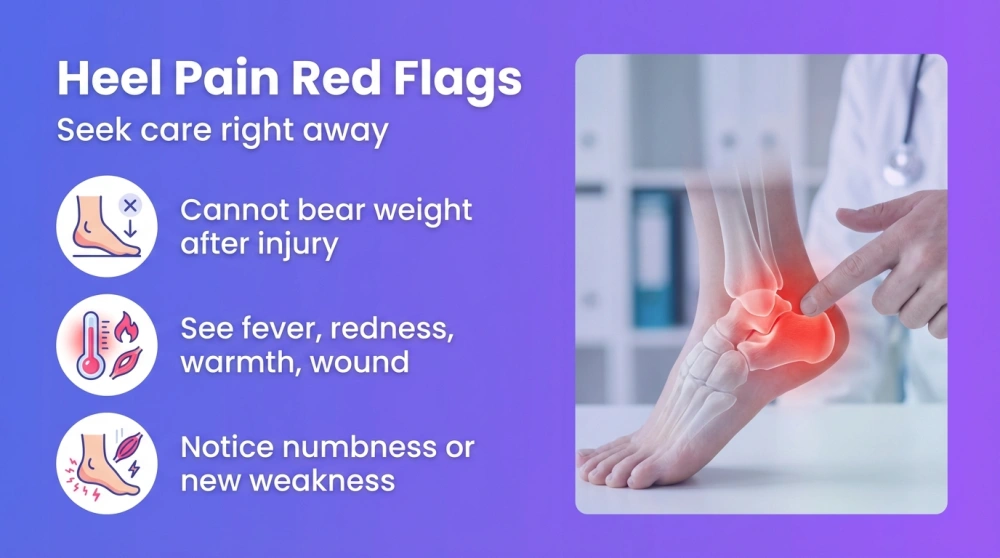
- Inability to bear weight Sudden onset severe pain after a pop or fall, or marked swelling, may indicate a more serious injury that warrants prompt evaluation [7].
- Signs of infection or systemic illness Fever, redness, warmth, or an open wound near the heel should be assessed promptly [10].
- Numbness or progressive weakness New nerve related symptoms such as foot drop or persistent numbness need medical attention.
- History of inflammatory arthritis New severe heel pain and morning stiffness in this setting may need coordinated medical care.
What evidence based treatments can help plantar fasciitis and heel pain?
Clinicians commonly combine several options based on your presentation, goals, and preferences. High quality guidelines from professional organizations emphasize a stepped approach that begins with education and exercise and may include manual therapy, taping, and carefully selected modalities [3].
- Education and load management Learn how to balance activity with recovery, adjust training, and choose supportive footwear. A short period of relative rest followed by gradual loading often helps [3].
- Manual therapy Joint mobilization and soft tissue techniques can improve mobility and reduce pain when combined with exercise [3].
- Taping or foot orthoses Short term symptom relief is supported by research, especially when used alongside exercise and patient education [3][4].
- Stretching and strengthening Calf and plantar fascia specific stretches and progressive loading for the calf and intrinsic foot muscles are core components of care [3][6].
- Night splints For people with persistent morning heel pain, a period of night splint use may help reduce start up pain [5][3].
- Shockwave therapy For chronic cases that do not respond to first line care, clinicians may consider shockwave based on guideline recommendations and supportive studies [3].
- Medication considerations Over the counter pain relievers may help some people short term, but medication choices and risks should be discussed with your medical clinician. Injections can provide short term relief for some, though potential risks include fascia rupture and fat pad changes [14].
How does chiropractic care fit within these best practice recommendations?
Chiropractic care for plantar fasciitis and heel pain focuses on noninvasive strategies that align with current guidelines. A chiropractor can provide individualized exercise progressions, manual therapy for foot and ankle mobility, taping for symptom relief, and coaching on daily habits that protect healing tissues. If your case is complex or not improving as expected, we coordinate with your broader care team to ensure you receive the right level of support at the right time [3].
Can stretching exercises and activity changes reduce morning heel pain?
Yes, many people experience meaningful relief with a combination of targeted stretching and smart activity changes. A widely cited study found that a plantar fascia specific stretch can reduce pain and improve function for people with heel pain consistent with plantar fasciitis [6]. Calf stretching and progressive strengthening also support tissue capacity and may reduce strain on the fascia [3].
Which simple stretches can you discuss with your clinician?
- Plantar fascia specific stretch Sit, cross the affected leg, and gently pull the toes back to feel a stretch along the sole. Hold for short intervals and repeat as directed by your clinician [6].
- Calf stretching Perform both straight knee and bent knee calf stretches to address the gastrocnemius and soleus muscles. Consistency matters more than intensity [3].
- Activity pacing Reduce impact activities initially, use supportive shoes indoors, and reintroduce walking or running in gradual intervals as pain allows [3].
Even small, steady changes like adding two to three brief stretch sessions each day can make a noticeable difference over a few weeks. If symptoms flare, scale back slightly and reconnect with your clinician for guidance.
Do orthotics footwear changes or taping help plantar fasciitis?
Short term use of orthoses and taping can help reduce pain, especially early on. A Cochrane review reports that foot orthoses can modestly improve pain in the short term for plantar heel pain, particularly prefabricated devices when used with other care elements [4]. Taping methods can offload the fascia and often provide immediate but temporary relief, which can support progress with exercise and activity changes [3].
What footwear choices are supportive during recovery?
- Stable base and adequate cushioning Choose shoes that limit excessive foot collapse and reduce impact on firm floors.
- Do not go barefoot on hard floors Use supportive slippers or indoor shoes to protect the fascia while it heals [3].
- Consider work demands If you stand for long shifts, plan footwear rotation and cushioning inserts to manage load [4].
Are imaging tests or injections necessary for heel pain?
Most people with classic plantar fasciitis do not need imaging. Diagnosis is based on history and physical exam. Imaging is considered when symptoms are atypical, when there is concern for a stress injury or other diagnosis, or when symptoms persist despite guideline based care. In those situations, ultrasound can visualize fascia thickness and X ray may show a heel spur, while MRI can assess complex cases. Appropriateness criteria emphasize selecting imaging based on specific clinical questions rather than as a first step for every case [7].
Corticosteroid injections can provide short term pain relief for some individuals but carry risks such as plantar fascia rupture and fat pad thinning. Decisions about injections should be made in consultation with a medical clinician, weighing benefits and risks for your situation [14]. Noninvasive options and exercise remain foundational [3].
How long does recovery usually take and what can you expect?
Many people notice improvement within several weeks of consistent care, though full recovery varies. A realistic range is several weeks to a few months depending on duration of symptoms, contributing factors, and how steadily you can follow your plan [3]. Chronic cases may take longer and sometimes benefit from adjunctive options such as night splints or shockwave in consultation with your care team [3][5].
Which factors influence recovery time the most?
- Duration of symptoms before starting care Earlier attention is often associated with quicker improvement [3].
- Calf flexibility and ankle motion Limited motion can prolong strain on the fascia and slow recovery if not addressed [3].
- Work and sport demands Prolonged standing or high impact activity can increase time to recovery unless load is managed well [3].
How can athletes manage heel pain and continue training safely?
Athletes and active adults often want to keep moving while they heal. With guidance, most can maintain fitness using strategic substitutions. Cross training with low impact cardio such as cycling or swimming can maintain aerobic capacity while reducing strain on the fascia. Progressive loading of the calf and foot muscles supports tissue capacity and can fit alongside sport specific drills as symptoms allow [3]. Avoid abrupt jumps in mileage or intensity, and consider a return to running plan that alternates walk and run intervals with pain monitored limits.
What risk factors deserve extra attention in runners?
- Training volume and speed work Rapid increases raise risk and may trigger recurrence if progressed too fast [8].
- Limited ankle dorsiflexion Tight calves and restricted ankle motion are associated with plantar fasciitis in case control studies [8].
- Footwear updates Rotate shoes and replace worn out pairs to maintain cushioning and stability that match your gait.
Does a heel spur cause pain and should you worry about it?
A heel spur is a bony outgrowth at the bottom of the heel where the fascia attaches. Many people with plantar fasciitis do not have a spur, and many with a spur have no pain at all. In other words, the presence of a spur does not necessarily mean it causes your symptoms. Clinical assessment and response to care guide treatment more than the presence or absence of a spur on X ray [2].
What California rules guide chiropractic care and your privacy?
In California, chiropractors are licensed by the California Board of Chiropractic Examiners. State regulations define the scope of practice, which includes spinal and extremity joint manipulation and related physiologic therapeutics. Chiropractors do not prescribe medications and do not perform surgery. When your condition requires services outside of chiropractic scope, referral or co management with another licensed professional is provided [12].
Your health information is protected under federal privacy rules. Health Insurance Portability and Accountability Act standards govern how clinicians and clinics safeguard your data and share it only for permitted purposes such as treatment and billing. You can request access to your records and ask how your information is used [13].
Who is OneAndOnlyChiro and how do we help in Santa Ana?
We are OneAndOnlyChiro, a wellness and injury clinic serving Santa Ana and surrounding Orange County communities in California. Our team provides personalized, evidence based chiropractic care for people of all ages. If heel pain or plantar fasciitis is limiting your day, we focus on practical steps that fit your routine so you can move with greater comfort and confidence.
How do our services connect to your next steps?
- Clear diagnosis and plan We start by clarifying whether your foot pain is plantar fasciitis or another cause. You leave with a simple plan for pain relief, mobility, and strength based on current guidelines [3].
- Hands on care and coaching We combine manual therapy, taping when appropriate, and customized exercises you can do at home and at work. We coach you on footwear, pacing, and habits that protect healing tissues.
- Progress you can feel We measure what matters to you such as morning heel pain, standing tolerance, or return to sport and adjust the plan as you improve.
What is our unique approach and methodology?
- Evidence guided care We use research informed protocols for heel pain and plantar fasciitis while tailoring them to your goals and schedule [3][4].
- Whole person focus We look beyond a single sore spot to evaluate movement, strength, and daily demands so your plan addresses the real drivers of pain.
- Collaborative mindset When needed, we coordinate with your primary care clinician or a foot and ankle specialist to support imaging decisions or medical interventions.
Where do we operate and how can you reach us?
We serve Santa Ana and nearby Orange County communities in California. To schedule an evaluation or ask a question, call us at (949) 800 8525. Same week appointments are often available, and we strive to keep visits efficient and focused on your goals.
What experience and stories highlight our track record?
- Care for active adults From retail workers who stand all day to weekend runners, we have helped many people reduce morning heel pain and return to the activities they value.
- Support for athletes Our clinicians guide load management, cross training, and return to running progressions tailored to sport demands.
- Patient centered outcomes We track functional progress such as walking tolerance and step counts so you can see your gains.
Every person and case is different. We avoid one size fits all plans and instead build a path forward that reflects your needs, values, and lifestyle. If you are in Santa Ana or greater Orange County and want a thoughtful approach to heel pain, we are ready to help.
What are common questions people ask about heel pain and plantar fasciitis?
Can plantar fasciitis go away on its own if I ignore it?
Some cases improve without formal care, but ignoring persistent pain can prolong recovery. Early education, activity adjustments, and targeted exercises can shorten recovery time and reduce setbacks [3].
Do I need custom orthotics or will prefabricated inserts help?
Many people do well with prefabricated inserts used in the short term alongside exercise and load management. Custom devices are considered for specific needs after a trial of simpler options [4].
Is morning heel pain always plantar fasciitis?
Morning pain is classic but not exclusive to plantar fasciitis. Other conditions can mimic it. A focused exam helps confirm the diagnosis and rule out other causes [1][9].
Will a heel spur need to be removed?
Usually no. Heel spurs are often incidental and not the primary pain generator. Treatment focuses on the plantar fascia and related factors rather than removing a spur [2].
Should I stop all activity until I am pain free?
Complete rest is rarely needed. Strategic activity modification and cross training can keep you active while symptoms improve. Your clinician can help you set pain monitored limits and progress safely [3].
Do I need an X ray or MRI to confirm plantar fasciitis?
Not typically. Diagnosis is clinical. Imaging is reserved for atypical cases, persistent symptoms, or when another diagnosis is suspected [7].
Where can you find the references and resources used in this article?
- Plantar Fasciitis – StatPearls – NCBI Bookshelf
- Plantar Fasciitis and Bone Spurs – OrthoInfo AAOS
- Heel Pain Plantar Fasciitis Revision 2023 Clinical Practice Guideline – JOSPT
- Foot orthoses for plantar heel pain – Cochrane Review
- Night splints for plantar fasciitis – Cochrane Review
- Plantar fascia specific stretching exercise improves outcomes in chronic plantar fasciitis – PubMed
- ACR Appropriateness Criteria Chronic Foot Pain – American College of Radiology
- Risk factors for plantar fasciitis a matched case control study – PubMed
- Achilles Tendinopathy – StatPearls – NCBI Bookshelf
- Plantar Fasciitis – MedlinePlus
- Physical Activity Guidelines for Adults – CDC
- Scope of Practice for California Chiropractors – California Board of Chiropractic Examiners
- Your Rights Under HIPAA – U.S. Department of Health and Human Services
- Diagnosis and Treatment of Plantar Fasciitis – American Family Physician
About the Author