“Sports Injury Recovery: How Santa Ana Athletes Get Back in the Game Faster”

- What makes sports injuries in Santa Ana different and why does local context matter?
- How do common sports injuries happen and what warning signs should you watch for?
- When should you seek care for a sports injury in California?
- What does an evidence based sports injury assessment include?
- How do chiropractors help athletes recover safely and efficiently?
- Which soft tissue therapies can help and what does the research say?
- What role do corrective exercises and loading progressions play in recovery?
- How are return to play decisions made in Santa Ana and what steps are used?
- What can you expect during the first month of injury rehab?
- How can runners, lifters, and field sport athletes reduce reinjury risk?
- What regulations in California affect sports injury care and privacy?
- How can parents support student athletes during recovery without delaying healing?
- What questions should you ask any sports chiropractor before starting care?
- How does OneAndOnlyChiro support sports injury recovery in Santa Ana?
- References
What makes sports injuries in Santa Ana different and why does local context matter?
Playing and training in Santa Ana means year round outdoor seasons, crowded pickup games, and quick turnarounds between work, school, and sport. That mix can increase overuse and contact related injuries. Emergency departments in the United States treat many sports and recreation injuries each year, which highlights how common these issues are and why quick, appropriate care matters for active communities like Santa Ana [13]. Understanding the playing surface, climate, and training demands here in Santa Ana, California helps us tailor sports injury recovery Santa Ana plans that fit your season and your schedule.
Local context also includes school and league policies. Youth teams, high schools, and clubs in California follow concussion and return to play rules that affect timelines and clearance. These rules are designed to protect athletes and support safe progression back to sport [2][1]. When you work with a sports chiropractor Santa Ana or a rehab professional familiar with these standards, you can move forward with confidence and clear expectations.
How do common sports injuries happen and what warning signs should you watch for?
Most athletic injuries come from one of two patterns. The first is a sudden event like a rolled ankle during a soccer cut or a shoulder strain during overhead lifting. The second is gradual overload such as runner’s knee, Achilles tendon irritation, or low back tightness that builds across weeks. Recognizing early warning signs helps you act before a mild issue becomes a season stopper.
Common examples include the following:
- Sprains and strains happen when ligaments or muscles and tendons are stretched or torn. Swelling, bruising, and pain with movement are typical. Early active care for sprain and strain rehab supports faster return to function and helps prevent stiffness [8][5].
- Patellofemoral pain often called runner’s knee produces ache in the front of the knee with stairs, squats, or long runs. It responds to targeted strengthening and gradual loading progressions that match your sport [9].
- Rotator cuff related shoulder pain shows up with overhead motions in swimming, tennis, throwing, and pressing. Strength, mobility, and technique changes typically help symptoms and performance [11].
- Low back pain in athletes can be acute or persistent and often improves with nonpharmacologic care such as spinal manipulation, targeted exercise, and education [4].
- Concussion presents with headache, dizziness, light sensitivity, and cognitive changes after a blow or jolt. Removal from play and a step wise approach to return are essential [1][2].
If you notice swelling that increases, pain that limits walking, throwing, or lifting, or symptoms that do not improve after a couple of days of relative rest and gentle movement, it is a good time to connect with a professional for sports therapy Santa Ana and a clear plan.
When should you seek care for a sports injury in California?
Seek care right away for any suspected fracture, dislocation, head injury, or severe swelling. These red flags require prompt medical evaluation. For most sprains, strains, tendon issues, and back or neck pain, early assessment by a qualified clinician can reduce time away from sport and improve outcomes [4][5]. Imaging such as X ray or MRI is not always needed and is usually reserved for specific cases with red flags or when symptoms do not follow a typical recovery pattern [7].
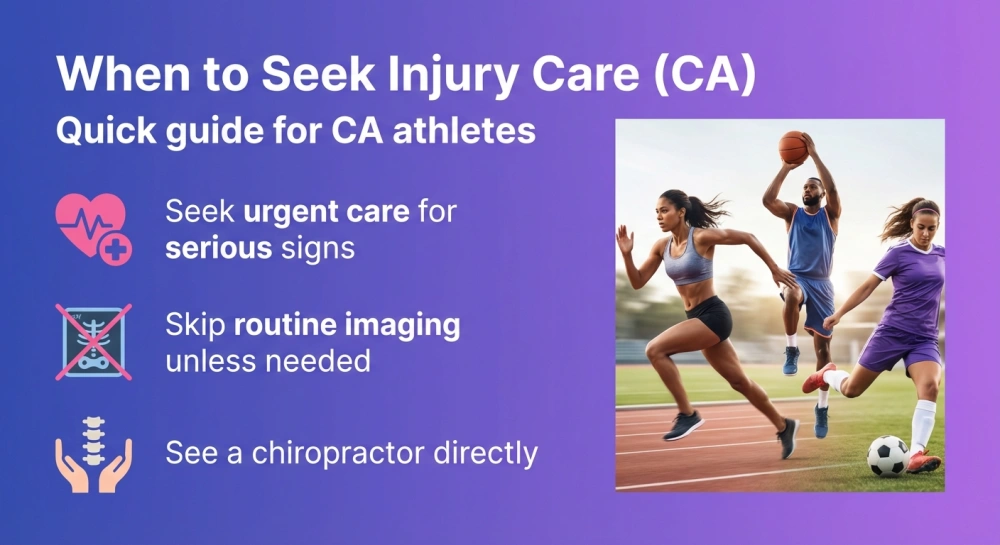
California athletes can see a chiropractor directly for musculoskeletal evaluation and management. Chiropractors in California are licensed to manage conditions of the spine and musculoskeletal system and can coordinate with your primary care provider, athletic trainer, or orthopedist as needed [3]. If you are in season in Santa Ana, let your provider know your game schedule so your injury rehab Santa Ana plan matches your training load and key dates.
What does an evidence based sports injury assessment include?
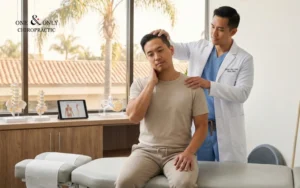
A thorough evaluation sets the stage for effective care. Expect the following elements during an initial visit:
- History and goals including how the injury occurred, positions or movements that worsen or relieve symptoms, and your short and long term performance targets.
- Red flag screen to determine if imaging or referral is appropriate based on current guidelines [7].
- Movement exam that looks at range of motion, strength, balance, coordination, and sport specific tasks.
- Load tolerance tests such as step downs, hop tests, or tempo based strength to guide initial training doses for athletic rehabilitation Santa Ana.
- Education about the condition, expected recovery, and self care steps supported by research. For acute soft tissue injury, that often includes the PEACE and LOVE approach that emphasizes protection, education, load, optimism, vascular exercise, and strength when appropriate [6].
By the end of the visit you should understand the likely diagnosis, initial plan, what to avoid temporarily, and how progress will be tracked.
How do chiropractors help athletes recover safely and efficiently?
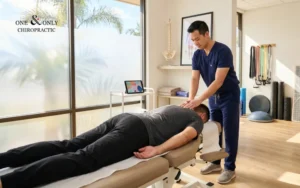
Chiropractic care for athletes blends manual therapy, targeted exercise, and education with clear milestones for return. Depending on your needs, sessions may include spinal or extremity joint manipulation, mobilization, soft tissue therapy, motor control training, and progressive strength work. For low back pain, clinical guidelines recommend nonpharmacologic options first including spinal manipulation and exercise [4]. For ankle sprains, a plan that pairs manual therapy with balance and strengthening improves pain and function and supports safe return to sport [5].
Care is collaborative. We coordinate with coaches and athletic trainers, respect school and league policies, and document return to play steps when required by California law for concussion and youth sports. For head injuries, a step wise progression and medical clearance are essential before any competition resumes [1][2].
Which soft tissue therapies can help and what does the research say?
Soft tissue therapies can reduce pain, improve mobility, and prepare tissues to handle load. Options you might discuss with your clinician include the following:
- Myofascial release targets areas of increased tone to improve comfort and movement before exercise. It can be performed manually or with tools and is often paired with active mobility drills to reinforce changes.
- Active release techniques ART combine manual contact with patient movement to address specific restrictions. Many athletes find this helpful as part of a broader plan that includes exercise and load progressions.
- Cupping therapy is sometimes used for short term relief of pain or tightness. Evidence is mixed and appears condition specific, so cupping should complement, not replace, active rehab [10].
Manual care aims to create a window of opportunity for movement quality, strength, and sport specific training. For acute soft tissue injury, current guidance favors early education, gradual loading, and a positive outlook alongside symptom management strategies [6]. This approach helps you make steady gains without flaring symptoms.
What role do corrective exercises and loading progressions play in recovery?
Exercise is the foundation of long term recovery. Corrective exercises improve mobility and control, while progressive loading restores strength and resilience for your sport. Thoughtful programming adjusts sets, reps, tempo, and rest to match tissue healing and your response.
Examples include the following:
- Runner’s knee treatment often includes hip and knee strengthening, step rate adjustments, and gradual return to running volume. Education and exercise are core components for patellofemoral pain care [9].
- Sprain and strain rehab progresses from protected range to balance and power. Ankle sprain guidelines recommend early weight bearing as tolerated, manual therapy, and proprioceptive training to improve outcomes [5].
- Shoulder and rotator cuff rehab focuses on scapular control, rotator cuff strength, and graded exposure to overhead work. Evidence supports exercise based care for many shoulder conditions [11].
- Back and neck pain in athletes benefit from a mix of motor control exercises, strength work, and manual therapy as needed in line with clinical guidelines [4].
A well designed plan uses objective markers to progress such as pain during and after sessions, swelling, range, and functional tests. This is the heart of performance optimization because it turns rehab into preparation for the demands of your sport.
How are return to play decisions made in Santa Ana and what steps are used?
Return decisions balance safety, performance, and league or school rules. For concussion, California requires removal from play, evaluation by a licensed health care provider trained in concussion management, and a gradual, step wise return to school and sport, with written clearance before full participation [2][1].
For most musculoskeletal injuries, a staged plan works well. A typical return to play approach includes the following steps:
- Symptom control reduce pain and swelling while maintaining as much safe movement as possible [6].
- Capacity rebuild restore range, strength, balance, and conditioning that match your position or event.
- Practice progressions noncontact drills to tempo controlled practice to full practice.
- Clearance pass functional tests and complete sport specific tasks at game speed without increase in symptoms.
- Full return resume competition with ongoing maintenance to reduce reinjury risk.
Throughout, your clinician documents steps and coordinates with coaches and trainers. This keeps everyone aligned on goals and timing for safe return to play protocols that fit your league and season calendar [12].
What can you expect during the first month of injury rehab?
Recovery timelines vary by condition and severity, but here is a general look at four weeks of early care. This is not a substitute for a personalized plan, and your path may move faster or slower based on your presentation.
What happens in week one and how do you set the right tone?
Focus on protection, education, and gentle movement. For acute soft tissue injury, use the PEACE and LOVE framework to guide choices. Short bouts of pain free movement, isometrics to reduce pain when appropriate, and light cardio help circulation and maintain conditioning [6]. For ankle sprains, weight bearing as tolerated and early balance drills can begin under guidance [5].
How do weeks two and three rebuild capacity without overdoing it?
As symptoms calm, add range, strength, and coordination. Move from isometrics to slow tempo strength and controlled plyometrics if indicated. For runner’s knee, this might include hip abductors and quadriceps strengthening and step rate work on the treadmill [9]. For shoulders, introduce external rotation and scapular control work at various angles [11].
What should week four look like before practices resume?
Transition to sport specific tasks. For field sports, add change of direction, deceleration drills, and reactive work. For lifters, rebuild barbell patterns under fatigue. Functional testing helps confirm readiness. If symptoms rise, scale back temporarily and recheck your plan. If you are unsure when to push or pause, a check in with your clinician prevents lost time and setbacks.
How can runners, lifters, and field sport athletes reduce reinjury risk?
Prevention blends smart training, movement quality, and load management. No single drill prevents every injury, but a few habits make a real difference.
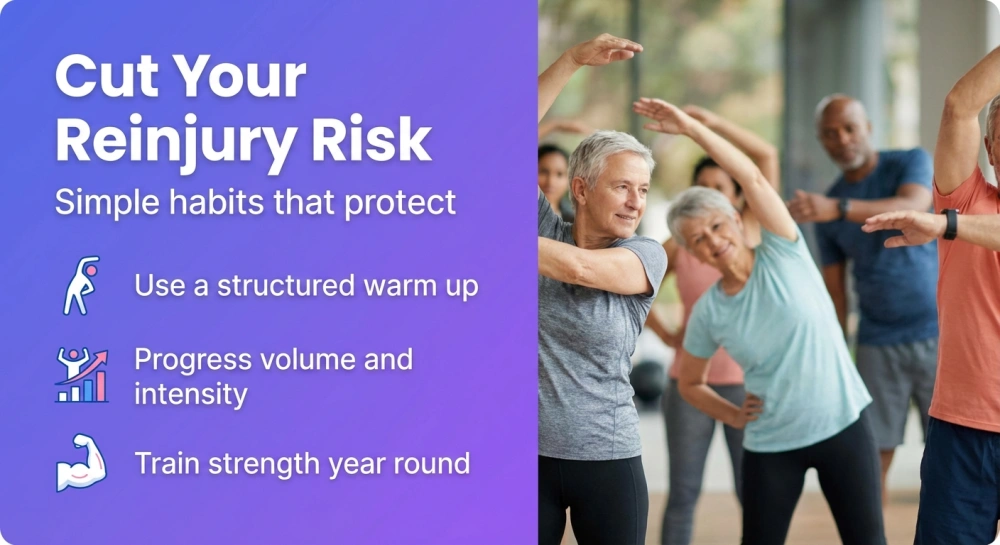
- Use a structured warm up with dynamic mobility, balance, and power prep. Comprehensive warm ups are linked with lower injury rates in team sports and support better performance [12].
- Progress volume and intensity gradually and track spikes in training load. Follow a plan rather than guessing.
- Strength train year round with a mix of heavy and speed focused work that matches your sport and position.
- Prioritize sleep and recovery to support tissue repair and learning new motor patterns.
- Address small problems early with a quick screens and tune ups so they do not grow into missed games.
Local resources also matter. Having trusted options for sports therapy Santa Ana, imaging when indicated, and referral to specialists speeds decision making and keeps you moving toward your goals.
What regulations in California affect sports injury care and privacy?
California law and national privacy rules shape your care experience. Here are key points relevant to athletes and families in Santa Ana:
- Chiropractic scope Chiropractors in California evaluate and manage conditions of the spine and musculoskeletal system, use physical modalities, and coordinate care within a defined scope of practice [3].
- Youth concussion rules Under California Education Code section 49475, student athletes suspected of concussion must be removed from play, evaluated by a trained licensed health care provider, complete a gradual return, and receive written clearance before full participation [2].
- Imaging standards Imaging is ordered when clinically appropriate. For example, acute low back pain without red flags typically does not require routine imaging based on national criteria [7].
- Privacy protections Your health information is protected by federal privacy rules. Providers take steps to safeguard records and disclose only as permitted by law [15].
Ask your clinician how these rules apply to your situation, especially for school sports, work clearance, or competition deadlines.
How can parents support student athletes during recovery without delaying healing?
Parents play a powerful role in safe return to class and sport. A few supportive actions go a long way:
- Encourage honest symptom reporting so coaches and clinicians can adjust training and classroom demands when needed. This is essential after suspected concussion [1][2].
- Help with routine by setting sleep schedules, preparing nutritious meals, and planning rides so stress stays low and recovery stays on track.
- Celebrate small wins such as walking without a limp, completing drills, or finishing class work without symptoms. Optimism supports adherence and outcomes [6].
- Coordinate with school staff including athletic trainers, nurses, and teachers for temporary academic adjustments when recommended by your clinician.
Parents in Santa Ana can also help choose a provider who understands local team calendars, travel tournaments, and school policies so timelines and clearances are handled smoothly.
What questions should you ask any sports chiropractor before starting care?
Choosing the right partner for recovery matters. Consider asking:
- What is my working diagnosis and how confident are you? Clear answers guide expectations.
- What will the first four weeks look like? You should hear a plan for symptom control, capacity rebuild, and practice progressions.
- How will we measure progress? Look for strength numbers, movement tests, and functional tasks rather than vague goals.
- What is the plan for return to play and coordination with my coach or trainer? A step wise outline with communication checkpoints is ideal [12].
- When is imaging or referral appropriate? Your clinician should be aligned with current criteria [7].
If you are in Santa Ana, ask about same week appointment options and how your provider handles documentation for school or club requirements. A good fit feels collaborative, transparent, and supportive from day one.
How does OneAndOnlyChiro support sports injury recovery in Santa Ana?
At OneAndOnlyChiro, we help Santa Ana athletes move from pain to performance with a plan that fits your life and your sport. Our focus is education first, hands on care when it helps, and targeted training that prepares you to return confidently. We serve active people across Santa Ana, California and nearby communities, from student athletes to adult competitors and weekend warriors.
What is our approach to assessment and planning?
We begin with a detailed history, movement screen, and sport specific testing. You will leave your first visit knowing what we think is going on, what to do this week, what to avoid temporarily, and how we will progress. Our method follows current research based guidance for spine and extremity conditions and respects California return rules for youth athletes when relevant [4][5][2].
How do our treatments and training steps work together?
Sessions may include joint manipulation or mobilization, soft tissue therapy such as myofascial release or ART, cupping therapy as appropriate, and progressive corrective exercises. We aim to create short term relief when possible and convert that window into lasting gains with strength and conditioning that match your sport demands [10][6]. We design plans that support sports injury recovery Santa Ana and keep you connected to your team whenever safe.
What tools and processes support your progress?
- Objective testing for strength, range, and hop or stability tasks to guide progressions.
- Clear benchmarks for return to practice and competition that align with school or league policies [1][2].
- Education and home programming delivered in plain language so you know what to do between visits.
- Care coordination with coaches, athletic trainers, and medical providers as needed.
What experience and stories reflect our commitment?
Our clinicians have years of combined experience working with runners, lifters, and field sport athletes. Here are two brief examples from local athletes. These are individual experiences and timelines vary.
- High school soccer player with a moderate ankle sprain followed current guideline based care including early weight bearing, manual therapy, and balance work. She returned to controlled practice first, then to full play after passing hop and agility tests without symptom increase [5].
- Adult recreational runner with runner’s knee completed hip and knee strength progressions, step rate adjustments, and a gradual run build. He reported steady symptom reduction and completed a ten kilometer event comfortably after a period of training focused on capacity and technique [9].
Where do we operate and how can you get started?
We serve athletes throughout Santa Ana and nearby neighborhoods in Orange County. If you are looking for a sports chiropractor Santa Ana that offers clear plans and collaborative care, we are here to help. To ask questions or schedule, call 949 800 8525. You can request an initial visit or Book Your Athletic Performance Evaluation so we can map out your next steps together.
What sets our athlete care apart without hype?
- Personalized care that reflects your goals, your calendar, and your sport role.
- Evidence based guidance with a clear path from relief to rebuild to return [4][5][6].
- Transparent communication about timelines and checkpoints with coordination for letters or forms when needed.
- Performance ready programming so rehab prepares you for the exact demands you will face on the field, court, road, or platform.
If you need athletic rehabilitation Santa Ana for sprains, strains, runner’s knee treatment, shoulder and rotator cuff rehab, or back and neck pain in athletes, our team will help you understand your options and build a plan that makes sense. We also offer guidance for injury prevention and performance optimization so the work you do in the clinic translates to the way you move and compete.
When you are ready, call 949 800 8525 to Book Your Athletic Performance Evaluation. We will confirm the details, listen to your story, and start your plan.
References
- Returning to Sports and Activities after a Concussion – CDC Heads Up
- Section 49475 Concussions and Head Injuries – California Education Code
- Scope of Practice Information – California Board of Chiropractic Examiners
- Noninvasive Treatments for Acute, Subacute, and Chronic Low Back Pain – American College of Physicians Clinical Practice Guideline
- Ankle Sprain Clinical Practice Guideline Revision 2021 – Journal of Orthopaedic and Sports Physical Therapy
- Soft tissue injuries and the PEACE and LOVE approach – British Journal of Sports Medicine
- Low Back Pain Appropriateness Criteria – American College of Radiology
- Sprains and Strains Overview – MedlinePlus
- Patellofemoral Pain Syndrome – NCBI Bookshelf
- Cupping Therapy: What You Need To Know – National Center for Complementary and Integrative Health
- Rotator Cuff Tears – American Academy of Orthopaedic Surgeons OrthoInfo
- Sports Safety and Injury Prevention Strategies – CDC
- Sports and Recreation Injuries Treated in Emergency Departments – U.S. Consumer Product Safety Commission
- Summary of the HIPAA Privacy Rule – U.S. Department of Health and Human Services
About the Author