Pregnancy Back Pain Relief: The Trimester-by-Trimester Safety Guide (OB-GYN Approved)

- What causes pregnancy back pain and why does it change by trimester?
- How common is back pain during pregnancy?
- What should you know before trying pregnancy back pain relief?
- What can help during the first trimester?
- What supports comfort during the second trimester?
- What helps most in the third trimester?
- How can you tell the difference between normal discomfort and a warning sign?
- What role can prenatal chiropractic care play?
- What safety standards matter for chiropractic care during pregnancy?
- What self care options are often used for safe back pain relief during pregnancy?
- What about pregnancy sciatica relief?
- What questions should you ask before starting care in Santa Ana, California?
- How do California licensing rules shape your options?
- How can One & Only Chiropractic support expecting mothers?
- What are the most common questions pregnant women ask?
- References
What causes pregnancy back pain and why does it change by trimester?
If you are pregnant and your back suddenly feels different, you are not imagining it. Pregnancy changes how your body moves, rests, balances, and carries weight. Those changes can affect the low back, hips, pelvis, tailbone, and even the upper back. What feels manageable one month can feel very different a few weeks later, which is why a trimester by trimester pregnancy back pain approach often makes more sense than using one strategy from the beginning to the end.
Several factors can contribute. Hormonal changes can increase joint laxity. As your pregnancy progresses, your center of gravity shifts forward. Abdominal muscles lengthen and may offer less support to the spine. Weight gain, fluid shifts, sleep disruption, and changes in walking patterns can also add strain. The American College of Obstetricians and Gynecologists notes that regular physical activity and movement during pregnancy can help with back pain, constipation, bloating, swelling, and overall well being, which shows how closely comfort and function are linked during this time[1].
Back pain may begin early, stay mild for a while, or become more noticeable as the baby grows. Some women feel a dull ache across the low back. Others feel pain on one side, sharp pain near the sacroiliac joints, or nerve like pain down the leg. Understanding what is typical in each trimester can help you choose safer, more realistic ways to feel better and know when it is time to check in with your OB GYN or another qualified professional.
How common is back pain during pregnancy?
Back and pelvic pain are common during pregnancy. Research published in peer reviewed literature has reported that low back pain and pelvic girdle pain affect a substantial share of pregnant women, with prevalence estimates varying depending on the definition used, the trimester studied, and whether pain is measured as current pain or pain at any point during pregnancy[2][3]. That variation is frustrating when you want a simple number, but the overall message is clear. You are far from alone if you are dealing with discomfort.
This matters because many pregnant women assume pain is just something they have to push through. While some discomfort can be part of pregnancy, support options exist. Education, movement, posture changes, physical therapy, and in some cases prenatal chiropractic care may be part of a broader comfort plan when coordinated appropriately. The right next step depends on your symptoms, your medical history, and whether your obstetric provider has any concerns about your pregnancy.
What should you know before trying pregnancy back pain relief?
Before you try any pregnancy back pain relief strategy, it helps to start with one rule. Pregnancy discomfort should be taken seriously, but it should also be interpreted carefully. Not every backache is dangerous, and not every internet tip is safe for you.
There are a few practical principles that can help:
- Get new or intense pain checked if it is severe, one sided, paired with bleeding, fever, contractions, leaking fluid, weakness, or numbness.
- Match the strategy to the trimester because your body mechanics and tolerance may change as pregnancy progresses.
- Use qualified professionals who understand pregnancy specific positioning, precautions, and communication with your OB GYN when needed.
- Avoid all or nothing thinking because relief often comes from combining small changes such as posture support, movement, sleep setup, and hands on care when appropriate.
- Keep expectations realistic since the goal is often improving comfort and function, not forcing your body to feel the same as it did before pregnancy.
If you live in Santa Ana, California, it can also help to choose clinicians who understand local referral patterns, California licensing requirements, and how to coordinate care with prenatal providers in the area.
What can help during the first trimester?
First trimester back pain can catch people off guard. You may not be visibly pregnant yet, but fatigue, nausea, hormonal shifts, and early ligament changes can still affect your comfort. Some women also become less active in the first trimester because they are exhausted or feeling sick, which can lead to stiffness and reduced muscular support.
For first trimester back pain, the safest starting point is usually simple and conservative support:
- Gentle walking can reduce stiffness and support circulation if your OB GYN has not told you to restrict activity.
- Short posture resets during the day can help if you work at a desk or spend a lot of time driving.
- Pillow support when sleeping can reduce strain on the low back and hips.
- Hydration and regular position changes may help if prolonged sitting makes pain worse.
- Early discussion with your prenatal provider can help sort out what is common discomfort versus something that needs medical attention.
The first trimester is also the time to be especially cautious about self treating without guidance. If your pain is strong, sudden, or paired with pelvic pressure, dizziness, bleeding, or abdominal pain, contact your obstetric team promptly. Those symptoms are outside the usual comfort discussion and deserve medical review.
Some women also ask about chiropractic care during pregnancy this early. That conversation should focus on individual risk factors, current symptoms, pregnancy status, and whether the chiropractor is trained to modify positioning and technique for prenatal patients.
What supports comfort during the second trimester?
The second trimester is often when people start feeling more energetic, but it is also when mechanical changes become more obvious. As the uterus grows, your posture shifts, your abdominal wall stretches, and your pelvis may begin reacting to changing loads in a new way. This is a common stage for second trimester back pain, hip tightness, and pelvic discomfort.
For many women, this is the most practical time to build healthy habits that can carry into later pregnancy. Safe back pain relief during pregnancy often includes a mix of movement, body mechanics, and professional guidance.
- Targeted exercise can help maintain strength and mobility. ACOG supports physical activity during uncomplicated pregnancies and notes that exercise is associated with minimal risks for most healthy pregnant women[1].
- Proper lifting and bending mechanics matter more as your bump grows. Squatting instead of hinging awkwardly can reduce strain.
- Supportive sitting and standing habits may help if work or commuting increases low back stress.
- Pelvic floor and core guidance from a qualified clinician can be useful when discomfort is linked to changing pressure and stability demands.
- Hands on care when indicated may support comfort and mobility as part of a broader prenatal wellness plan.
During this stage, some women seek prenatal chiropractic care because they want a non drug approach to managing daily discomfort. That can be a reasonable topic to discuss with your OB GYN, especially if you are looking for options that fit alongside exercise, stretching, and obstetric care rather than replacing them.
What helps most in the third trimester?
Third trimester back pain tends to be more mechanical and more persistent. By this point, your body is managing a larger forward load, less room for comfortable sleep positions, and more pressure on the pelvis and lower spine. Rolling in bed, getting out of a car, putting on shoes, or standing for too long may suddenly become major triggers.
Third trimester back pain often responds best to frequent, practical adjustments rather than one big fix:
- Break up standing and sitting time because long stretches in one position can increase pressure and stiffness.
- Use side lying sleep support with pillows between the knees and under the abdomen as needed.
- Scale activity to symptoms since overdoing it can create a pain flare that lingers into the next day.
- Consider supportive garments if recommended because some patients find maternity support belts useful for selected activities.
- Use pregnancy specific hands on care only with clinicians who adjust positioning and technique for late pregnancy.
This stage is also where pregnancy sciatica relief becomes a frequent concern. Nerve related symptoms can feel alarming, especially if pain radiates down the buttock or leg. Since sciatica like symptoms can overlap with pelvic girdle pain and other causes of referred pain, proper assessment matters. If you notice weakness, loss of bowel or bladder control, or rapidly worsening symptoms, seek urgent medical evaluation.
Many women in late pregnancy need more than comfort advice. They need a realistic routine that fits fatigue, childcare, work, commute time, and sleep disruption. That is why the best support is often simple, repeatable, and easy to modify week by week.
How can you tell the difference between normal discomfort and a warning sign?
This is one of the most important questions in any OB GYN approved pregnancy pain relief discussion. Common musculoskeletal discomfort often feels positional. It may change when you rest, walk, stretch, or switch sides in bed. It may be sore, achy, tight, or tender. Warning signs, by contrast, are more likely to feel severe, progressive, or paired with other symptoms.
Contact your obstetric provider promptly if back pain comes with:
- Vaginal bleeding
- Leaking fluid
- Fever
- Painful contractions or rhythmic tightening
- New severe pelvic pressure
- Burning with urination
- Weakness, numbness, or trouble walking
- Reduced fetal movement later in pregnancy
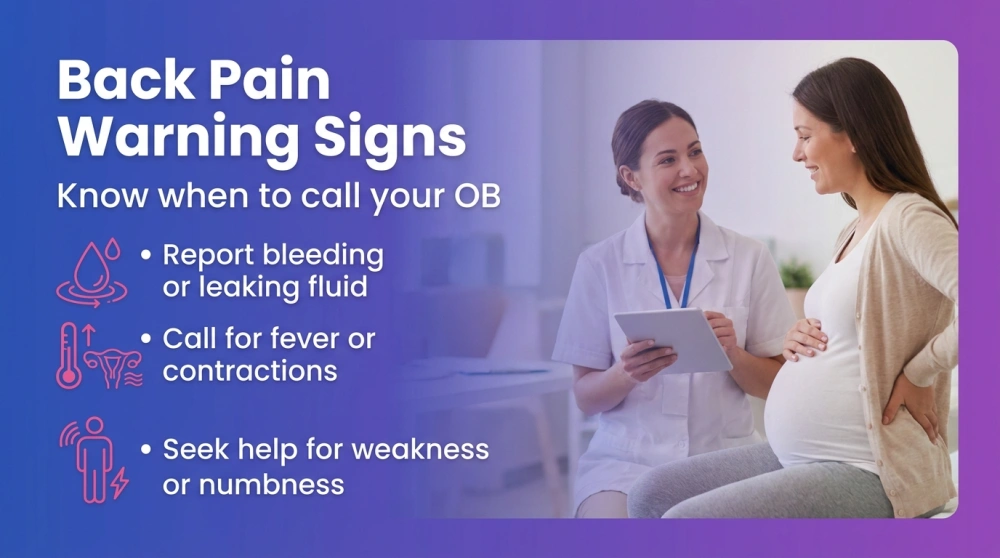
The Mayo Clinic and ACOG both emphasize the importance of discussing concerning symptoms with your prenatal care team rather than assuming they are routine discomfort[1][4]. If something feels clearly different from ordinary soreness, trust that instinct and call.
What role can prenatal chiropractic care play?
Prenatal chiropractic care is generally discussed as a conservative, non medication option that may support comfort, mobility, and function for some pregnant patients. The key phrase is for some. It is not a cure all, and it should not be presented as a replacement for obstetric care. Instead, it may be one part of a larger plan that includes exercise, sleep support, body mechanics, and communication with your prenatal provider.
Some pregnant women seek care for low back pain, pelvic discomfort, posture related strain, or pregnancy sciatica relief. A chiropractor who treats prenatal patients should know how to modify tables, positioning, and treatment choices based on gestational age and patient comfort. They should also screen for red flags and refer out when symptoms suggest a non musculoskeletal issue.
Professional organizations and educational resources commonly describe pregnancy as a population requiring clinical modification rather than routine treatment exactly as performed on non pregnant adults[5][6]. That distinction matters. Safe care depends on technique selection, patient positioning, communication, and knowing when not to proceed.
If you are exploring chiropractic care during pregnancy, consider asking your OB GYN whether there are any pregnancy specific precautions in your case. If you have placenta related issues, signs of preterm labor, severe hypertension, unexplained bleeding, or another high risk concern, the answer may be different from that of someone with an uncomplicated pregnancy.
Some women looking for pregnancy back pain relief in Santa Ana prefer coordinated care that fits around prenatal appointments, work schedules, and practical daily routines. When care is chosen thoughtfully, convenience and communication can make it easier to stay consistent.
What safety standards matter for chiropractic care during pregnancy?
Safety is the main question most pregnant women ask first, and it should be. Instead of looking for absolute yes or no statements, look for evidence of thoughtful screening, appropriate training, and clear professional boundaries.
Important safety standards include:
- Medical screening first to rule out warning signs that need obstetric or medical evaluation.
- Pregnancy specific positioning so you are not placed in ways that increase discomfort or risk as the pregnancy progresses.
- Modified techniques based on trimester, patient size, symptom pattern, and tolerance.
- Communication with your prenatal provider when needed especially in complex or high risk pregnancies.
- Clear informed consent so you understand what the clinician is doing and why.
- Licensure verification through the California Board of Chiropractic Examiners if you are receiving care in California[7].
It is also reasonable to ask whether the clinician has additional prenatal training, how often they care for pregnant patients, and what they do if symptoms do not seem musculoskeletal. Those questions are not awkward. They are smart.
What self care options are often used for safe back pain relief during pregnancy?
Safe back pain relief during pregnancy usually starts with low risk daily habits. These strategies are not dramatic, but they often matter because pregnancy discomfort is influenced by how you move, sleep, sit, and recover across the whole day.
- Regular walking or approved exercise can reduce stiffness and support general conditioning[1].
- Heat used cautiously may help local muscle tension, but avoid overheating and confirm what is appropriate with your prenatal provider.
- Frequent position changes can reduce the pressure that builds from sitting too long.
- Footwear with stable support may help if pain worsens with long periods on your feet.
- Simple stretching can be useful when taught or cleared by a qualified professional.
- Sleep setup adjustments are often more important than people expect, especially later in pregnancy.
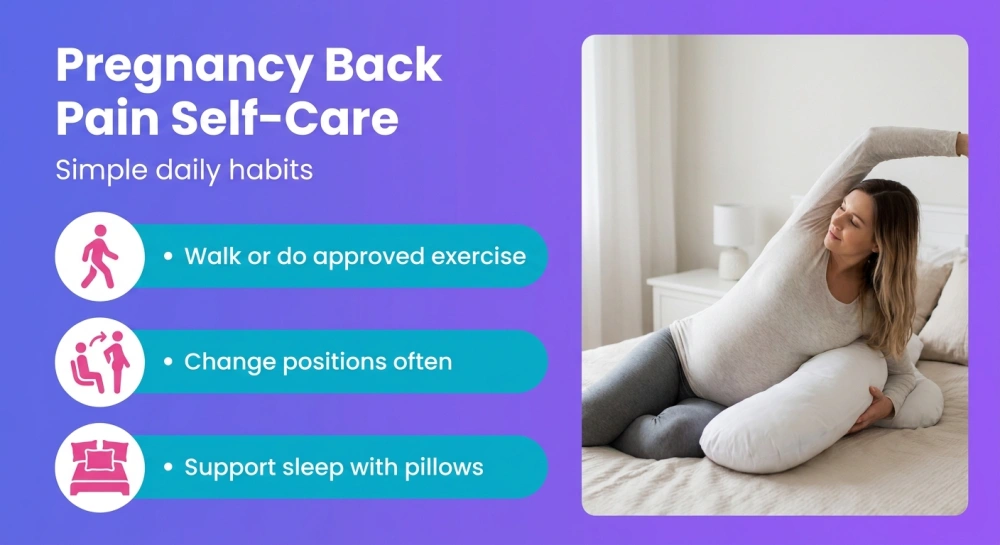
Medication questions should always go through your prenatal clinician because what is appropriate can vary by trimester, dose, timing, and your medical history. The U.S. Food and Drug Administration advises that medication use during pregnancy should be based on informed discussion with a healthcare professional, not assumptions or old internet advice[8].
For many women, prenatal wellness is not about doing everything perfectly. It is about stacking a few supportive habits that lower strain and make day to day function more manageable.
What about pregnancy sciatica relief?
Pregnancy sciatica relief is a common search term, but not all leg pain in pregnancy is true sciatica. Some women have nerve irritation. Others have referred pain from the low back, glutes, or pelvic girdle. The symptoms can overlap, which is why assessment matters.
You may notice:
- Pain that starts in the low back or buttock and travels down the leg
- Tingling or burning
- Pain that worsens with certain positions
- One sided symptoms
Conservative strategies may include position changes, guided exercise, soft tissue work, modified hands on care, and activity pacing. If symptoms are severe or paired with weakness or numbness, you should not try to self diagnose. A medical evaluation may be needed to make sure something more serious is not being missed.
Because the source of pain can change as pregnancy advances, your relief plan may need to change too. What helps in the second trimester may not feel useful in the third, and that is normal.
What questions should you ask before starting care in Santa Ana, California?
If you are considering hands on support, therapy, or Santa Ana prenatal chiropractic care, asking a few careful questions can help you make a more informed decision.
- Do you regularly treat pregnant patients and how do you modify care by trimester?
- Will you coordinate with my OB GYN or midwife if needed?
- What symptoms would make you refer me back to my prenatal provider right away?
- How will you position me comfortably and safely during visits?
- What are your goals for care, such as improving mobility, reducing strain, or helping daily function?
- What can I do at home between visits that stays within my prenatal provider’s guidance?
These questions matter whether you are seeing a chiropractor, physical therapist, or another clinician. A thoughtful provider should welcome them. You deserve clear answers, especially during pregnancy.
How do California licensing rules shape your options?
In California, chiropractors are licensed by the California Board of Chiropractic Examiners. Patients can verify licensure and review the board’s role in regulating the profession through the board’s official website[7]. For you as a patient, that means there is a state level system overseeing licensure and professional standards.
California patients also benefit from the broader healthcare framework that encourages referral and co management when symptoms fall outside a provider’s scope. During pregnancy, that matters because musculoskeletal pain can overlap with obstetric, neurologic, or urinary concerns. A provider who stays within scope and refers appropriately is protecting your safety.
If you are comparing options for prenatal wellness in Santa Ana, it is reasonable to verify credentials, ask about prenatal experience, and choose professionals who communicate clearly about limits, red flags, and collaboration with your OB GYN.
How can One & Only Chiropractic support expecting mothers?
At One & Only Chiropractic, our role is to help expecting mothers better understand musculoskeletal discomfort during pregnancy and explore conservative care options that fit within a broader prenatal plan. We serve patients in Santa Ana, California, and nearby communities as a wellness and injury clinic with a patient centered approach to chiropractic care.
For pregnant patients, that means we focus on individualized assessment, clear communication, and pregnancy aware modifications rather than a one size fits all routine. We pay attention to the stage of pregnancy, symptom location, comfort with positioning, activity demands, and whether the pattern of pain suggests that a patient should first check in with an OB GYN or another medical professional. Our goal is to support informed next steps, not to overstate what any one treatment can do.
Our broader clinic philosophy emphasizes evidence based care, education, and minimally invasive support for mobility and quality of life. We care for a wide range of patients, including prenatal patients, pediatric patients, adults with injuries, athletes, and post surgical clients. That multidisciplinary mindset helps us think carefully about movement, daily function, and practical habits that may influence comfort beyond a single office visit.
Patients often appreciate direct access to qualified professionals who can explain what they are doing in plain language, adjust care to changing needs, and communicate when outside evaluation is appropriate. In pregnancy, that personal attention matters because symptoms can change quickly from trimester to trimester. What is comfortable one week may need a different approach the next.
For women looking into prenatal chiropractic care, we aim to provide a calm setting where questions about safety, positioning, and realistic goals are taken seriously. We also understand the local context of care in and around Santa Ana, which can make it easier for patients to coordinate scheduling and continue supportive routines close to home.
One & Only Chiropractic can be reached at (949) 800 8525. If you are pregnant and dealing with back, hip, pelvic, or posture related discomfort, we encourage you to use that conversation to ask informed questions about whether conservative care is appropriate for your situation and how it may fit with your prenatal medical care.
What are the most common questions pregnant women ask?
Is back pain normal in pregnancy?
Back pain is common in pregnancy, but common does not always mean ignore it. Mild to moderate musculoskeletal discomfort is often related to posture, joint loading, and tissue changes. Severe or unusual pain should be reviewed by your prenatal provider.
Can first trimester back pain be serious?
It can be, depending on what comes with it. Mild soreness may be related to early pregnancy changes, but first trimester back pain with bleeding, severe cramping, faintness, or sharp abdominal pain should be evaluated promptly by a medical professional.
When does second trimester back pain usually start?
There is no exact week for everyone. Many women notice symptoms becoming more obvious as posture and weight distribution change during the middle months of pregnancy.
Why does third trimester back pain feel worse at night?
Nighttime discomfort often reflects accumulated strain from the day plus reduced comfort in sleeping positions. Side lying support with pillows may help, but persistent pain still deserves discussion with your prenatal team.
Is chiropractic care during pregnancy considered safe?
For some patients with uncomplicated pregnancies, modified chiropractic care may be considered as one conservative option. Safety depends on appropriate screening, professional training, patient positioning, symptom type, and ongoing communication with the prenatal care team when indicated.
What is the difference between pelvic girdle pain and sciatica?
Pelvic girdle pain often centers around the sacroiliac joints, pubic area, or deep gluteal region and may worsen with walking, turning in bed, or standing on one leg. Sciatica more often suggests nerve related pain radiating down the leg. The two can overlap, so evaluation can help clarify the cause.
Should you exercise if your back hurts while pregnant?
Often yes, but only if your prenatal provider has not restricted activity and the exercise is appropriate for your condition. ACOG supports physical activity in most uncomplicated pregnancies[1].
When should you call your OB GYN about back pain?
Call if pain is severe, sudden, or paired with bleeding, fever, leaking fluid, contractions, burning with urination, weakness, numbness, or reduced fetal movement later in pregnancy.
References
- Exercise During Pregnancy FAQ119 American College of Obstetricians and Gynecologists ACOG
- The prevalence of low back pain and pelvic pain during pregnancy a systematic review BMC Musculoskeletal Disorders PubMed
- Pregnancy related lumbopelvic pain National Center for Biotechnology Information PMC
- Pregnancy week by week Mayo Clinic
- Chiropractic Care for Adults StatPearls NCBI Bookshelf
- Clinical Compass Academy of Integrative Health and Medicine and chiropractic clinical guidance resources
- California Board of Chiropractic Examiners State of California
- Medicine and Pregnancy U.S. Food and Drug Administration
About the Author