Infrared vs. Red Light Therapy: Find the Right Treatment for Your Pain – Book a Free Demo Session
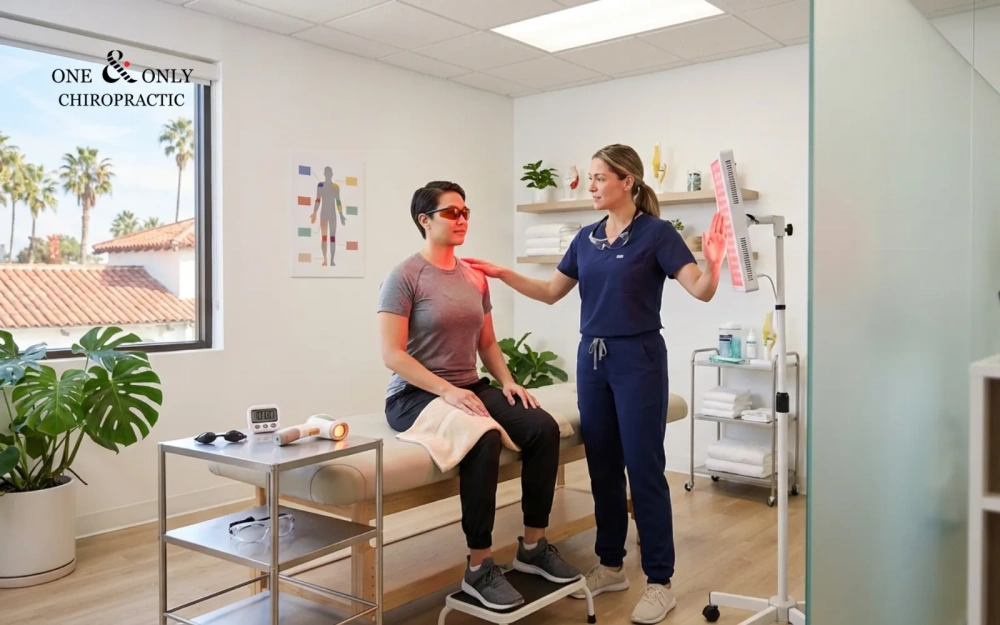
- What will you learn in this guide?
- How do red light and infrared therapy differ at a glance?
- What wavelengths define red and near infrared light?
- How does photobiomodulation work in the body?
- What does high quality research say about pain relief and recovery?
- Which conditions might benefit from red or near infrared therapy?
- How do clinic LED panels compare with low level laser devices?
- What treatment dose and session details should you know?
- How many sessions are typical and how is progress tracked?
- Who should avoid or take precautions with light therapy?
- How do regulations in California affect light therapy in chiropractic settings?
- What do federal agencies say about device clearance and marketing?
- How can you choose between red and near infrared for your goals?
- What decision checklist can you use to pick the right option today?
- What should you expect during a free demo session in Santa Ana?
- How does OneAndOnlyChiro integrate light therapy with chiropractic care?
- What frequently asked questions do people in Santa Ana ask?
- Who is OneAndOnlyChiro and how can we help in Santa Ana?
- References
What will you learn in this guide?
If you are comparing infrared therapy with red light therapy and wondering which one can support pain relief, tissue repair, or faster recovery, you are in the right place. In this guide we explain how each option works, where they differ, and what the research says about outcomes for back and neck pain, joint pain, inflammation, and sports or overuse injuries. We also outline what to expect during a free demo session at our Santa Ana CA clinic so you can make an informed choice that fits your goals and schedule.
Light based care falls under a broader category called photobiomodulation. That term simply means using specific wavelengths of light to influence cellular activity in a way that may support healing and decrease discomfort. Scientists have been studying these effects for decades, and while the field continues to evolve, several mechanisms are well described in peer reviewed literature and professional guidelines [1] [2] [6].
Chronic pain is common, and people in Santa Ana and across Orange County often look for noninvasive treatment options that can be used alongside chiropractic care and exercise. National data estimate that more than one in five adults in the United States live with chronic pain, which highlights the need for multiple safe approaches to management [11]. Our goal here is to help you understand the differences so you can decide if red or near infrared therapy belongs in your plan.
How do red light and infrared therapy differ at a glance?
Both approaches use light from the visible to near infrared spectrum. The main difference is wavelength and depth of penetration. Red light therapy uses visible red wavelengths that tend to interact most with skin and superficial tissues. Near infrared therapy uses wavelengths just beyond visible red that tend to reach deeper layers such as muscles and joints. Both are forms of photobiomodulation and both can be delivered by LED light therapy devices or low level laser therapy instruments [2].
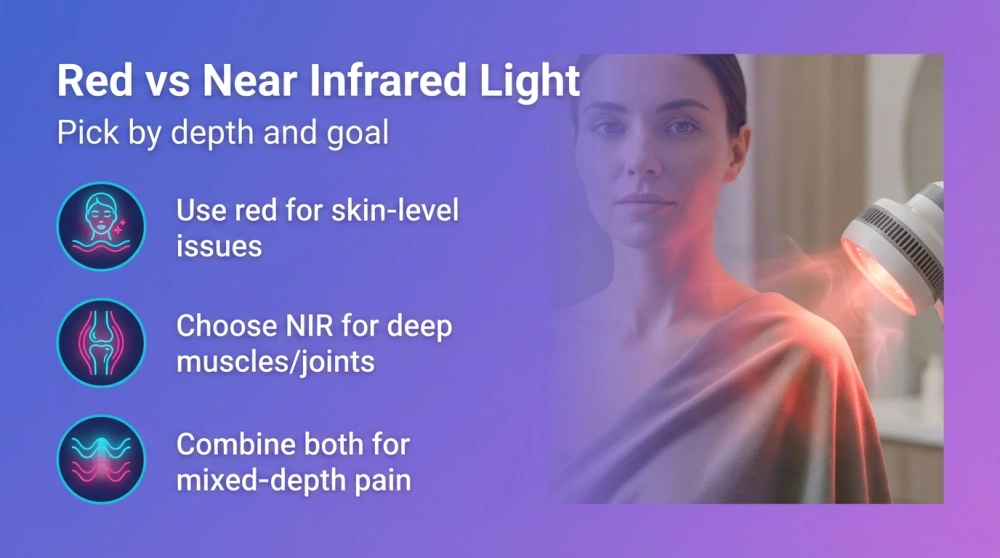
- Red light therapy focus Targets skin and superficial tissues, often used for surface level discomfort, minor soft tissue strains, and skin health concerns [2].
- Near infrared therapy focus Targets deeper tissues where many pain generators live, including muscle and joint structures in the back, neck, hip, and knee [2].
- Shared mechanism Both support cellular energy processes and signaling pathways linked to inflammation and repair [1].
In practice many modern systems combine both red and near infrared LEDs to cover a range of depths during the same session. A mixed approach can be useful when a condition affects both superficial and deeper tissues, as with a combined muscle and tendon irritation around a joint [2].
What wavelengths define red and near infrared light?
Most clinical protocols use red light in the range of about 620 to 700 nanometers and near infrared light in the range of about 700 to 1100 nanometers. Absorption by cellular photo acceptors varies with wavelength, and certain windows are widely used because they balance tissue penetration and biological response. Reviews of photobiology and engineering principles highlight the practical wavelength ranges and how light scatters or absorbs in tissue [2].
In simple terms, red light generally interacts with surface structures first because it is visible light that attenuates sooner in tissue, while near infrared has a better chance of reaching deeper targets like paraspinal muscles or the joint capsule of the knee. These are tendencies rather than hard limits, and dose, device type, and technique also matter [2] [6].
How does photobiomodulation work in the body?
Photobiomodulation is thought to influence the way mitochondria produce energy and manage reactive oxygen species. When specific wavelengths are absorbed by photo acceptors such as cytochrome c oxidase, cells can respond with changes in ATP production, nitric oxide signaling, and downstream transcription factors. These changes may help modulate inflammation and support tissue repair over time [1] [2].
Beyond mitochondria, researchers have reported effects on blood flow, edema dynamics, and peripheral nerve excitability. These responses are dose dependent and can be biphasic, which means too little or too much light may not produce the intended effect. That is one reason protocols pay attention to energy density and timing [1] [6].
Historically, interest in light based support for tissue healing was boosted by aerospace and military research exploring LED arrays for plant growth and wound applications. That early work helped accelerate development of medical grade arrays and contributed to the safety testing of light delivery systems used today [12].
What does high quality research say about pain relief and recovery?
Evidence varies by condition and protocol. Some areas show promising results while others remain mixed. Here are key takeaways from systematic reviews and consensus resources you can verify in the reference list.
- Neck pain A meta analysis in a leading medical journal found that low level laser therapy can reduce pain in acute and chronic neck pain in the short to medium term compared with sham treatment [3].
- Musculoskeletal pain Broad reviews report potential benefits for various soft tissue conditions, though optimal parameters and consistency across studies differ. Some studies show clinically meaningful pain reduction while others show modest or uncertain effects [4].
- Low back pain Cochrane reviewers reported mixed or uncertain benefits of low level laser therapy for nonspecific low back pain, emphasizing the importance of dosing, device parameters, and combination with active care like exercise [5].
- Knee osteoarthritis Systematic reviews have suggested that photobiomodulation may improve pain and function in some knee osteoarthritis protocols, though heterogeneity and study quality mean results can vary by wavelength, dose, and site technique [15].
- Inflammation and repair mechanisms Laboratory and translational studies describe anti inflammatory signaling and tissue repair pathways that can plausibly support clinical outcomes when dosing is appropriate [1] [2].
For many people, the practical takeaway is that red light therapy and near infrared therapy can be useful tools within a comprehensive plan that includes chiropractic care, graded movement, and strength work. Clinical guidelines for back pain also emphasize non drug, noninvasive options along with physical activity and education, which is consistent with how we integrate light based care in our Santa Ana practice [13].
Which conditions might benefit from red or near infrared therapy?
Clinical decisions should be individualized, but it helps to map typical needs to the properties of each modality. Below are common scenarios people ask about in Orange County, with guiding ideas you can discuss during your consultation.
How does light therapy relate to back and neck pain?
Neck pain has some of the stronger support in the light therapy literature, with meta analytic evidence for short term pain reduction when low level laser parameters are applied thoughtfully [3]. For back pain, findings are mixed and tend to be better when combined with active care such as spinal stabilization and flexibility work [5] [13]. If your primary pain source is muscular, near infrared therapy may be favored for depth, while red light can be used to address superficial tenderness or trigger points that sit close to the skin.
During your assessment, your Santa Ana chiropractor can help identify whether pain is likely driven by muscles, joints, or nerve irritation and then tailor the plan. We place a strong emphasis on measurable functional goals such as improved range of motion, better sleep quality, or easier transitions from sitting to standing, not just symptom scores.
What about joint pain and osteoarthritis?
For weight bearing joints like the knee and hip, near infrared therapy is often used because of its ability to reach deeper intra articular and periarticular tissues. Some trials report improved pain and function in knee osteoarthritis when wavelength and energy density align with established dosing windows, though effects can vary [15]. We typically pair light sessions with progressive loading exercises that maintain joint nutrition and muscle support, which is consistent with guideline based conservative care [13].
Can light therapy help nerve related pain or neuropathy?
Photobiomodulation is being studied for peripheral nerve conditions, with proposed mechanisms that include modulation of nerve conduction and inflammatory mediators. Results are still developing and depend heavily on accurate diagnosis and realistic goals. A careful evaluation helps determine whether light therapy is an appropriate adjunct or whether referral to a different specialist is advisable [2].
Does light therapy reduce inflammation and swelling?
Basic and translational research suggests that photobiomodulation can influence inflammatory cytokines, oxidative stress, and lymphatic dynamics in ways that support recovery from overuse and acute strain injuries when dosed appropriately [1]. In the clinic we match dose and technique to the stage of healing so that the intervention complements your activity plan and any manual therapy rather than replacing them.
How do clinic LED panels compare with low level laser devices?
Both LED and laser devices can deliver therapeutic wavelengths, but how they deliver energy and how precisely they target tissue differ.
- LED light therapy LED panels or pads cover a larger area and can be efficient for broad regions like the low back or thigh. They often combine red and near infrared diodes to address multiple depths in one setup [2].
- Low level laser therapy Laser probes or clusters emit coherent light that can concentrate energy into a smaller spot, which may be useful for focal tendon insertions or small joint areas. Parameters and dosimetry need careful control, and clinicians often follow professional dosing guides [6].
- Practical choice For diffuse muscle soreness or widespread myofascial tenderness, LEDs may be preferred for coverage. For a pinpoint trigger or small tendon site, a laser probe can make sense. Many clinics use both depending on the region and goal.
Both device types are considered noninvasive and are used within conservative care plans. Safety practices include screening for contraindications, eye protection when indicated, and adherence to the manufacturers instructions and professional standards [7] [14].
What treatment dose and session details should you know?
Dose refers to energy delivered to the target tissue. Commonly used ranges for photobiomodulation are informed by research and professional recommendations. Clinicians track factors like wavelength, power, irradiance, energy density, and time. The World Association for Photobiomodulation Therapy publishes dosage recommendations that many providers use as a starting point, then adjust based on patient response and tissue depth [6].
- Energy density The total energy per area is often in the single digit to low double digit joules per square centimeter range for pain applications. Deeper structures may require modified settings compared with superficial targets [6].
- Frequency Sessions are commonly scheduled two to three times per week at first, then tapered as symptoms and function improve. Acute conditions may respond in fewer visits while longstanding pain often needs a longer runway [4].
- Combination care We integrate light sessions with chiropractic care, mobility drills, and strength work to reinforce gains between visits, which aligns with nonpharmacologic approaches recommended in back pain guidelines [13].
It is normal to feel mild warmth on the skin during LED sessions. The sensation with low level laser is typically minimal. You should not feel burning or sharp discomfort. If you do, tell your provider so settings can be adjusted or the session paused for reassessment.
How many sessions are typical and how is progress tracked?
Everyone responds differently, but here is a general framework you can discuss during your consultation in Santa Ana.
- Acute strain or sprain Often two to four weeks of care, with check ins each week to update movement goals and light therapy settings.
- Chronic back and neck pain Often four to eight weeks of combined care that includes graded exercise. We track pain scores, range of motion, and patient selected goals like walking time or workstation tolerance [13].
- Degenerative joint pain Often six to ten weeks with periodic booster sessions for flare management. Function measures include stair climbing time or sit to stand count.
We document outcomes so you and your provider can see what is working and decide whether to continue, modify, or pause light therapy. If progress is not on track, we adjust the plan or coordinate with your primary care provider or specialist.
Who should avoid or take precautions with light therapy?
Light based care is generally well tolerated, but screening is important. Tell your provider about all health conditions and medications, and ask how safety applies to your situation. Common considerations include the following.
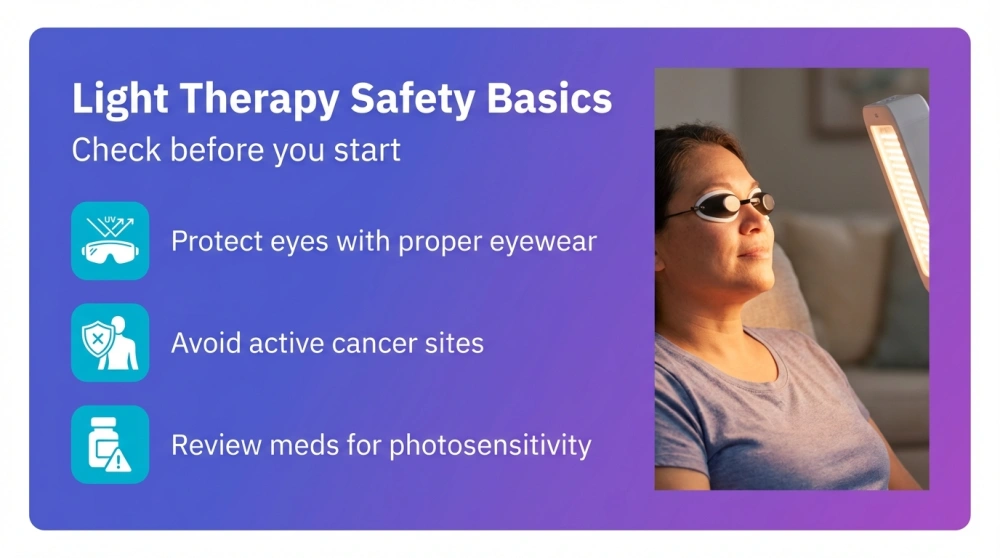
- Active cancer in the treatment field Many clinicians avoid direct application over known malignancy unless directed by an oncology team, because research in this context is complex and ongoing [2].
- Pregnancy For abdominal or low back application during pregnancy, providers typically exercise caution and may avoid direct exposure without obstetric input since research is limited [2].
- Photosensitive medications or conditions Some drugs and skin conditions can increase light sensitivity. Your clinician will review your medication list and health history.
- Eye protection Direct exposure to the eyes must be avoided. Appropriate eyewear is used when indicated, especially with laser devices and higher intensity sources [7] [14].
- Thermal sensation deficits If you have reduced sensation that could prevent you from noticing heat or irritation, extra care is taken with monitoring and placement.
If light therapy is not a good fit, your chiropractor can recommend alternative noninvasive treatments and coordinate care with your medical team.
How do regulations in California affect light therapy in chiropractic settings?
Regulation covers two main areas. One is what licensed professionals are allowed to do under state scope of practice. The other is how devices are classified and marketed at the federal level. In California, the Board of Chiropractic Examiners provides scope guidance and laws and regulations that clinics must follow. Chiropractors in California evaluate and manage neuromusculoskeletal conditions and may use adjunctive physiotherapy modalities consistent with the Chiropractic Initiative Act and board policies [9] [10].
Clinics must also follow California advertising and disclosure rules, maintain appropriate records, and use treatments consistent with training and evidence. When we discuss light therapy with you, we present balanced information and avoid statements that imply guarantees of outcomes, in line with professional standards and consumer protection laws [10].
What do federal agencies say about device clearance and marketing?
At the federal level, the U.S. Food and Drug Administration regulates medical lasers, LEDs, and other radiation emitting products. FDA device classifications and regulations address safety, labeling, and what medical indications a manufacturer may claim. For example, infrared lamps are classified under a physical medicine regulation that covers adjunctive uses such as temporary relief of minor muscle and joint pain, and increasing local circulation [8]. More generally, FDA guidance for laser products explains safety standards and the importance of proper eyewear and controls when lasers are used in health care settings [7].
Clinics are responsible for applying devices within their intended use and for describing services accurately. We discuss expected benefits and limits with you, and we include light therapy as one element of a conservative plan that also features education and movement based care.
How can you choose between red and near infrared for your goals?
Your choice often comes down to tissue depth, sensitivity, and session goals. When in doubt, a combined protocol using both red and near infrared can be a practical starting point, then refined as we see how your symptoms and function respond.
- Surface tenderness or skin level concerns Start with red light therapy with appropriate dosing for superficial tissues and consider adding near infrared if deeper discomfort persists [2].
- Deep muscle or joint pain Favor near infrared therapy to reach deeper structures and support circulation and comfort in tissues that sit beneath the skin and subcutaneous layers [2].
- Post activity soreness Use a broader LED array that mixes red and near infrared to cover the region efficiently and monitor changes in recovery markers like stiffness on waking or first step pain.
- Progress checks Reassess range of motion, strength tolerance, and daily function weekly and adjust the light dose and exercise plan accordingly [6].
We keep the process collaborative. You help set goals and tell us what matters most, whether that is picking up kids without a back twinge, sitting through a meeting without neck ache, or returning to a favorite Orange County walking route.
What decision checklist can you use to pick the right option today?
- Identify your primary symptom Is it sharp joint pain, dull muscle ache, stiffness, or surface tenderness.
- Estimate tissue depth Choose near infrared therapy for deeper targets and red light therapy for surface targets, or use a combined device when both layers matter [2].
- Confirm safety Review medical history, medications, and eye protection needs with your provider before starting [7] [14].
- Set functional goals Define outcomes that you can measure each week such as walking time, ability to turn your head, or fewer sleep interruptions.
- Agree on a trial period Plan a defined series of sessions with progress checks, usually two to four weeks, and be ready to adjust based on results [4] [6].
- Integrate movement Pair sessions with mobility and strength work recommended by your chiropractor to reinforce improvements [13].
What should you expect during a free demo session in Santa Ana?
Your free demo session is a chance to experience light therapy first hand and get answers to your questions in a low pressure, educational setting. Here is how it typically works at our Santa Ana CA clinic.
- Brief intake We ask about your symptoms, activity level, and goals so we can tailor the demonstration to what matters most to you.
- Safety screening We review your health history and medications to confirm that light therapy is appropriate and to determine any necessary precautions [7] [14].
- Device overview We show you the difference between LED panel delivery and laser probe delivery and explain how wavelength and dose are chosen [6].
- Test application You can experience a short application to a non sensitive area to feel what a session is like. We explain what you should and should not feel and how we monitor response.
- Next steps We outline a suggested plan that integrates chiropractic care, movement, and any additional modalities that fit your case, with clear options and timelines.
If you decide to move forward, we schedule sessions at times that work for you and we provide a simple plan for home movement between visits. If light therapy is not the right fit, we will discuss alternatives or referrals.
How does OneAndOnlyChiro integrate light therapy with chiropractic care?
Light therapy works best when it is part of a comprehensive approach. At OneAndOnlyChiro in Santa Ana we combine photobiomodulation with spinal and extremity joint care, soft tissue techniques, and guided exercise. This integrated model supports circulation, mobility, and resilience while reducing pain sensitivity in a stepwise and sustainable way [13].
- Assessment first We identify pain drivers and movement limitations so that light sessions align with your highest priority goals.
- Layered care We use red or near infrared therapy to prepare tissues, then reinforce gains with mobility and strength work that you can continue at home.
- Outcome tracking We document changes in range of motion, activity tolerance, and patient reported outcomes to guide progression or tapering of sessions.
- Education We explain what we are doing and why, so you feel confident about each step and know how to maintain progress on your own.
What frequently asked questions do people in Santa Ana ask?
Will I feel immediate pain relief from my first session?
Some people notice easier movement or a calmer sensation after the first few sessions, while others notice changes over several visits. Response depends on the condition, duration of symptoms, and how well the overall plan fits your needs. We check progress regularly and adjust.
Is red light therapy different from a heating pad?
Yes. Photobiomodulation uses specific wavelengths that influence cellular signaling and energy production rather than simply providing superficial heat. While you may feel gentle warmth with some devices, the primary goal is a light mediated biological effect rather than thermal heating [1] [2].
Can I use home devices instead of clinic sessions?
Home devices can be helpful for maintenance, but they often deliver lower energy and may not reach deeper targets as efficiently as clinic grade systems. If you choose to use a home device, ask your provider about safe dosing and how to integrate it with your chiropractic care plan [6].
How do you keep my eyes safe during sessions?
We avoid direct exposure to the eyes and provide eyewear when indicated, especially with laser devices. We follow safety guidance for radiation emitting products and laser use in occupational settings [7] [14].
Is light therapy covered by insurance?
Coverage varies by plan and device type. We can provide documentation of services and outcomes to support your inquiries. Many people choose to use light therapy as a cash service while using insurance for other aspects of their plan.
Can light therapy replace exercise or chiropractic adjustments?
Light based care is a supportive tool and is not a replacement for movement or joint care when those are indicated. The most durable results typically come from a plan that blends education, manual care, and progressive exercise with adjunct modalities like photobiomodulation [13].
Who is OneAndOnlyChiro and how can we help in Santa Ana?
OneAndOnlyChiro is a wellness and injury clinic serving Santa Ana and the greater Orange County community. Our team provides personalized chiropractic care and complementary noninvasive treatments that support comfort, mobility, and quality of life. We welcome people of all ages including youth athletes, expectant parents, busy professionals, and active adults returning from surgery or a long layoff.
Here is how we connect the dots for you when you are comparing infrared therapy and red light therapy for pain relief and recovery.
- Local expertise Our clinicians are trained in photobiomodulation dosing and safety and integrate light sessions with chiropractic adjustments, soft tissue work, and active rehab that fits your goals and schedule [6] [13].
- Evidence informed planning We use peer reviewed research and professional guidelines to select wavelengths and dose ranges, then personalize based on your response and functional targets [1] [2] [6].
- Proven processes Our visit flow includes assessment, clearly explained options, and outcome tracking so you always know where you stand and what comes next.
- Modern technology We maintain clinic grade LED arrays and low level laser options to address both superficial and deeper targets efficiently and comfortably.
- Patient centered care You set the goals. We build the plan around what matters most, whether that is lifting without back strain, turning your head comfortably in traffic, or returning to the field with confidence.
- Transparent communication We discuss expected timelines, home strategies, and when to coordinate with your primary care provider or specialist if that would better serve your health.
People choose us because we blend hands on care with modern modalities in a supportive environment. Our track record includes helping office workers resolve stubborn neck tightness as they update their desk habits, guiding weekend hikers back to local trails with stronger hips and knees, and supporting parents who want to carry and play without a pain flare. We never promise specific outcomes and we always encourage realistic goals that fit your life and health profile.
We operate in Santa Ana CA and serve nearby communities across Orange County. If you are curious about how infrared therapy or red light therapy could fit your plan, you can call us at (949) 800 8525 to book a free demo session and ask your questions. You will meet with a qualified professional who can listen, examine, and outline next steps that respect your preferences and time.
References
- Mechanisms and applications of the anti inflammatory effects of photobiomodulation – AIMS Biophysics
- The nuts and bolts of low level laser therapy – Annals of Biomedical Engineering
- Efficacy of low level laser therapy in neck pain – The Lancet
- The use of low level laser therapy for musculoskeletal pain – PubMed Central
- Low level laser therapy for nonspecific low back pain – Cochrane Database of Systematic Reviews
- Dosing recommendations for photobiomodulation – World Association for Photobiomodulation Therapy
- Laser products and instruments – U.S. Food and Drug Administration
- 21 CFR 890.5500 Infrared lamp – Electronic Code of Federal Regulations
- Scope of practice for California chiropractors – California Board of Chiropractic Examiners
- Laws and regulations for chiropractic practice – California Board of Chiropractic Examiners
- Chronic pain and high impact chronic pain among U.S. adults 2021 – Centers for Disease Control and Prevention
- Light emitting diodes help heal oral mucositis – NASA Spinoff
- Noninvasive treatments for acute subacute and chronic low back pain guideline – Annals of Internal Medicine
- Laser hazards overview – Occupational Safety and Health Administration
- Photobiomodulation therapy for knee osteoarthritis systematic review – PubMed
About the Author