Herniated Disc Treatment in Santa Ana: Avoid Surgery with Chiropractic Care
- What Is a Herniated Disc and Why Does It Hurt?
- Why Surgery Is Not Always the First Step
- How Chiropractic Care Addresses a Herniated Disc
- Techniques Used in Non-Surgical Herniated Disc Treatment
- The Sciatica Connection: When Your Leg Hurts More Than Your Back
- What the Research Shows About Non-Surgical Care
- Who Is a Candidate for Chiropractic Care?
- Frequently Asked Questions
- About One & Only Chiropractic in Santa Ana
- References
If you have recently received a diagnosis of a herniated disc, you know how unsettling that moment can feel. One minute you are carrying out a normal day, and the next you are sitting in a doctor’s office hearing words like “disc extrusion,” “nerve root compression,” and possibly “surgery.” Before you schedule a procedure, it is worth pausing to understand what conservative, non-surgical care can realistically offer, and why many physicians now recommend exploring those options first.
This article is written for adults in Santa Ana and the surrounding Orange County area who have a confirmed disc injury, may have already been referred by a medical doctor, and are trying to make a well-informed decision about their next steps. We will walk through what a herniated disc actually is, what the published research says about non-surgical treatment, and how chiropractic care fits into that picture.
What Is a Herniated Disc and Why Does It Hurt?
Your spine is made up of vertebrae stacked on top of each other, separated by intervertebral discs that act as shock absorbers. Each disc has a tough outer ring called the annulus fibrosus and a soft, gel-like center called the nucleus pulposus. When the outer ring cracks or weakens, the inner material can push through, pressing on surrounding nerves. This is what clinicians call a herniated disc, sometimes also referred to as a slipped disc or ruptured disc.
The pain you feel can come from two sources: the mechanical pressure of disc material on a nerve root, and the inflammatory chemicals that are released at the injury site. Research published in peer-reviewed journals notes that inflammatory cytokines and immune-cell activity at the herniation site are significant contributors to the pain signal, which helps explain why some people experience severe symptoms even with a relatively small herniation, while others with a larger herniation may feel very little [1].
Common symptoms associated with a herniated disc include:
- Sharp or burning lower back pain that may worsen with sitting, bending, or coughing
- Radiating leg pain (sciatica) that travels down the buttock, thigh, calf, or foot
- Numbness or tingling in the leg or foot along the affected nerve’s distribution
- Muscle weakness in the leg or foot that can affect walking or standing
- Reduced range of motion in the lumbar spine
Herniated discs are most common in the lumbar (lower) spine, particularly at the L4-L5 and L5-S1 levels, though they can also occur in the cervical (neck) region. If you are reading this because you received an MRI confirming disc herniation, you are not alone. Lumbar disc herniation is one of the most frequently encountered musculoskeletal conditions in clinical practice [1].
Why Surgery Is Not Always the First Step
It is a reasonable question: if the disc is pressing on a nerve, why not just remove it surgically? The answer is more nuanced than many people expect, and the clinical guidelines reflect that complexity.
The North American Spine Society (NASS) publishes evidence-based clinical guidelines for the diagnosis and treatment of lumbar disc herniation with radiculopathy. These guidelines explicitly recommend non-operative treatment as first-line therapy, advocating for at least six weeks of conservative management before surgical intervention is considered [1]. This recommendation is grounded in a well-documented biological reality: herniated discs can resorb naturally over time.

Can a Herniated Disc Actually Shrink on Its Own?
Yes, and the data on this point is striking. A systematic review published in Clinical Rehabilitation found that spontaneous regression probabilities vary based on herniation type: approximately 13% for bulging discs, 41% for protruding discs, 70% for extruded discs, and as high as 96% for sequestered discs [1]. In other words, the more severe the herniation, the higher the likelihood of natural resolution.
A systematic review and meta-analysis published in Clinical Rehabilitation comparing surgical versus non-operative treatment for lumbar disc herniation found that spontaneous regression of disc tissue can occur in most patients and that conservative treatment should be the primary strategy [3]. Researchers noted that on average, roughly 90% of patients experience improvement in radiculopathy within three months, even without surgery [1].
None of this is to say surgery is never appropriate. It is reserved for patients who fail to improve with conservative care or who present with severe neurological signs such as progressive muscle weakness, cauda equina syndrome, or bladder or bowel dysfunction. If you have been referred to explore non-surgical options, your doctor likely believes your situation falls into the category where conservative care deserves a genuine trial first.
How Chiropractic Care Addresses a Herniated Disc
Chiropractic care for herniated disc treatment in Santa Ana involves a structured, individualized approach rather than a one-size-fits-all protocol. A licensed chiropractor evaluates the full clinical picture, which typically includes reviewing your MRI or imaging, performing a physical and neurological exam, and assessing your functional limitations before recommending any course of care.
The primary tool in a chiropractor’s approach to disc herniation is spinal manipulation, also called high-velocity, low-amplitude (HVLA) manipulation. This technique applies a precise, controlled force to specific spinal segments to restore movement, reduce joint restriction, and address nerve irritation. Research has proposed several mechanisms by which spinal manipulation may assist with disc herniation, including:
- Immune modulation: Spinal manipulation may stimulate immune responses that accelerate macrophage phagocytosis and enzymatic degradation of herniated material, promoting resorption [1]
- Disc dehydration and shrinkage: Manipulation may aid in the natural dehydration and size reduction of the nucleus pulposus, particularly in larger herniations with higher water content [1]
- Mechanical retraction: By altering pressure within the intervertebral space, manipulation may facilitate the retraction of herniated disc material [1]
- Pain modulation: Spinal manipulation influences neurophysiological pathways involved in the transmission of pain signals, providing symptomatic relief independent of structural changes
A published case study in Cureus described a 52-year-old patient with severe L3/L4 disc extrusion causing bilateral nerve root compression. After a ten-week conservative management plan that included spinal manipulation, lumbar traction, and home exercise, the patient achieved significant pain relief, functional improvement, and near-complete resolution of neurological deficits. A six-month follow-up MRI confirmed full resolution of the disc extrusion, and the patient remained symptom-free at nine months [1].
It is worth noting that chiropractic care is not a single isolated intervention. When used alongside adjunctive therapies and rehabilitative exercises, it becomes part of a comprehensive conservative management strategy.
Techniques Used in Non-Surgical Herniated Disc Treatment
A chiropractic approach to herniated disc treatment may incorporate several evidence-informed modalities depending on the individual’s presentation, the level and severity of the herniation, and the presence of accompanying conditions such as sciatica or spinal stenosis.
What Is Spinal Decompression and How Does It Work?
Spinal decompression in Santa Ana refers to a non-invasive technique that gently stretches the spine to create negative intradiscal pressure. This can help draw herniated disc material back toward the center of the disc and promote the flow of water, oxygen, and nutrients into the disc space, which supports the natural healing process. Decompression therapy is often used for patients with moderate to severe disc herniation, particularly those with significant radiculopathy that has not responded to manipulation alone.
Non-surgical decompression differs entirely from surgical spinal decompression (such as laminectomy or microdiscectomy). It involves no incisions, no anesthesia, and no hospital stay. Patients lie on a specialized table and undergo a series of traction cycles guided by a computerized protocol calibrated to their specific condition.
What Other Treatments May Be Combined with Manipulation?
Depending on the clinical picture, a chiropractor may incorporate:
- Soft tissue therapy: Manual techniques applied to the muscles surrounding the lumbar spine to reduce guarding, spasm, and myofascial tension that often accompany disc injury
- Therapeutic exercise: Targeted movements to restore spinal stability, improve core endurance, and reduce the mechanical load on the disc
- Postural and ergonomic guidance: Education about positions and movements that aggravate or relieve disc pressure, which can meaningfully reduce symptom recurrence
- Lumbar traction: A passive stretch applied to the spine to temporarily reduce intradiscal pressure and nerve root compression
- Modalities such as ultrasound or interferential current: Used adjunctively to manage acute inflammation and pain in some clinical presentations
A narrative review published in the Journal of Clinical Medicine in 2024 examined various non-surgical approaches for lumbar disc herniation associated with radiculopathy and found that combined, multi-modal conservative strategies consistently outperformed single-modality approaches for pain reduction and functional improvement [2].
The Sciatica Connection: When Your Leg Hurts More Than Your Back
One of the most common and disabling features of lumbar disc herniation is sciatica, a term describing radiating pain that travels along the sciatic nerve from the lower back through the buttock and down the leg, sometimes extending to the foot. Many patients are surprised to find that their most severe symptoms are in their leg rather than their back. This can make diagnosis feel confusing, particularly when the origin of the problem is clearly in the spine.
Sciatica relief through chiropractic care centers on addressing the root cause of nerve root irritation rather than managing the symptom in isolation. When a herniated disc compresses the L4, L5, or S1 nerve root, the resulting sciatic pain follows a predictable anatomical pattern. Spinal manipulation, decompression, and targeted therapeutic exercise are all directed at reducing that compressive load on the nerve.
A prospective observational cohort study published in the Journal of Manipulative and Physiological Therapeutics followed 49 consecutive patients with lumbar radiculopathy secondary to disc herniation through a conservative, nonsurgical treatment program that included chiropractic care. Researchers reported clinically significant improvements in pain, disability, and quality of life outcomes at follow-up [4].
If you are experiencing leg pain, weakness, or numbness alongside your back pain, seeking evaluation from a herniated disc chiropractor in Santa Ana is an appropriate next step. A thorough clinical assessment can help determine whether your symptoms are consistent with discogenic radiculopathy and whether conservative care is appropriate for your presentation.
What the Research Shows About Non-Surgical Care
The published evidence on non-surgical treatment for lumbar disc herniation has grown considerably over the past decade. Several key findings are worth understanding as you weigh your options.
Does Non-Surgical Treatment Produce Lasting Improvements?
A longitudinal cohort study evaluating the efficacy of non-surgical treatment methods for lumbar disc herniation found that patients treated conservatively experienced significant and lasting reductions in pain scores and functional disability over a follow-up period, with the majority avoiding surgical intervention entirely [5].
A comparative effectiveness study published in the Journal of Clinical Medicine in 2025 examined non-pharmacological versus pharmacological treatments in patients with non-acute lumbar disc herniation across multiple centers. The study found that non-pharmacological interventions, which include chiropractic manipulation, produced comparable or superior outcomes to drug-based treatments for pain reduction and function, with a more favorable safety profile [6].
What Does the Evidence Say About Surgical Versus Conservative Outcomes?
A systematic review and meta-analysis published in Clinical Rehabilitation assessed outcomes from surgical versus non-operative treatment of lumbar disc herniation. Researchers found that while surgery may produce faster short-term relief in some patients, the long-term outcomes for pain and disability between surgical and conservative cohorts tended to converge over time [3]. The authors emphasized that because disc tissue can spontaneously regress and symptoms often resolve with conservative management, surgery should be reserved for cases where conservative care has been genuinely exhausted.
These findings do not minimize the role of surgery where it is genuinely indicated. They do, however, support the clinical rationale for pursuing chiropractic care for herniated disc as a structured, time-limited trial before considering an invasive procedure.
Who Is a Candidate for Chiropractic Care?
Not every patient with a herniated disc is equally suited to the same conservative care pathway, which is why a thorough clinical evaluation matters. In general, chiropractic care may be appropriate for adults who:
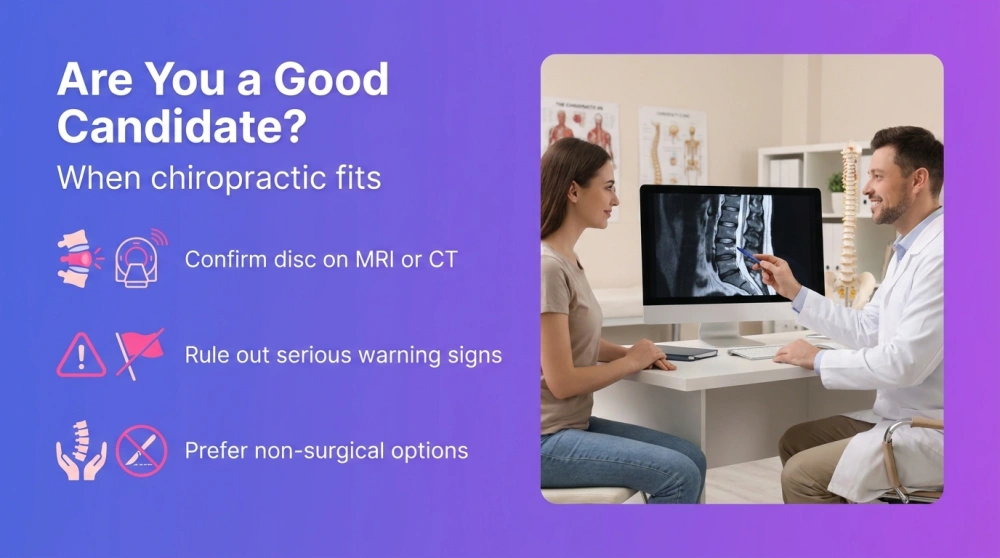
- Have a confirmed diagnosis via MRI or CT imaging showing disc herniation with or without nerve root involvement
- Are experiencing moderate to severe back pain or radiculopathy that has not progressed to cauda equina syndrome or severe neurological compromise
- Have been referred or cleared by a medical doctor for conservative care
- Do not have red-flag signs such as bowel or bladder dysfunction, progressive bilateral lower extremity weakness, or a known spinal infection or tumor
- Prefer to explore non-surgical options before committing to an invasive procedure
If you have already been seen by an orthopedic surgeon or neurosurgeon who recommends a trial of conservative care first, chiropractic is one of the most studied and clinically supported options available to you. A chiropractor who specializes in disc injuries will coordinate with your referring physician and can provide structured documentation of your progress to support ongoing clinical decision-making.
Are There Situations Where Chiropractic Is Not Appropriate for a Disc Injury?
Yes. Chiropractic manipulation is not indicated when a patient presents with cauda equina syndrome (a medical emergency involving loss of bladder or bowel control and bilateral leg weakness), severe progressive neurological deficits, evidence of spinal infection or malignancy, or significant spinal instability. A thorough pre-treatment examination is essential to identify these contraindications, and a qualified chiropractor will refer out when the clinical picture warrants it.
Frequently Asked Questions
Is chiropractic care safe for a herniated disc?
For appropriately screened patients without contraindications, chiropractic care is generally considered safe when provided by a licensed practitioner following a thorough assessment. Clinical guidelines from the North American Spine Society identify non-operative treatment, including spinal manipulation, as the recommended first-line approach for most patients with lumbar disc herniation and radiculopathy [1]. As with any healthcare intervention, risks and benefits should be discussed with your provider based on your individual clinical presentation.
How many chiropractic visits are typically needed for a herniated disc?
There is no universal answer because treatment duration depends on the severity of the herniation, the degree of neurological involvement, the patient’s overall health, and how their body responds to care. Published case data suggests that meaningful functional improvement can begin within the first few weeks of consistent treatment, with more complete recovery measured over a period of months [1]. A structured treatment plan with clear milestones and periodic reassessment is the standard of care.
Can chiropractic care help if I have already had back surgery?
This depends on the nature of the surgery, how long ago it was performed, and the current clinical presentation. Post-surgical patients may have adjacent-level disc involvement or other structural changes that require a modified approach. A chiropractor with experience treating post-surgical patients can evaluate your imaging and history to determine whether conservative care is appropriate for your specific situation.
What is the difference between a bulging disc and a herniated disc?
A bulging disc occurs when the disc extends outside its normal boundary symmetrically, without the inner nucleus pulposus breaking through the outer wall. A herniated disc involves a focal disruption of the outer ring, allowing disc material to protrude outward and potentially contact nerve tissue. In clinical research, different types of herniation have different spontaneous regression rates, with more severe forms such as disc extrusion and sequestration showing the highest rates of natural resolution over time [1].
What should I do if my pain gets worse during treatment?
Some patients experience temporary fluctuation in their symptoms during the early phase of conservative care, which can be a normal part of the body’s adaptation process. However, any significant worsening, particularly new or escalating weakness, numbness, or loss of bladder or bowel control, should be reported to your chiropractor and your referring physician immediately. These symptoms may indicate a change in the clinical picture that warrants urgent medical evaluation.
Does insurance cover chiropractic care for herniated discs in California?
Many insurance plans, including Medicare and a significant number of private health insurers, cover chiropractic services for spine-related conditions in California. Coverage details vary by plan, and pre-authorization may be required in some cases. It is advisable to contact your insurance provider directly and ask your chiropractic office to assist with benefits verification before beginning care.
About One & Only Chiropractic in Santa Ana, California
If you are searching for a herniated disc chiropractor in Santa Ana, One & Only Chiropractic offers a patient-centered, evidence-informed approach specifically suited to adults navigating complex disc injuries. Led by Dr. Azizi, the clinic has built its practice philosophy around the kind of care he would want for himself and his own family, including the use of non-surgical methods for conditions that once seemed to require surgery.
Dr. Azizi isn’t just credentialed on paper. He’s lived this. The diagnosis, the weighing of options, the choice to go the non-surgical route — he’s been through all of it himself, which kind of changes the whole feel of a consultation at One & Only Chiropractic. Nobody’s rushing to hand you a schedule. The team starts by actually listening, then walks through your imaging, and they’ll tell you straight what the evidence supports for your case. Or doesn’t.
The clinic sees folks from Santa Ana, Tustin, and the wider Orange County area. It’s branded as a wellness and injury clinic. Which, practically speaking, means care doesn’t just shut off the moment your acute pain fades. There’s a longer arc. Spinal health over time, mobility, quality of life. The team gets there through education, rehab exercises, and self-management tools you can actually use on your own.
What Makes the Approach at One & Only Chiropractic Different?
Several elements distinguish the experience at this clinic for patients with herniated disc injuries:
- Personalized care plans: No two disc injuries are the same, and treatment protocols are calibrated to each patient’s MRI findings, symptom pattern, functional goals, and response to care over time
- Direct access to the treating chiropractor: Patients work directly with Dr. Azizi rather than being rotated through support staff, which allows for more nuanced clinical decision-making and ongoing communication with referring physicians
- Multi-modal conservative care: The clinic integrates spinal manipulation, decompression techniques, soft tissue therapies, and rehabilitative exercise into a cohesive treatment strategy, aligned with evidence supporting combined non-pharmacological approaches [6]
- Collaboration with the referring medical team: For patients referred by orthopedic surgeons, neurologists, or primary care physicians, the team supports coordinated communication and documentation to ensure all providers share an accurate picture of clinical progress
- Scope-appropriate care: When a patient’s presentation indicates they need a level of care beyond what chiropractic can provide, appropriate referrals are made without hesitation
Whether you were just diagnosed or have been managing pain for months, we encourage you to schedule a consultation to explore whether non-surgical chiropractic care is a suitable option for your situation.
Ready to Explore Your Options?
Dr. Azizi resolved his own herniated disc without surgery. If you have a confirmed disc injury and want to understand what non-surgical chiropractic care may offer for your specific situation, we invite you to book a consultation.
Call One & Only Chiropractic: (949) 800-8525
Serving Santa Ana, Tustin, and surrounding Orange County communities.
References
- Chu ECP, Sabourdy E. Non-surgical Restoration of L3/L4 Disc Herniation. Cureus. 2023;15(6):e40941. doi:10.7759/cureus.40941 – Cureus Journal of Medical Science
- El Melhat AM, Youssef ASA, Zebdawi MR, et al. Non-surgical Approaches to the Management of Lumbar Disc Herniation Associated with Radiculopathy: A Narrative Review. Journal of Clinical Medicine. 2024;13(4):974. – MDPI
- Chen BL, Guo JB, Zhang HW, et al. Surgical versus non-operative treatment for lumbar disc herniation: a systematic review and meta-analysis. Clinical Rehabilitation. 2018;32(2):146-160. – SAGE Journals
- Murphy DR, Hurwitz EL, et al. A nonsurgical approach to the management of patients with lumbar radiculopathy secondary to herniated disk: a prospective observational cohort study with follow-up. Journal of Manipulative and Physiological Therapeutics. 2009;32(9):723-733. – JMPT
- Kumar L, Kare S, Kumar K, Naidu BN. Evaluating the efficacy of non-surgical treatment methods for lumbar disc herniation: a longitudinal cohort study. International Journal of Academic Medicine and Pharmacy. 2023;5(6):428-432. – Academic Med
- Kim D, Lee JY, Lee YJ, et al. Comparative effectiveness of non-pharmacological and pharmacological treatments for non-acute lumbar disc herniation: a multicenter, pragmatic study. Journal of Clinical Medicine. 2025;14(4):1204. – MDPI
- Simon J, Conliffe T, Kitei P. Non-operative management: An evidence-based approach. Seminars in Spine Surgery. 2016;28(1):11-17. – Elsevier
- Shi F, Wen H, Liu Y, et al. Efficacy of acupuncture combined with manipulation and other non-pharmacological interventions in the treatment of lumbar disc herniation. Frontiers in Medicine. 2025;11:1507115. – Frontiers
About the Author