Pregnancy Back Pain Relief: Safe Chiropractic Care for Santa Ana Moms-to-Be

- What should you know about pregnancy back pain relief in Santa Ana?
- How safe is prenatal chiropractic care during pregnancy?
- How can prenatal chiropractic care help with common pregnancy pains?
- What is the Webster Technique in Santa Ana and who may benefit?
- What is sciatica during pregnancy and how can we address it?
- How does pelvic alignment in pregnancy influence comfort and delivery preparation?
- Which pregnancy safe stretches and self care tips can reduce back pain?
- How should prenatal back care change across each trimester?
- When should you see a Santa Ana prenatal chiropractor and what happens at a visit?
- How do chiropractors coordinate with your obstetric team during pregnancy?
- How can posture, work setup, and sleep habits ease third trimester back pain?
- What California rules and professional standards guide prenatal chiropractic care?
- What questions should you ask before starting chiropractic care for pregnancy?
- What is included in a prenatal wellness package and how does scheduling work?
- Why choose OneAndOnlyChiro for prenatal chiropractic care in Santa Ana?
- References
What should you know about pregnancy back pain relief in Santa Ana?
Pregnancy changes your body in amazing ways, and it also asks a lot of your spine and pelvis. If you are feeling low back aches, hip tension, or pelvic pressure, you are not alone. Research suggests that more than half of pregnant people experience low back pain at some point during pregnancy, often due to a combination of hormonal changes, joint laxity, postural shifts, and increased load on spinal and pelvic structures [1] [14]. The goal of prenatal chiropractic care is to support comfort, mobility, and daily function with techniques that are gentle and tailored to pregnancy. When used as part of a comprehensive prenatal wellness plan, non drug strategies such as movement education, posture coaching, and manual therapy can help reduce pain and improve quality of life [2] [3] [4].
In Santa Ana and across Orange County, many expectant parents look for care that is both effective and respectful of the unique needs of pregnancy. That includes attention to back pain relief, sciatica during pregnancy, pelvic girdle pain, round ligament pain, and third trimester back pain. We focus on safe chiropractic during pregnancy, prenatal wellness education, and pregnancy safe stretches that fit your daily routine. If you prefer a supportive, step by step approach, you will find that prenatal chiropractic care can integrate smoothly with your obstetric or midwifery plan. For any new or worsening pain, or if pain limits your daily tasks, it is wise to talk with your obstetric provider and a qualified prenatal chiropractor for individualized guidance [1] [4].
How safe is prenatal chiropractic care during pregnancy?

Safety is always the starting point. Prenatal chiropractic care uses positioning, techniques, and equipment that accommodate a growing belly and protect both the patient and the developing baby. A qualified chiropractor trained in prenatal methods avoids high force approaches and uses pregnancy specific tables and cushions. Available evidence supports the use of exercise, education, and manual therapy for pregnancy related back and pelvic pain, with studies reporting improvements in pain and function when care is delivered by trained clinicians as part of a multimodal plan [2] [3] [4].
Chiropractors also emphasize non drug options that align with guidance from obstetric groups. Because certain medications are restricted or used cautiously during pregnancy, many people value conservative options for pain management [5]. Care decisions are individualized, and your chiropractor should screen for red flags, coordinate with your obstetric provider, and explain benefits and potential risks so you can make informed choices.
Imaging is rarely needed for routine pregnancy back pain. If imaging is considered, obstetric guidelines recommend choosing modalities and shielding strategies that minimize fetal radiation exposure, and using imaging only when benefits outweigh risks [8]. Most prenatal chiropractic assessments rely on a detailed history and a gentle physical exam focused on mobility, posture, and functional movement, which limits the need for imaging.
How can prenatal chiropractic care help with common pregnancy pains?
During pregnancy, various parts of your body undergo significant changes. Here, we outline some typical worries and suggestions for a prenatal chiropractic plan that is centered on your goals and trimesters. Remember that these strategies should always be discussed with your healthcare provider before starting any new wellness approach. First Trimester: – Low Back Pain: With the increasing weight of the growing baby, lower back pain is one of the most common issues in this trimester. Your chiropractor may suggest exercises to strengthen your core muscles and techniques such as chiropractic adjustments to alleviate pressure from the spine and pelvis area. – Fatigue: It’s quite normal to feel extremely tired during pregnancy, especially in the first trimester when your body is working hard. Your prenatal chiropractor might offer nutritional guidance or relaxation techniques to help you manage this fatigue more effectively. Second Trimester: – Heartburn and Digestion Problems: As your baby continues to grow, the pressure on your internal organs can lead to heartburn and digestive issues. A prenatal chiropractor might suggest specific adjustments or gentle stretches to aid digestion and promote proper organ function. – Preparing for Labor and Delivery: Your body is beginning to prepare itself for labor, so this is a great time to work on pelvic alignment and overall comfort. Your prenatal chiropractor could help you with techniques that focus on the pelvis, lower back, and sacrum to ensure your body is as ready as possible for birth. Third Trimester: – Discomfort in the Lower Back and Pelvis: As your baby continues to grow, these areas can become more uncomfortable. Your prenatal chiropractor may suggest specialized techniques like Webster Technique or Craniosacral Therapy to help alleviate pain and ensure optimal positioning for labor. – Preparation for Birth: By the third trimester, most women are eagerly waiting for their baby’s arrival. Your prenatal chiropractor might offer techniques specifically designed for labor readiness, such as birthing positions or exercises to aid in a more comfortable birth experience. Remember, always consult with your healthcare provider before starting any new wellness approach during pregnancy.
What patterns of pain are most common during pregnancy and why?
Common presentations include low back pain, pelvic girdle pain at the sacroiliac joints, pubic symphysis discomfort, rib and mid back tightness from posture changes, and round ligament pain in the lower abdomen as ligaments adapt to a growing uterus [1] [6] [7]. Hormonal shifts increase joint mobility, which can be helpful for delivery but may add strain to stabilizing muscles and connective tissues. As your center of gravity moves forward, spinal curves and gait patterns adapt, which can stress the low back and hips [1].
Which conservative treatments are supported by research for pregnancy related pain?
- Exercise and movement education can reduce pain and improve function when guided appropriately for each trimester [2] [3] [4].
- Manual therapy including joint mobilization and soft tissue techniques may offer relief for pelvic girdle pain and low back pain when delivered by trained clinicians [2].
- Pelvic support belts can reduce strain in some cases of pelvic girdle pain by improving stability during walking and standing [2] [7].
- Posture and body mechanics coaching helps reduce repetitive strain at work and home [1].
- Pelvic floor physical therapy supports core and pelvic stability, breath mechanics, and preparation for delivery and postpartum recovery [10].
Why is a personalized plan important for pregnancy back pain relief?
Your fitness plan should be tailored to your health history, pregnancy stage, level of activity, and what matters most to you daily. Everyone’s needs are different; some people benefit from a focus on mobility and posture, while others find stability and breath work more helpful. A customized plan helps prevent overloading loose joints while keeping you active in ways that promote circulation, mood, and sleep quality according to guidelines for pregnant women [3] [4].
What is the Webster Technique in Santa Ana and who may benefit?
The Webster Technique is a specific chiropractic analysis and adjustment approach that focuses on pelvic balance and sacral function. The goal is to reduce biomechanical stress in the pelvis and supporting soft tissues so that motion is more symmetrical and comfortable for the pregnant person [13]. While the technique is often discussed in relation to overall pelvic balance, care should avoid claims that it treats fetal position directly. The focus remains on the pregnant patient and on improving comfort, movement, and function [13].
Many expectant parents in Santa Ana seek information about Webster Technique options to address pelvic alignment issues during pregnancy. If you experience sacroiliac discomfort, pubic symphysis pain, or feel imbalanced while walking, you might benefit from an evaluation. Your chiropractor will assess for any contraindications, explain expected sensations, and make sure your positioning is comfortable with the use of pregnancy supports. It’s crucial to share any obstetric concerns, so your care can be coordinated with your medical team.
What is sciatica during pregnancy and how can we address it?
Sciatica describes radiating pain or tingling that travels from the low back or buttock down the leg along the path of the sciatic nerve. During pregnancy, sciatica like symptoms can arise from a combination of postural changes, muscular tension, and joint mechanics rather than a classic disc herniation, which is less common in this period [9]. Assessment focuses on finding which movements aggravate symptoms and which ease them.
- Targeted mobility and stability exercises can reduce nerve irritation by improving space and support around the sciatic pathway [2] [4] [9].
- Gentle manual therapy can address tight gluteal, piriformis, and low back tissues that contribute to symptoms [2].
- Positioning strategies for sleep and daily tasks reduce strain on sensitive structures [1].
If you experience progressively worsening weakness, problems controlling your bladder or bowels, persistent and intense pain, or a numb sensation in your groin, seek immediate medical attention. Make sure to have your chiropractor refer you quickly if any of these red flags arise.
How does pelvic alignment in pregnancy influence comfort and delivery preparation?
Pelvic alignment refers to the relationship between the sacrum, ilium bones, and pubic symphysis when a person is standing, walking, or engaging in daily activities. When these joints function properly, muscles work together efficiently, providing more stability during movement. However, during pregnancy, increased ligament laxity can lead to minor misalignments that cause local irritation and pain. Studies show that education, exercise, and manual therapy can help address pelvic girdle pain and improve mobility during pregnancy [2] [7] .
- Movement balance uses gentle hip and core activation to support the pelvis during walking, stairs, and lifting.
- Symmetry checks spot side to side differences in stride length, foot turnout, and standing posture that may drive pain.
- Pelvic support belts may help temporarily for standing and walking tasks when instability is a driver of pain [2] [7].
Which pregnancy safe stretches and self care tips can reduce back pain?
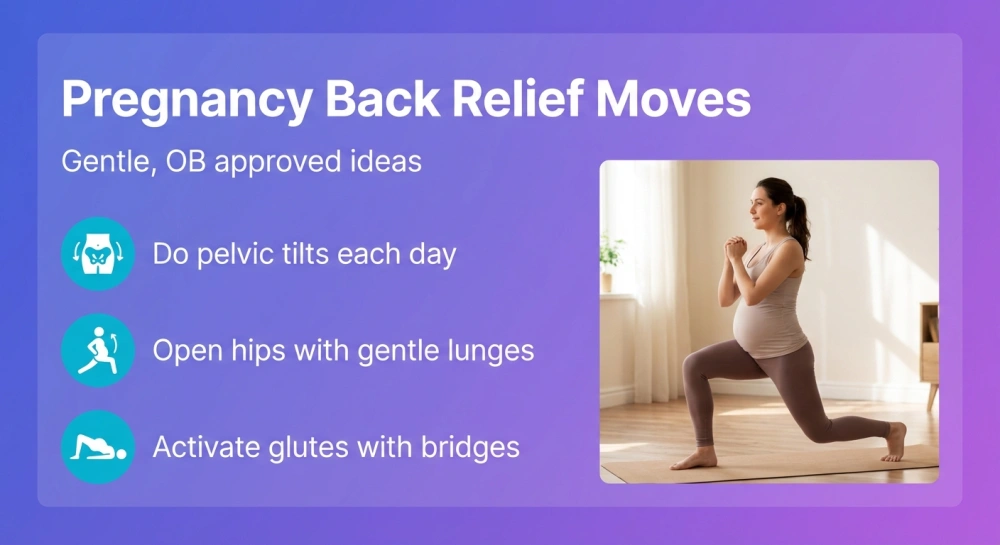
Always consult your obstetric provider before starting any new physical activities during pregnancy, especially if you have any medical or pregnancy complications. Once given the go-ahead, use these gentle strategies guided by obstetric and public health recommendations that emphasize staying active with appropriate modifications for pregnancy [3] [4].
What simple daily moves can support your back and hips?
- Pelvic tilts while standing against a wall or on hands and knees help reduce low back stiffness and engage deep core support.
- Hip flexor release with a short gentle lunge can relieve front hip tightness that pulls the pelvis forward.
- Glute bridges with a short hold build posterior chain support without heavy strain.
- Side lying clam activates the lateral hip to support pelvic stability during walking.
- Thoracic rotation in a side lying open book pattern helps ease mid back tension from postural changes.
How can you reduce round ligament pain safely?
Round ligament pain often feels like sharp twinges in the lower abdomen or groin with sudden movements. Slowing transitions, supporting the belly with your hands during a cough or sneeze, and using gentle hip flexor and adductor stretching can help [6]. Many find benefit from modifying exercise intensity and using gradual warm ups before activity [6].
Which daily habits protect your back between visits?
- Use the exhale to lift when getting out of bed or picking up items so that core and pelvic floor engage before the effort.
- Roll to your side before sitting up to reduce strain on the abdomen and low back.
- Alternate positions every 30 to 45 minutes by changing from sitting to standing or walking to prevent stiffness.
- Hydrate and walk within comfort levels to support circulation and tissue health [3] [4].
How should prenatal back care change across each trimester?
What makes care unique in the first trimester?
In the initial stages, emphasis is placed on education, gentle movements, and stress management. If you feel exhausted or experience nausea, taking short movement breaks and focusing on breathwork might be more suitable. For those with a history of back pain, a proactive mobility and stability plan can minimize flare-ups as physical activity transitions [4] .
What changes in the second trimester?
As the belly grows and energy often improves, we adjust positioning on the table for comfort and continue with mobility and stability work. Many people begin to notice pelvic girdle strain or early sciatica like symptoms. Gentle manual therapy, posture coaching, and personalized exercise plans often help at this stage [2] [4].
How do we adapt care in the third trimester?
Third trimester back pain can be more intense as load increases and sleep becomes harder. Sessions may focus on comfort, mobility, body mechanics for birth preparation, and strategies for sleep and daily tasks. Pelvic balance approaches, including Webster analysis and gentle adjustments where appropriate, aim to reduce asymmetries and improve movement tolerance [13].
When should you see a Santa Ana prenatal chiropractor and what happens at a visit?
Consider a visit if pain interrupts sleep or daily tasks, if you feel unsteady in the pelvis when walking, or if sciatica like pain persists. At the initial appointment, you can expect a careful history, pregnancy sensitive orthopedic and movement testing, and a clear review of findings and options. A visit may include gentle joint mobilization, soft tissue work, guided breath and movement drills, and home strategies to reinforce relief. You should receive clear explanations, consent for each part of care, and a plan that coordinates with your obstetric team.
How do you prepare for a first appointment?
- Bring your obstetric history including any restrictions from your medical provider.
- Wear flexible clothing that allows movement and comfortable positioning with pregnancy supports.
- List your goals such as sleeping through the night, walking without hip pain, or lifting your toddler comfortably.
How do chiropractors coordinate with your obstetric team during pregnancy?
Teamwork supports safety and better outcomes. Obstetric groups encourage staying active with appropriate modifications and promote non drug measures for pain when possible [3] [4]. Your chiropractor should communicate with your obstetrician, midwife, or primary care provider when helpful, share findings that affect activity recommendations, and refer out if red flags arise. When pelvic floor physical therapy is indicated, a referral adds meaningful support for stability, comfort, and preparation for delivery and postpartum recovery [10].
How can posture, work setup, and sleep habits ease third trimester back pain?
What posture cues help during daily tasks?
- Stack head over ribs over pelvis to reduce low back sway and rib flare that can tighten the mid back and pelvic floor.
- Keep photos and screens at eye height to avoid forward head posture that strains the neck and upper back.
- Use foot support when sitting so hips and knees are at comfortable angles with light core engagement.
How can you improve your workstation and lifting habits?
- Alternate between sitting and standing to break up pressure on the low back and hips.
- Lift close to your body with a strong exhale and avoid twisting while carrying.
- Use a rolling bag for heavy items to reduce strain.
What sleep positions reduce strain late in pregnancy?
- Side lying with pillows between knees and under the belly supports the pelvis and low back [1].
- Switch sides periodically to avoid pressure points.
- Practice a gentle wind down with breath work to relax postural muscles before bed.
What California rules and professional standards guide prenatal chiropractic care?
In California, chiropractic is regulated by the California Board of Chiropractic Examiners. The scope of practice includes the diagnosis, treatment, and prevention of conditions of the neuromusculoskeletal system using chiropractic methods. Chiropractors must adhere to state statutes and regulations, maintain patient records, obtain informed consent, and practice within their training and licensing [11] [12]. For pregnancy related care, clinicians further follow obstetric guidance related to physical activity, imaging, and medication considerations, and coordinate as needed with the obstetric team [3] [4] [8] [5].
Chiropractors should avoid imaging unless clinically necessary, use positioning and equipment compatible with pregnancy, and document indications, risks, benefits, and alternatives for recommended care. These steps promote safety and transparency.
What questions should you ask before starting chiropractic care for pregnancy?
- What prenatal training do you have and which approaches do you use for low back and pelvic girdle pain?
- How do you modify care for each trimester and for patients with specific medical considerations?
- How will you coordinate with my obstetric provider and refer if needed?
- What outcomes should I expect and how will we measure progress that matters to me?
- Which home strategies will support me between visits and how often should I perform them?
What is included in a prenatal wellness package and how does scheduling work?
A thoughtful prenatal wellness package offers structure with flexibility for your changing needs. While packages vary, many include an initial comprehensive assessment, a series of follow up visits aligned with your trimester, and education resources so you can practice strategies at home. The focus is on pregnancy back pain relief, sciatica during pregnancy solutions, and pelvic alignment in pregnancy, with clear guidance on how to modify movement as your body changes.
- Initial prenatal assessment includes history, gentle exam, movement testing, risk screening, and personalized goal setting.
- Trimester specific sessions adjust techniques and education to match first, second, and third trimester needs.
- Home plan resources with pregnancy safe stretches, posture cues, and activity tips consistent with obstetric guidance [3] [4].
- Coordination with your medical team as needed for safe, consistent messaging and referrals.
Scheduling usually starts with weekly or biweekly visits during periods of higher discomfort, then tapers as pain and function improve. Your plan should remain flexible to adjust for changes in symptoms, activity, and life demands. If you are looking for prenatal back pain treatment options in Santa Ana, it is reasonable to book early so you have time to build supportive habits and update your plan as you approach delivery.
If you have questions about safe chiropractic during pregnancy, or you are searching for a chiropractor for pregnancy in the Santa Ana area, we welcome your call. You can request an appointment online or call to discuss whether an evaluation fits your goals. To speak with a team member now, call (949) 800 8525 and ask to Schedule Your Prenatal Wellness Assessment.
Why choose OneAndOnlyChiro for prenatal chiropractic care in Santa Ana?
At OneAndOnlyChiro, we support expectant parents in Santa Ana, CA and throughout Orange County with thoughtful, evidence based prenatal chiropractic care. Our team focuses on comfort, mobility, and education so you feel confident navigating each trimester. We integrate exercise, manual therapy, and posture coaching that align with current obstetric activity guidance and public health recommendations [3] [4]. When indicated, we incorporate pelvic balance approaches, including Webster analysis and gentle adjustments, to address asymmetries that can drive pain [13].
How do our services help you understand the next steps?
- Clear assessment explains what is driving your pain in terms you can use in daily life.
- Personalized plan outlines visits and home strategies by trimester, with goals tied to sleep, walking, work, and family activities.
- Coordinated care connects with your obstetric team and pelvic floor physical therapy when that collaboration adds value [10].
Where do we operate and whom do we serve?
- Local access for Santa Ana and surrounding Orange County communities.
- Flexible scheduling designed around your trimester and changing energy levels.
What is our unique approach or methodology?
- Gentle techniques adapted to pregnancy with purpose built tables and supports.
- Movement first model that pairs hands on care with targeted exercises and body mechanics coaching.
- Education centered visits so you leave with simple, actionable steps for home and work.
Do we use any proprietary tools or processes?
- Pregnancy comfort system with adjustable cushions and positioning protocols for each trimester.
- Progress check templates that track your personal goals such as stairs tolerance, sleep duration, or sitting comfort.
What leadership, innovation, and experience do we bring?
- Dedicated prenatal training in assessment and gentle adjustment methods, including Webster analysis.
- Interdisciplinary collaboration with local obstetric and pelvic health professionals for comprehensive support.
How do we provide personalized service and direct access to qualified professionals?
- One to one sessions with a licensed chiropractor who adjusts your plan based on how you feel each visit.
- Real time support for questions between visits with clear follow up instructions.
Can we share past results or typical outcomes responsibly?
- Client stories often include improved sleep comfort, easier walking, and better tolerance for daily tasks. Individual results vary and depend on many factors.
- Measurable change is tracked with simple goal based metrics like minutes of comfortable walking or number of position changes at work without pain spikes.
What areas do we serve and what is our experience?
- Service areas include Santa Ana and greater Orange County.
- Combined experience across prenatal, pediatric, and general musculoskeletal care informs balanced, adaptable planning.
What benefits do clients commonly report?
- Reduced back and pelvic discomfort that supports daily function.
- Improved body awareness and confidence with movement.
- Better sleep positioning and smoother work days with practical posture tools.
If you are ready to explore pregnancy back pain relief with a Santa Ana prenatal chiropractor, call (949) 800 8525 to Schedule Your Prenatal Wellness Assessment. We will listen, create a plan that fits your life, and coordinate with your medical team so you feel supported every step of the way.
References
- Back Pain During Pregnancy – American College of Obstetricians and Gynecologists
- Interventions for preventing and treating pelvic and back pain in pregnancy – Cochrane Database of Systematic Reviews
- Physical Activity During Pregnancy – Centers for Disease Control and Prevention
- Physical Activity and Exercise During Pregnancy and the Postpartum Period – ACOG Committee Opinion
- FDA recommends avoiding use of NSAIDs in pregnancy at 20 weeks or later – U.S. Food and Drug Administration
- Round Ligament Pain – MedlinePlus
- Pelvic Girdle Pain and Pregnancy – Royal College of Obstetricians and Gynaecologists
- Guidelines for Diagnostic Imaging During Pregnancy and Lactation – ACOG Committee Opinion
- Sciatica – National Institute of Neurological Disorders and Stroke
- Pregnancy and Postpartum Conditions – APTA Pelvic Health
- Scope of Practice – California Board of Chiropractic Examiners
- Board Rules and Regulations – California Board of Chiropractic Examiners
- Webster Technique – International Chiropractic Pediatric Association
- Prevalence of low back pain in pregnancy – PubMed
About the Author