Insurance Coverage Decoder: What Your Auto/Health Insurance Actually Covers for Chiropractic Care
- What should you know before using insurance for chiropractic care?
- Does health insurance cover chiropractic care?
- What do auto insurance policies cover after a car accident?
- How do California rules affect chiropractic claims?
- What out of pocket costs should you expect?
- How can you check benefits before your first visit?
- What mistakes cause denials or billing surprises?
- Which common insurance myths should you ignore?
- When should you see a professional after a crash or sudden pain?
- How does OneAndOnlyChiro support patients in Santa Ana and nearby areas?
- References
What should you know before using insurance for chiropractic care?
If you are trying to understand chiropractic insurance coverage, you are not alone. Many drivers and families in Santa Ana want to know a simple thing before scheduling care: what will my policy actually pay for, and what will I have to pay myself? The answer depends on several moving parts, including the type of insurance involved, the reason for treatment, your plan rules, and how the claim is documented.
In general, coverage usually falls into two broad categories. The first is health insurance chiropractic care, which may apply when you seek treatment for back pain, neck pain, headaches, or other musculoskeletal issues through your regular medical benefits. The second is auto insurance chiropractic care, which may apply when symptoms are related to a motor vehicle collision and payment is tied to auto policy benefits or an injury claim. Those are very different systems, and mixing them up can create delays and confusion.
It also helps to know that chiropractic benefits are often governed by plan language such as medical necessity, referral requirements, visit limits, network participation, deductibles, copays, coinsurance, prior authorization, and documentation standards. Medicare, for example, covers manual manipulation of the spine to correct a subluxation under limited circumstances, but it does not broadly cover every chiropractic service[1]. Private plans may offer broader benefits, but the details vary by insurer and employer plan.
After a collision, coverage questions become even more fact specific. California is not a no fault state, so many claims involve fault based liability insurance rather than a broad no fault personal injury protection system used in some other states. California drivers may also carry Med Pay, which can help pay certain medical expenses regardless of fault if it is part of the policy[2]. That distinction matters because people often search for personal injury chiropractic claims or whiplash treatment coverage without realizing that the path to payment can differ substantially from one policy to another.
Another important point is timing. The National Highway Traffic Safety Administration reports that in 2022 there were more than 2.38 million people injured in motor vehicle traffic crashes in the United States[3]. Many crash related injuries, including neck strain and soft tissue complaints, may not feel severe at the scene. If you have pain, stiffness, headaches, or limited mobility after a crash, it is wise to seek an appropriate professional evaluation promptly so your symptoms are documented and you can better understand your next steps.
For readers looking for chiropractic benefits explained in plain language, the most practical approach is to think in layers:
- Reason for care: Is this related to everyday pain, work strain, sports activity, or a car accident?
- Type of policy: Are you using employer health insurance, an individual health plan, Medicare, Med Pay, or a third party auto liability claim?
- Plan rules: Does the plan require in network care, referrals, or authorization?
- Your share of cost: Have you met your deductible, and what copay or coinsurance applies?
- Records and coding: Was the visit documented and billed in a way that matches the policy rules?
These basics can make insurance for chiropractic visits feel less mysterious and help you ask better questions before treatment begins.
Does health insurance cover chiropractic care?
Often, yes, but not always in the same way from one plan to the next. Many employer sponsored and individual health plans include some level of chiropractic coverage for evaluation and treatment of neuromusculoskeletal conditions. At the same time, there may be restrictions on the number of visits, the services covered during each visit, and the providers you are allowed to see. If you are in Santa Ana and trying to budget for care, it is important not to assume your friend’s plan works like yours.
The Centers for Medicare and Medicaid Services explains that Medicare Part B covers manual manipulation of the spine when medically necessary to correct a subluxation, but does not cover other services or tests ordered by a chiropractor, including X rays ordered by the chiropractor, massage therapy, or maintenance therapy[1]. That narrow Medicare rule is a useful reminder that even when chiropractic care is covered, not every component of a visit may be reimbursable.
For commercial health plans, here are common variables that affect payment:
- Network status: In network providers generally have negotiated rates, while out of network care may cost more or may not be covered.
- Referral rules: Some plans require a referral from a primary care physician, especially in HMO style arrangements.
- Prior authorization: Some plans ask for authorization before a certain number of visits or before specific services.
- Visit limits: Plans may cap the number of chiropractic visits per year or per condition.
- Medical necessity review: The plan may require records showing symptoms, functional limits, progress, and a treatment plan.
- Cost sharing: Deductibles, copays, and coinsurance can significantly affect out-of-pocket chiropractic costs.
Health plans also distinguish between active treatment and maintenance care. Active treatment is generally tied to a diagnosed problem with documented functional impairment and measurable goals. Maintenance care, which is often described as ongoing care intended to sustain current status or prevent future problems without evidence of a new or worsening condition, is less likely to be covered. This distinction appears frequently in policy language and is one of the most common reasons patients are surprised by balances.
If you are comparing plans, ask whether your benefits cover spinal manipulation only or whether they also include related services that may be billed at the same visit. Even when a visit is covered, parts of the visit may apply differently to your deductible or coinsurance.
From a budgeting standpoint, the Kaiser Family Foundation reports that average annual premiums and worker contributions for employer sponsored coverage remain substantial, and deductibles continue to be a major factor in what patients actually pay when they use care[4]. In everyday terms, that means a service can be covered by the plan but still require meaningful payment from you if your deductible has not been met.
For people searching does insurance cover chiropractor, the most accurate answer is this: many health plans do cover some chiropractic services, but coverage is conditional. It depends on your exact policy, your diagnosis, whether the care is considered medically necessary, and whether the provider meets the plan’s network and documentation rules.
What do auto insurance policies cover after a car accident?
Auto insurance chiropractic care can be more confusing than regular health insurance because several sources of payment may be involved at the same time. In California, drivers commonly rely on one or more of the following: Med Pay under their own auto policy if they purchased it, their health insurance, and a third party claim against the at fault driver’s liability insurance. Which path applies depends on the facts of the collision and the coverage that exists.
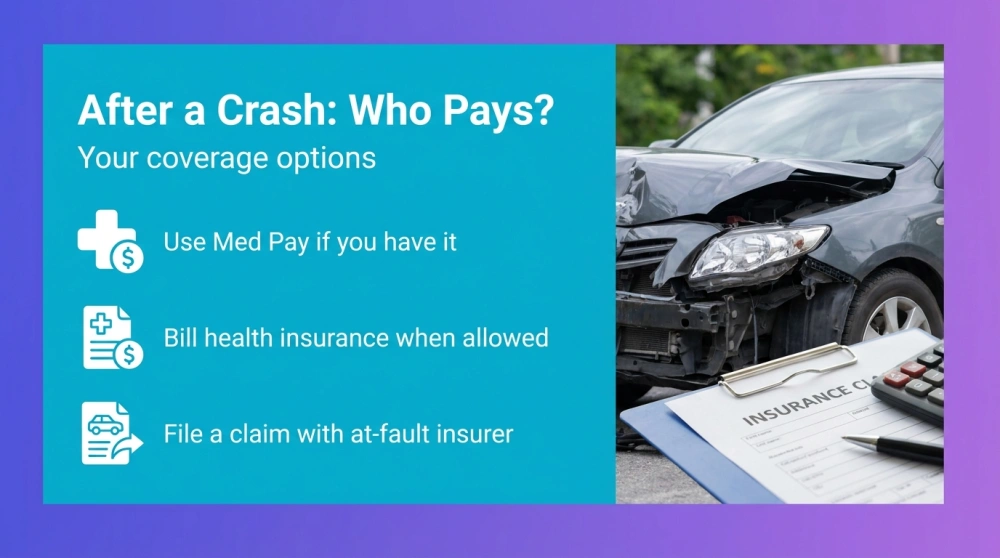
The California Department of Insurance explains that Medical Payments Coverage, often called Med Pay, is optional coverage that can help pay reasonable medical expenses for you and your passengers after an auto accident, regardless of who caused it[2]. Not every driver buys it, and policy limits can vary. If you do have Med Pay, it may help with early bills while fault issues are being investigated.
Liability claims are different. If another driver caused the crash, their bodily injury liability coverage may be the source of payment through a claim or settlement. In that setting, providers may or may not bill directly through the claim process, and treatment records often matter greatly because the insurer will evaluate whether the care was related to the collision, whether it was reasonable, and whether the duration and frequency were supported by the documentation.
Common questions drivers ask after a collision include:
- Will auto insurance pay for a car accident chiropractor? It may, depending on fault, available coverage, and the billing route used.
- Does whiplash treatment coverage exist under auto insurance? Potentially yes, but the source of payment may be Med Pay, health insurance, or the at fault driver’s liability coverage rather than a single automatic benefit.
- Can I use health insurance instead? Sometimes yes, though coordination rules may apply and your insurer may seek reimbursement in some situations.
- Do I need a police report? It is not always required for treatment, but documentation related to the collision often helps support the claim.
- Will I owe anything out of pocket? Possibly yes, especially if there are deductibles, coinsurance, policy limits, or unresolved liability issues.
Whiplash and related neck injuries are common after crashes. The National Institute of Neurological Disorders and Stroke describes whiplash as a neck injury caused by forceful, rapid back and forth movement of the neck, often associated with rear end motor vehicle collisions[5]. Symptoms can include neck pain, stiffness, reduced range of motion, headache, and sometimes symptoms that extend into the shoulders or upper back. Because symptoms can change over time, timely assessment matters.
One area of confusion is that auto carriers and health plans may not evaluate the same records in the same way. A health insurer is usually looking at plan terms and medical necessity. An auto insurer handling a liability claim may focus on causation, comparative fault, policy limits, and whether the treatment appears accident related and reasonable. That is why organized records, consistent symptom reporting, and prompt evaluation are often important in personal injury chiropractic claims.
If your collision happened near Santa Ana, keep in mind that California traffic volume is high. The California Office of Traffic Safety reports thousands of annual injury and fatal crashes across the state and tracks local crash data by community[6]. In practical terms, that means crash related care is a routine need for many drivers, but each claim still turns on the details of the policy and the facts of the event.
How do California rules affect chiropractic claims?
California law shapes both who can provide chiropractic services and how certain claims are evaluated. First, chiropractors in California are licensed through the California Board of Chiropractic Examiners[7]. If you are verifying a provider, checking licensure is a sensible first step.
Second, California’s fault based auto system means there is no broad statewide no fault personal injury protection requirement like in some states. That affects the way many accident related treatment bills are handled. Some patients use Med Pay if available, some use health insurance, and some pursue reimbursement through a liability claim. This is one reason people can hear very different stories from friends in other states and assume the same rules apply in California when they do not.
Third, if a claim becomes disputed, record quality matters. Insurers may review whether the history of present illness, diagnosis, treatment plan, progress notes, and discharge or reassessment documents support the billed services and the connection to the crash. That does not mean every claim becomes a legal fight, but it does mean clear documentation is valuable from the beginning.
California consumers should also know that network and billing protections can depend on the type of insurance involved. For health insurance claims, plan documents and provider contracts play a major role in what is allowed. For auto related claims, policy language and fault investigation can matter just as much. If you are unsure which coverage should be billed first, ask for a detailed benefits review and billing explanation in writing if possible.
For readers searching for a Santa Ana chiropractor after a crash, the local point is straightforward: seek a licensed professional, confirm what type of insurance pathway applies, and ask how your records and billing will be handled before treatment starts. That can help reduce later surprises.
What out of pocket costs should you expect?
Out-of-pocket chiropractic costs depend on the insurance path, the provider’s network status, your deductible, and what services are actually covered. Even strong insurance can leave you with expenses, so it is wise to ask for a realistic estimate before your first appointment.
Here are common categories that affect your total cost:
- Deductible: The amount you pay before many health plans begin sharing costs.
- Copay: A fixed amount due at each covered visit under some plans.
- Coinsurance: A percentage of the allowed amount that you pay after the deductible.
- Noncovered services: Services excluded by the plan can be billed directly to you.
- Out of network charges: These may be higher and can include balance billing depending on the situation.
- Policy limits: Auto coverage such as Med Pay only pays up to the selected limit.
- Claim disputes: If an auto carrier disputes causation or reasonableness, payment may be delayed or reduced.
This is one reason insurance for chiropractic visits can feel frustrating. Covered does not always mean paid in full. For example, if your health plan says chiropractic care is covered subject to deductible and coinsurance, you may still owe the full contracted rate until the deductible is met. Likewise, if you are using auto benefits with a low Med Pay limit, early payments may stop once that amount is exhausted.
If you are comparing clinics, ask specific questions:
- Can you verify my benefits before I start?
- Are you in network with my plan?
- What services during the visit are usually billable to insurance?
- What services are commonly not covered?
- If this is a car crash claim, what billing route do you use first?
- Can I receive a written estimate of likely patient responsibility?
For many drivers, these questions matter as much as the treatment plan itself. Financial clarity helps you make decisions without guessing.
How can you check benefits before your first visit?
Before your first appointment, it is reasonable to ask for a benefits check. This is not a guarantee of payment, but it can clarify the likely rules and costs. A thorough verification usually involves both your insurer and the provider’s office.

Here is a practical step by step process you can follow:
- Call the number on your insurance card: Ask whether chiropractic services are covered, whether a referral is needed, whether prior authorization applies, and what your deductible, copay, and coinsurance are.
- Confirm network status: Make sure the clinic is in network if your plan relies on network participation.
- Ask about visit limits: Some plans cap the number of visits each year or per episode of care.
- Clarify accident related billing: If your pain followed a car crash, ask whether your health plan has coordination of benefits rules for auto accidents.
- Ask the clinic to verify benefits too: Offices often know which questions matter most for accurate estimates.
- Request written notes or a benefits summary: Keep the representative’s name, date, and call reference if one is provided.
If your symptoms began after a collision, gather the basics before you call:
- Date of accident: Insurers often ask for it.
- Claim number: Helpful if one has already been created.
- Auto policy information: Needed if Med Pay may apply.
- Health insurance card: Important in case health benefits are used.
- Any emergency or urgent care records: These may support continuity of care.
This process can be especially useful for families looking for chiropractic insurance coverage in Santa Ana because it turns a vague question into a checklist. Instead of asking only does insurance cover chiropractor, you can ask how many visits are covered, what documents are needed, and what costs may still apply to you.
What mistakes cause denials or billing surprises?
Many denials are not caused by bad faith or a lack of coverage. They happen because the right information was missing, the wrong insurance was billed first, or the policy rules were not understood up front. Knowing the common problems can help you avoid unnecessary stress.
- Assuming all plans cover the same services: Coverage varies widely, even within the same insurer.
- Ignoring referral or authorization requirements: Missing these steps can lead to denied claims.
- Using an out of network provider without understanding costs: This can sharply increase patient responsibility.
- Failing to mention the visit is related to a car accident: Accident related billing often follows different rules.
- Waiting too long to seek evaluation after a collision: Gaps in care can complicate causation arguments.
- Not reviewing explanations of benefits: Errors can go unnoticed if you never compare the EOB to the bill.
- Expecting maintenance care to be covered the same as active treatment: Many plans draw a clear distinction.
Documentation issues are also common. If the records do not clearly show symptoms, findings, diagnosis, functional impact, and progress, an insurer may question whether continued care was medically necessary. That is one reason detailed evaluations and regular reassessments are important.
For accident cases, another pitfall is assuming the at fault driver’s insurer will automatically pay bills as they come in. Sometimes they do not. In many situations, treatment is provided while the liability claim is still under review. That timing issue is one reason people should ask early how billing will work and whether they may have temporary out of pocket exposure while the claim is pending.
Which common insurance myths should you ignore?
Insurance confusion often grows because people repeat rules that are only partly true. Clearing up a few myths can make your decisions easier.
Is every chiropractic visit covered if my plan mentions chiropractic benefits?
No. A plan can include chiropractic benefits and still limit covered services, require authorization, or exclude maintenance care. The words covered benefit do not automatically mean every visit or every service will be reimbursed.
Does auto insurance always pay first after a crash?
No. In California, the answer depends on your available coverages and the claim setup. Med Pay may pay early if you purchased it, but many people also use health insurance or pursue a liability claim against the other driver.
Do I need severe pain at the scene for treatment to be related to the crash?
No. Some symptoms may appear or worsen after the initial event. The key issue is whether your condition is properly evaluated and documented by an appropriate professional.
Will the insurer tell me everything I need to know automatically?
Not always. You may need to ask specific questions about referrals, deductibles, visit limits, network status, and accident coordination rules.
Is the cheapest policy always enough for accident injuries?
Not necessarily. Lower premiums can come with lower optional benefits or higher cost sharing. Understanding your own policy before an accident can be valuable.
When should you see a professional after a crash or sudden pain?
If you have neck pain, back pain, headaches, numbness, weakness, dizziness, reduced range of motion, or symptoms that interfere with work, driving, sleep, or daily activity, seek an appropriate evaluation. This is particularly important after a motor vehicle collision, even if the vehicle damage seemed limited. Symptoms and tissue irritation do not always match what you expected from the scene.
The National Library of Medicine and other research sources have long documented the prevalence and impact of spinal pain conditions in the general population, with low back pain remaining one of the leading causes of disability worldwide[8]. That broader context matters because some drivers already have mild underlying pain before a crash, and an accident can aggravate it. Clear, timely evaluation can help distinguish baseline issues from new symptoms.
Red flag symptoms need prompt medical attention. These can include severe weakness, loss of bladder or bowel control, chest pain, shortness of breath, major trauma, fever with spinal pain, or rapidly worsening neurologic symptoms. Chiropractic care is one part of musculoskeletal care, but it is not a substitute for emergency or specialty evaluation when serious symptoms are present.
If you are unsure what your policy covers, do not delay asking. A timely benefits review and a professional evaluation can give you a clearer picture of both your health needs and your likely financial responsibility.
How does OneAndOnlyChiro support patients in Santa Ana and nearby areas?
OneAndOnlyChiro is a wellness and injury clinic serving patients in and around Santa Ana, California. Our role in a topic like this is educational and practical. We help patients understand what questions to ask about coverage, what records may be needed, and what the next steps in the visit process typically look like. We do not control what an insurance company will approve, but we can help patients navigate the information more clearly.
Our clinic focuses on personalized, evidence informed chiropractic care for a wide range of patients, including adults, athletes, prenatal patients, pediatric patients, and individuals recovering from injuries or surgery related setbacks. That patient centered approach matters because insurance questions are rarely one size fits all. A driver dealing with crash related neck pain may have different documentation and billing concerns than someone using health insurance for recurring low back pain.
At OneAndOnlyChiro, we aim to make the process easier to understand by reviewing history, symptoms, functional concerns, and available insurance information at the start of care. Patients often come in asking about health insurance chiropractic care or whether a recent collision changes how billing should work. We help explain those differences in plain language so they can make informed decisions.
Our methodology is built around individualized assessment, conservative care, patient education, and a clear plan that is responsive to each patient’s presentation. That includes discussing what type of care is being considered, how progress is monitored, and when a patient may need referral or co management if symptoms fall outside chiropractic scope or suggest a need for additional medical evaluation. In other words, the goal is not just a visit. The goal is helping patients understand their options and move through care in a thoughtful way.
For people dealing with crash related injuries, our office understands that personal injury chiropractic claims can be stressful because health concerns and financial questions tend to arrive at the same time. We work to keep communication direct and understandable, including discussing what information patients should gather, how accident details can affect claim handling, and what they should ask their insurer.
Patients in Santa Ana also value access and clarity. OneAndOnlyChiro offers direct access to qualified professionals who can answer questions about the clinical side of care and the administrative steps that often come with it. If you are looking for a Santa Ana chiropractor and you are unsure how your policy may apply, our team can help you understand the process of benefit verification and the common limits that appear in health and auto related claims.
Our broader service approach is grounded in minimally invasive care, patient education, and long term mobility support. That means we want patients to understand not only what a policy may cover today, but also how plan rules, referrals, visit caps, and out-of-pocket expenses may affect ongoing decisions. Financial transparency and clinical clarity often go hand in hand.
OneAndOnlyChiro can be reached at (949) 800-8525. We serve patients in Santa Ana and surrounding Orange County communities and strive to provide attentive, individualized support without making promises about outcomes or insurance determinations. If you are sorting through a recent accident claim or trying to make sense of chiropractic insurance coverage, our office can help you understand the questions to ask and the documentation that may be relevant before treatment begins.
References
- Chiropractic services coverage information Medicare.gov
- Auto Insurance Guide California Department of Insurance
- Traffic Safety Facts 2022 Overview National Highway Traffic Safety Administration
- 2023 Employer Health Benefits Survey Summary of Findings KFF
- Whiplash Information Page National Institute of Neurological Disorders and Stroke
- Crash Rankings Results California Office of Traffic Safety
- California Board of Chiropractic Examiners State of California
- Global burden of low back pain estimates from the Global Burden of Disease study National Library of Medicine
About the Author