Your First Chiropractic Visit at One & Only: What to Expect (Complete Guide)

- What is One and Only Chiropractic and who is this guide for?
- What happens before your first chiropractic visit in Santa Ana?
- What should you bring and what should you wear to the chiropractor?
- How does the chiropractic consultation process work?
- What happens during the new patient chiropractic exam?
- When are X rays or other imaging considered and why?
- What is a chiropractic adjustment and will it hurt?
- What other therapies might be recommended on the first visit?
- How long does a chiropractic visit take and how many visits are typical?
- What aftercare instructions should you follow after the first visit?
- How does insurance and pricing work for chiropractic in California?
- What special considerations apply for pediatric and prenatal chiropractic?
- How does sports chiropractic support active adults and student athletes?
- What safety standards, consent, and privacy rules apply in California?
- How do we create your personalized treatment plan at One and Only?
- How can you prepare questions to get the most from your visit?
- Who are we and how does One and Only Chiropractic help you take the next step?
- References
What is One and Only Chiropractic and who is this guide for?
If you are planning your first chiropractic visit, it is natural to wonder what to expect at the chiropractor. This complete guide walks you through the new patient chiropractic exam, the consultation, possible imaging, the first adjustment, and aftercare so you feel calm, informed, and in control. We wrote this for people who are brand new to chiropractic care in Santa Ana, CA and for anyone who wants a clear, evidence based overview of how a modern visit works at One and Only Chiropractic.
Chiropractic care focuses on the assessment and conservative management of spine and musculoskeletal conditions. Research supports spinal manipulation as one option for some types of back and neck pain when delivered by trained professionals and when matched to the right patient and condition [1][2][14]. Our goal is to help you understand each step so you can make informed decisions that fit your needs and preferences.
What happens before your first chiropractic visit in Santa Ana?
Before you arrive at our Santa Ana clinic, you will complete simple intake forms that capture your health history, medications, prior imaging or surgeries, and your current concerns. Sharing these details helps your chiropractor focus the exam and keep you safe.
We also ask about red flag symptoms that could point to urgent issues like severe unrelenting pain, progressive weakness, recent significant trauma, signs of infection, or changes in bowel or bladder function. If any of these are present, your chiropractor will discuss the safest next steps, which may include medical referral or imaging according to clinical guidelines [3][4].
If you are searching for chiropractor Santa Ana and you have previous reports or X rays, feel free to bring them so your clinician can review them during the visit.
What should you bring and what should you wear to the chiropractor?
Bring your photo identification, insurance card if you plan to use coverage, a list of medications and supplements, and any relevant imaging reports or specialist notes. Comfortable clothing that allows easy movement helps your posture and range of motion assessment. Athletic wear or loose fitting attire is ideal. If needed, gowns or shorts can be provided for certain exam procedures.
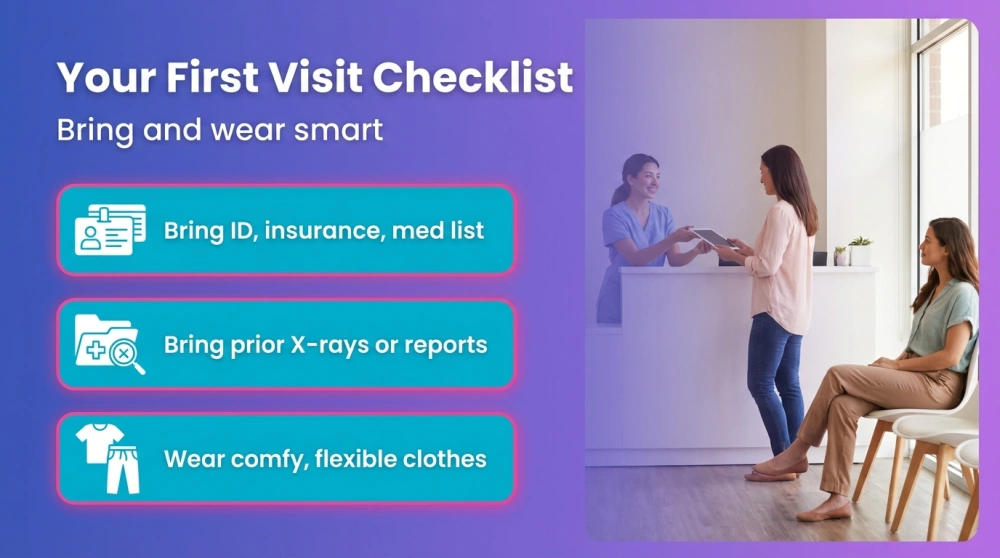
- Bring identification and insurance information so benefits can be checked efficiently.
- Bring prior imaging or test results to avoid unnecessary repeat studies when appropriate [4].
- Wear flexible clothing so you can move comfortably during the exam.
- Wear flat closed toe shoes if a balance or gait check is planned.
How does the chiropractic consultation process work?
Your visit begins with a conversation. We ask about the onset of your symptoms, activities that worsen or relieve discomfort, your work demands, sports or hobbies, sleep habits, and your goals. We also review your general health, since headaches, nerve symptoms, or widespread pain can have many causes.
Together, we confirm what you want out of care. Some people want help returning to work or sport without flares. Others want guidance on self care and ergonomics. This shared decision approach keeps the plan aligned with your priorities and current evidence [2][12].
What happens during the new patient chiropractic exam?
The new patient chiropractic exam is a structured process designed to guide safe and effective care. It usually includes several parts described below. We explain each step and ask permission before proceeding.
What does a posture and range of motion assessment include?
This portion evaluates how you sit, stand, and move. We observe spinal alignment and joint motion as you gently bend or rotate. We are not looking for a perfect posture. Instead, we identify patterns that may relate to your symptoms, training habits, or work setup. Simple movement screens also help us tailor home exercises and ergonomic advice [12].
What orthopedic and neurologic tests are performed?
Depending on your case, we may perform selective orthopedic tests to reproduce or relieve symptoms and help pinpoint the involved tissues. Neurologic checks can include reflexes, strength, and light touch sensation when nerve irritation is suspected. These tests guide next steps and help determine whether conservative care is appropriate or whether a referral is indicated [3].
How do palpation and functional movement checks help?
Gentle palpation assesses local tenderness, protective muscle tone, and joint motion. We may also observe simple functional tasks like sit to stand or a partial squat if your concern relates to daily activities or sport. The goal is to understand what helps and what aggravates symptoms so we can match the right treatment method to the right person [2].
When are X rays or other imaging considered and why?
Imaging is not a routine part of every first chiropractic visit. Large guidelines advise against imaging for most cases of new low back pain that lack red flag features, because early imaging rarely changes care and can lead to unnecessary costs and anxiety [3][4]. Your chiropractor considers imaging when there is trauma, suspicion of fracture, infection, cancer, significant neurologic deficit, or when symptoms do not improve as expected.
If imaging is clinically indicated, X rays are often the initial study for many spine concerns. We follow current appropriateness criteria and safety standards, and we discuss the benefits and risks with you before any study is ordered or reviewed [3].
What is a chiropractic adjustment and will it hurt?
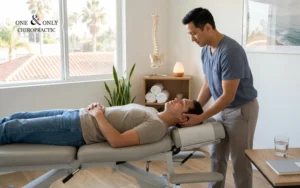
A chiropractic adjustment is a precise manual technique applied to a joint to improve motion, reduce pain, and help restore function. Some adjustments use quick, gentle forces that may create a small audible release. Other methods use slow, sustained pressure or instrument assistance. Research supports spinal manipulation as one option within a multimodal plan for certain spine conditions, especially when combined with education and exercise [1][2][14].
Most people tolerate adjustments well. Temporary soreness can occur and is usually mild and short lasting, similar to starting a new exercise routine [1]. Your chiropractor reviews your preferences and comfort level and will never proceed without your informed consent.
What other therapies might be recommended on the first visit?
Care is personalized. Depending on your needs, the first visit may include a combination of hands on treatment and active care, or it may focus on assessment and education with treatment beginning on visit two. Examples of supportive options are below.
- Soft tissue therapy such as gentle myofascial or trigger point work can ease protective muscle tone and improve comfort [11].
- Therapeutic exercise including mobility drills and graded strengthening helps build resilience for daily life and sport [2].
- Activity and ergonomics coaching can adjust your desk setup, lifting strategies, or training load to reduce strain [12].
- Home care guidance may include heat or cold use, simple movement breaks, and sleep positioning tips.
How long does a chiropractic visit take and how many visits are typical?
Your first chiropractic visit commonly includes a detailed history and exam, which can take longer than a follow up. Many people plan for about one hour for the first appointment, especially if treatment is also provided that day. Follow ups are often shorter to focus on targeted treatment and progress checks. The total number of visits varies based on your goals, the nature and duration of your symptoms, and how you respond to care. We revisit your plan at regular intervals to make sure you are improving as expected.
What aftercare instructions should you follow after the first visit?
After your first visit, it is normal to feel relief, no change, or mild soreness that resolves within one to two days. If you notice any unexpected or worsening symptoms, contact us promptly.
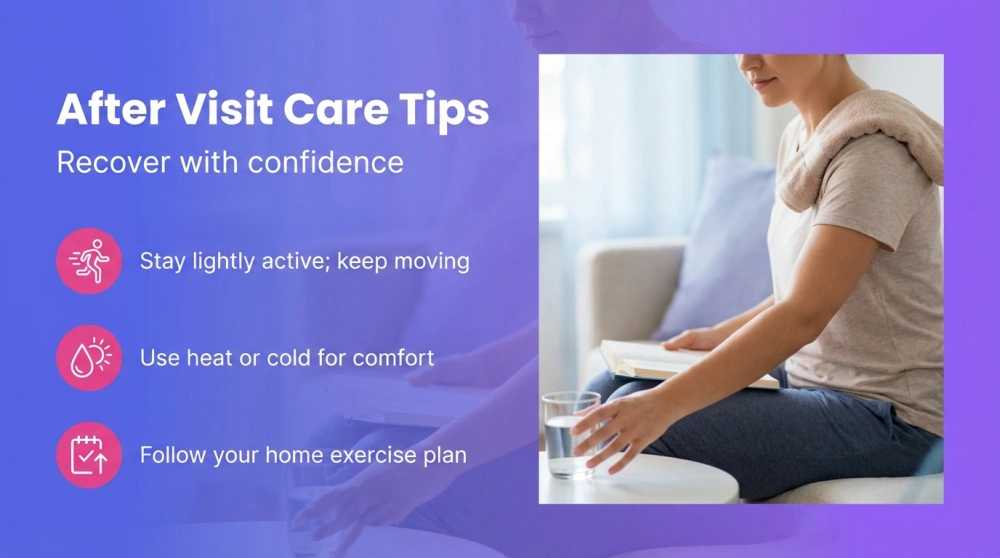
- Stay gently active with light walking or routine activities to keep joints moving, unless you were given a specific short rest period.
- Use heat or cold on the affected area for short sessions if it feels soothing, unless advised otherwise.
- Follow your exercise plan exactly as prescribed to build strength and mobility safely [2].
- Watch for normal soreness that fades quickly and reach out if you have questions about what you feel [1].
How does insurance and pricing work for chiropractic in California?
Coverage for chiropractic services varies by plan. Some health plans include office visits with a copay or coinsurance, others require a referral, and some cover only medically necessary services. California consumers can contact their plan or the California Department of Managed Health Care for help understanding benefits and rights [13]. We verify insurance when possible and discuss clear pricing before care so you can make an informed choice whether you use insurance or choose self pay.
If you prefer self pay, we review transparent options before your first visit. If you have a health savings account or flexible spending account, those funds may apply depending on your plan rules.
What special considerations apply for pediatric and prenatal chiropractic?
Pediatric and prenatal chiropractic are focused on gentle, safety first approaches. Techniques, forces, and positions are adapted to the individual. For children, available evidence and professional guidance highlight the need for careful assessment and a conservative approach, with attention to risks and benefits and to clear communication with parents and the pediatrician when appropriate [10]. For pregnancy related back and pelvic discomfort, manual therapies and exercise may reduce pain and improve function for some people, with care tailored to each trimester and medical guidance [9].
- Pediatric safety focus with age appropriate techniques and parent education supported by professional guidance [10].
- Prenatal positioning that avoids pressure on the abdomen and emphasizes comfort at every stage [9].
- Collaborative care with your primary care clinician or obstetric provider when needed to support whole person health.
How does sports chiropractic support active adults and student athletes?
Sports chiropractic applies the same evidence based principles within the context of training load, competition schedules, and return to activity goals. Your first visit covers movement demands of your sport, warm up routines, and previous injuries. Treatment may combine joint manipulation, soft tissue care, and progressive exercise along with training and recovery guidance. The focus is on restoring function and supporting safe, sustainable performance rather than chasing short term changes alone [2].
If you have a current injury that needs imaging or specialty evaluation, we follow clinical guidelines and coordinate with your medical team as appropriate [3].
What safety standards, consent, and privacy rules apply in California?
In California, chiropractors are licensed by the California Board of Chiropractic Examiners and must practice within state law and regulations, including documentation standards, patient records, and scope of practice [7]. Your chiropractor will obtain informed consent before exams or treatments, explain proposed benefits and risks, and answer your questions. If a procedure is not appropriate for your condition, or if your case falls outside chiropractic scope, a referral will be discussed.
Your health information is protected by the federal Health Insurance Portability and Accountability Act Privacy Rule, which sets standards for how personal medical information may be used and disclosed [8]. Our clinic follows both federal and state requirements for the privacy and security of your records.
For neck pain concerns, we screen for rare but serious conditions and discuss risks and benefits of cervical procedures. We prioritize techniques that fit your comfort level and clinical presentation, and we refer when indicated based on current guidance [6].
How do we create your personalized treatment plan at One and Only?
Your plan is built around your goals, exam findings, and current evidence. We outline immediate steps for relief, short term targets for function, and long term strategies to reduce recurrences. Plans are adjusted as you progress. You will always know why a therapy is used and how it should help, and you will have a clear home program to continue between visits [2].
- Clear goals that match what matters to you, such as lifting your child comfortably or walking without pain.
- Stepwise care that begins conservatively and progresses as you improve, with regular check ins.
- Education first so you understand pain science basics, what to expect at the chiropractor, and how to support recovery at home [1][2].
How can you prepare questions to get the most from your visit?
Arriving with your key questions helps you feel confident and engaged. Consider the list below and add your own.
- What is my working diagnosis and how sure are we based on today’s exam?
- Which treatments are recommended for my condition and what are the pros and cons [2]?
- What should I do at home in the next few days to support improvement?
- When should I expect to notice change and what should I do if symptoms flare?
- Which activities are fine to continue and which should I modify temporarily?
- How will we measure progress and decide when to change the plan?
How can people who feel nervous about adjustments feel more comfortable?
Feeling nervous before a first chiropractic visit is common. Tell your chiropractor exactly what concerns you. You can request slower mobilization techniques, instrument assisted approaches, or active care only. You are always free to pause or stop any procedure. Understanding that soreness is usually mild and short lived, and that many approaches are available beyond quick thrust manipulation, often eases worry [1].
How can you prepare for a smooth visit if you have chronic conditions?
If you live with chronic conditions like diabetes, osteoporosis, or autoimmune disease, bring a full medication list and any important specialist notes. We will adapt techniques and intensity to keep you safe and coordinate with your care team when appropriate. Chronic pain is common and manageable through a combination of education, graded activity, and individualized care plans [5][2].
Who are we and how does One and Only Chiropractic help you take the next step?
One and Only Chiropractic is a wellness and injury clinic in Santa Ana, CA that delivers personalized, evidence based chiropractic care for all ages. We welcome first time visitors, returning patients, student athletes, expecting parents, and people managing long term conditions who want a clear plan grounded in current research and compassionate communication.
Where do we operate and how can you reach us?
We serve Santa Ana and neighboring communities across Orange County. To ask questions or schedule your first chiropractic visit, call us at (949) 800 8525.
How does our approach guide you from day one?
- Evidence guided care that follows respected guidelines for noninvasive spine care, imaging, and active recovery [2][3][4].
- Patient centered planning that aligns care with your goals and preferences to reduce fear and increase confidence.
- Education first so you understand each step of the process and what to expect at the chiropractor, from exam to aftercare.
- Collaboration when needed with primary care, specialists, coaches, or trainers to support your daily life and sport.
What tools and methods do we use to personalize care?
- Comprehensive intake and movement screening to target the right tissues and priorities for safe progress.
- Adjustments, mobilization, and soft tissue care delivered with your informed consent and comfort as the top priority [1][11].
- Exercise programming with clear milestones that fits your schedule and gradually restores function [2].
- Ergonomics and lifestyle coaching to reduce daily strain at work and home [12].
How do experience and outcomes inform our care?
Our licensed chiropractors maintain state credentials and continuing education to stay current with best practices in conservative musculoskeletal care [7]. We track patient goals and progress so we can celebrate wins and make timely adjustments. Past cases often show that clear education, consistent home exercise, and right sized manual care can help people move more comfortably and return to meaningful activities, while recognizing that results vary and no approach suits everyone [2][14].
How can you get started today with less stress?
- Call or click to connect and tell us your goals for your first visit in Santa Ana.
- Bring your questions so we can address any concerns and explain options in plain language.
- Meet your chiropractor and explore a plan that fits your life, work, and sport.
Meet Your Chiropractor Book Free Consultation
References
- Spinal Manipulation Overview – National Center for Complementary and Integrative Health
- Clinical Guideline for Low Back Pain Care – Annals of Internal Medicine
- Appropriateness Criteria for Low Back Pain Imaging – American College of Radiology
- Choosing Wisely Imaging Guidance for Low Back Pain – American Academy of Family Physicians
- Chronic Pain Prevalence in the United States – Centers for Disease Control and Prevention
- Cervical Arterial Dissections and Association With Manipulation – American Heart Association and American Stroke Association
- Licensing and Regulations for Chiropractors – California Board of Chiropractic Examiners
- Summary of the HIPAA Privacy Rule – United States Department of Health and Human Services
- Interventions for Back and Pelvic Pain in Pregnancy – Cochrane Review
- Clinical Report on Spinal Manipulation in Children – American Academy of Pediatrics
- Massage Therapy Evidence Summary – National Center for Complementary and Integrative Health
- Workplace Ergonomics and Musculoskeletal Health – National Institute for Occupational Safety and Health
- Consumer Help With Health Plan Benefits – California Department of Managed Health Care
- Spinal Manipulative Therapy for Chronic Low Back Pain – Cochrane Review
About the Author