Neck Pain and Dizziness: Are They Connected?
- What is the connection between neck pain and dizziness?
- How does the neck help your brain keep balance?
- What symptoms suggest cervicogenic dizziness?
- What common conditions link neck problems and dizziness?
- How is cervicogenic dizziness different from BPPV and other causes?
- Could a pinched nerve in the neck cause dizziness?
- When is dizziness after a neck injury or whiplash an emergency?
- How do doctors and chiropractors diagnose neck related dizziness?
- What evidence supports conservative care for cervicogenic dizziness?
- How can chiropractic care for dizziness be coordinated with medical care?
- What self care steps are reasonable while you seek an evaluation?
- How can posture and daily habits reduce neck pain and dizziness over time?
- What should you expect during a visit with a Santa Ana chiropractor?
- When should you see a chiropractor versus a medical doctor?
- How do California regulations guide chiropractic care and referrals?
- What questions should you ask before starting care?
- What is the outlook and how can you prevent recurrences?
- Who is OneAndOnlyChiro in Santa Ana CA and how do we help?
- References
What is the connection between neck pain and dizziness?
If you have neck pain and dizziness at the same time, you are not alone. Many people describe feeling unsteady, lightheaded, or as if the room is moving when their neck aches or feels stiff. Some of these cases fit a pattern called cervicogenic dizziness, which means dizziness that is thought to originate from the neck. While the term is debated in academic circles, evidence suggests that abnormal sensory input from the cervical spine can disturb your balance system and create neck related vertigo like sensations in the right clinical context [1] [2].
Your balance relies on three main systems that constantly compare notes. Your inner ear detects head motion and orientation, your eyes track position and movement, and your joints and muscles sense body position. The neck is a key sensory hub that provides detailed information about head posture and motion. When the neck is irritated, tight, or injured, the signals traveling from neck muscles and joints to the brain may be altered. That mismatch can create dizziness, unsteadiness, or a sense of disorientation that often worsens with neck movement [1] [2].
Not every case of neck pain causing dizziness is cervicogenic. Dizziness after a neck injury could also involve vestibular problems such as benign paroxysmal positional vertigo, migraine, or even concussion related changes. Sorting these out is essential because each cause responds to different strategies and timelines [3] [4].
How does the neck help your brain keep balance?
The neck has a dense network of sensors called proprioceptors. These are located in muscles, joint capsules, and connective tissues around the cervical spine. They report head position and motion to areas of the brain that also integrate inner ear and visual information. When everything agrees, you feel steady. When neck input does not match what the eyes and inner ears report, you may feel dizzy or off balance [1].
Which balance systems work together to prevent dizziness?
- Inner ear vestibular system provides motion and orientation signals about angular and linear acceleration [1].
- Visual system offers reference points for movement and horizon alignment [1].
- Somatosensory and proprioceptive system tells the brain where body parts are in space, with the cervical spine playing a central role for head position [1] [2].
Clinical research and expert reviews describe pathways between the upper neck and the brainstem areas that coordinate eye and head movements. Disturbances in these pathways may contribute to the symptoms of cervicogenic dizziness in appropriate patients [2].
What symptoms suggest cervicogenic dizziness?
There is no single test that proves cervicogenic dizziness. Instead, providers look for a consistent pattern after ruling out other causes. Common features reported in the literature include the following [2] [5]:
- Neck pain or stiffness linked with dizziness especially when neck movement changes symptoms.
- Sensation of unsteadiness or disorientation more than a spinning feeling in many cases.
- Worse with specific neck positions or after prolonged postures such as looking down or holding the head forward.
- Associated limited neck range of motion or muscle tenderness in the cervical region.
- Symptoms after neck trauma such as whiplash related dizziness following a collision or sports incident [6].
Because other conditions can mimic these symptoms, it is important to consider medical red flags and to evaluate the inner ear and neurologic systems when needed [3] [4].
What common conditions link neck problems and dizziness?
Which musculoskeletal issues are frequently associated with dizziness?
- Neck muscle strain and joint irritation can alter proprioceptive signaling and contribute to dizziness in the right clinical scenario [2].
- Whiplash associated disorder may produce neck pain, headaches, and disequilibrium after rapid acceleration and deceleration injuries [6].
- Cervical spondylosis or age related changes can produce neck stiffness and nerve root irritation that sometimes coexists with dizziness complaints [7].
Which neurologic or ear related conditions can accompany neck symptoms?
- Benign paroxysmal positional vertigo often causes brief spinning with head movements and is common after head or neck trauma [3] [4].
- Concussion and mild traumatic brain injury may lead to dizziness, headaches, and visual disturbances that overlap with neck symptoms [8].
- Migraine related dizziness can present with neck discomfort and sensitivity to motion in some individuals [4].
Sorting out overlap is essential. For example, someone can have BPPV and neck pain at the same time. In that case, targeted inner ear maneuvers and gentle cervical care may both be appropriate after evaluation [3] [4].
How is cervicogenic dizziness different from BPPV and other causes?
It helps to compare symptom patterns. Use these general tendencies as discussion points with your provider rather than as a do it yourself diagnosis.
- Cervicogenic dizziness often presents as unsteadiness or disorientation linked to neck pain and worsened by neck positions. Spinning may be less prominent. Symptoms may build with sustained posture and ease with neck relaxation or improvement in mobility [2] [5].
- BPPV usually causes brief spinning when you roll over in bed, look up, or bend forward. Episodes are seconds long and follow predictable positional triggers that can be confirmed with specific tests and treated with canalith repositioning procedures [3] [4].
- Concussion or vestibular migraine may lead to sustained dizziness, sensitivity to visual motion, and headache. These conditions need medical evaluation and targeted rehabilitation in addition to any neck focused care [8] [4].
If you are wondering can neck pain cause dizziness, the answer is that it can in some people after other causes are ruled out. A thorough history and exam help distinguish BPPV vs neck dizziness and guide safe next steps [3] [5].
Could a pinched nerve in the neck cause dizziness?
A pinched nerve in the neck usually refers to cervical radiculopathy, where a nerve root is irritated or compressed. This often causes arm pain, tingling, or weakness along a nerve pattern. Dizziness is not a classic symptom of radiculopathy, though neck pain and protective muscle guarding can contribute to a general sense of imbalance. Cervical spondylosis can also coexist with dizziness for other reasons. A careful neurologic exam helps to separate pinched nerve and dizziness complaints from inner ear or cervicogenic patterns [7] [4].
When is dizziness after a neck injury or whiplash an emergency?
Seek urgent medical attention or call emergency services if dizziness occurs with any of the following warning signs, especially after trauma or if symptoms are new and severe:
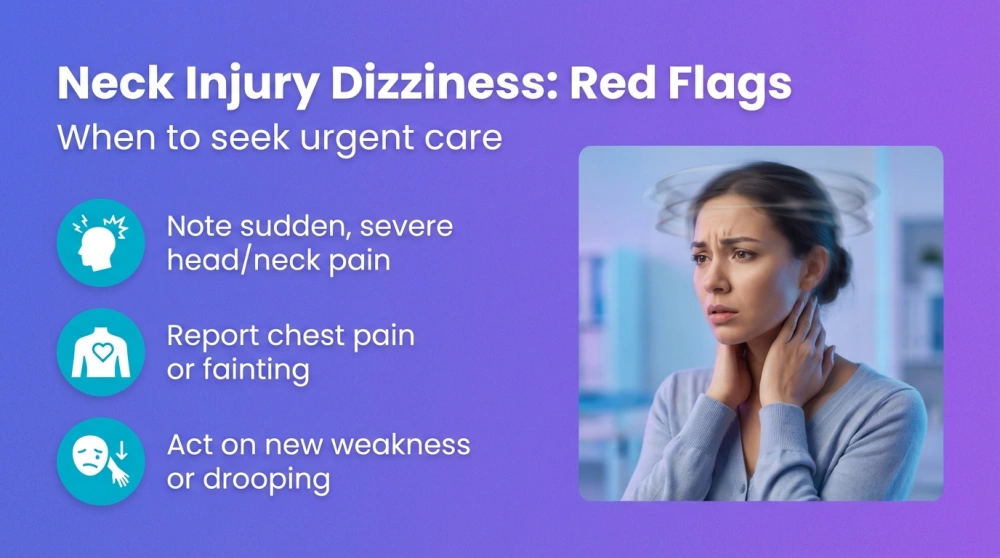
- Sudden severe headache or neck pain unlike anything you have felt before.
- Fainting, chest pain, or shortness of breath that starts with dizziness.
- Weakness, numbness, facial droop, vision loss, trouble speaking, or trouble walking that begins suddenly.
- Loss of consciousness, repeated vomiting, or confusion after a head or neck injury [8].
These red flags require immediate medical evaluation to rule out stroke, vascular injury, or serious head injury. Providers in Santa Ana, CA can coordinate care and refer to emergency services when needed.
How do doctors and chiropractors diagnose neck related dizziness?
Diagnosis begins with a detailed history and physical exam. A stepwise approach helps narrow the cause and protect your safety.
What history questions help pinpoint the cause?
- Timing and triggers such as whether symptoms are brief or continuous, and which positions or movements bring them on [5].
- Associated symptoms including neck pain, headaches, ear fullness, ringing, or visual sensitivity.
- Recent injuries or infections such as whiplash, concussion, or viral illnesses.
- Medication review to identify side effects that may cause lightheadedness [5].
Which physical tests are commonly performed?
- Cervical spine assessment checks posture, motion, muscle tone, and joint tenderness that may correlate with symptoms [2].
- Neurologic screening evaluates strength, reflexes, and sensation for signs of nerve involvement [7].
- Vestibular tests such as positional testing for BPPV, eye movement exams, and balance challenges help detect inner ear involvement [3] [4].
When is imaging or referral recommended?
- Imaging after trauma or with red flags may be appropriate according to established criteria for cervical pain and suspected injury [9].
- Medical referrals to primary care, neurology, or ear nose and throat can clarify complex or persistent dizziness, or if new neurologic findings are present [5].
What evidence supports conservative care for cervicogenic dizziness?
Peer reviewed sources describe cervicogenic dizziness as a clinical diagnosis that improves when cervical dysfunction is addressed and other causes have been excluded. Conservative treatments can include manual therapy, exercise for deep neck muscles, postural training, and vestibular rehabilitation when indicated. Systematic reviews and expert resources highlight that selected patients with neck related dizziness may benefit from a program that restores neck mobility, improves sensorimotor control, and reduces pain while monitoring safety [2] [10] [5].
Chiropractic clinicians and physical therapists often emphasize gentle joint and soft tissue techniques, along with exercises that retrain head and eye coordination. This may include gaze stabilization drills and cervical proprioception training. Care plans are individualized and adjusted based on response and findings from the initial evaluation [2] [10].
How can chiropractic care for dizziness be coordinated with medical care?
Many cases of neck pain and dizziness improve with a team approach. Collaboration can enhance safety and outcomes.
- Shared assessment allows chiropractors to screen for red flags and refer promptly when medical imaging or specialist input is appropriate [9] [5].
- Co managed plans may pair cervical manual therapy with vestibular maneuvers or rehabilitation for BPPV or concussion related dizziness when these are identified [3] [8].
- Clear communication with your primary care doctor helps align medications, activity guidance, and follow up testing.
In Santa Ana, CA, you can often access evaluation without a referral. Still, it is wise to keep your entire care team informed and to bring any imaging, specialist notes, or test results to your chiropractic visit in case they influence the plan [11] [12].
What self care steps are reasonable while you seek an evaluation?
Short term strategies may help calm symptoms while you arrange a professional assessment. If symptoms are severe or you notice red flags, seek immediate medical attention instead.
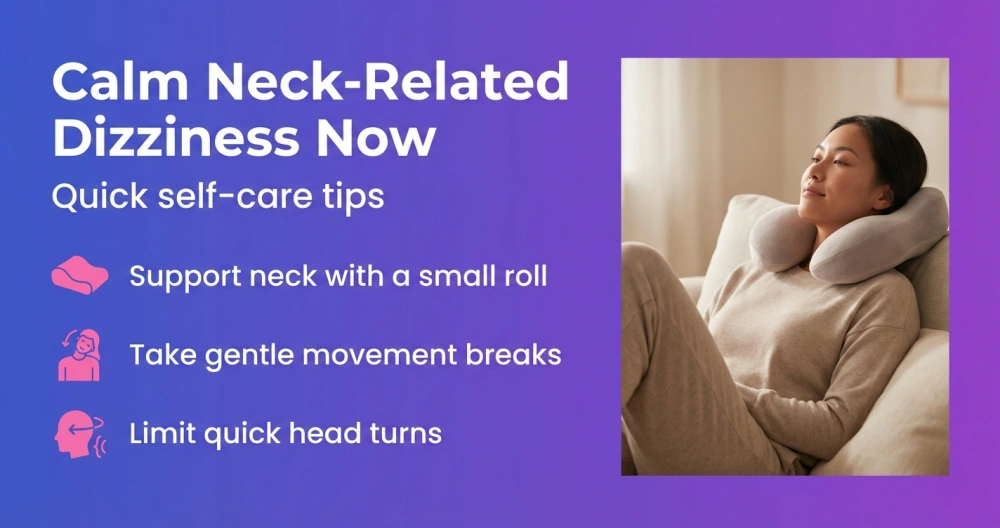
- Support your neck posture by using a small towel roll or pillow behind the upper back and base of the neck when sitting.
- Use gentle movement breaks every thirty to sixty minutes. Slow chin nods and shoulder blade squeezes can reduce stiffness if they do not worsen dizziness.
- Limit quick head turns during a flare and move more deliberately, especially in crowded or visually busy spaces.
- Stay hydrated and avoid skipping meals, since dehydration and low blood sugar can aggravate lightheadedness [5].
- Try brief heat or cold to the neck to ease muscle tension based on comfort, avoiding extremes of temperature.
These steps are not a substitute for an evaluation. They simply offer a starting point as you plan next steps with a qualified provider.
How can posture and daily habits reduce neck pain and dizziness over time?
Your daily routine strongly influences neck health and balance. Small changes add up.
- Set up your workstation so the top third of your screen is at eye level and you can sit upright with relaxed shoulders.
- Alternate positions by mixing seated, standing, and walking tasks through the day to avoid prolonged fixed postures.
- Adjust phone use by bringing the device up toward eye level instead of bending your neck down for long periods.
- Train deep neck flexors with gentle exercises taught by a professional to improve support and reduce strain [10].
- Practice balance with simple tasks like standing on one leg near a counter if cleared by your provider, especially if you have had dizziness episodes [1].
What should you expect during a visit with a Santa Ana chiropractor?
A thorough visit combines listening, testing, and a clear plan. Here is what typically happens when you see a Santa Ana chiropractor for neck pain and dizziness.
- Focused interview about the timing and triggers of neck pain and dizziness, past injuries, and your goals for daily life and activity [5].
- Neck and neurologic exam to check range of motion, muscle tone, joint function, reflexes, and any signs of nerve root irritation [7].
- Vestibular screening to assess for BPPV and other inner ear involvement when appropriate [3] [4].
- Discussion of findings that explains your likely diagnosis, the reasoning behind it, and options that fit your situation.
- Personalized care plan that may include gentle manual therapy, specific exercises, activity modifications, and referrals if additional testing is needed [2] [9].
Care is paced to your tolerance. If you have positional vertigo or concussion symptoms in addition to neck issues, your plan may include vestibular maneuvers or a referral for specialized rehabilitation.
When should you see a chiropractor versus a medical doctor?
It often makes sense to involve both. Consider these general guides and follow local emergency guidance when needed.
- See a medical doctor first if you have red flags like severe sudden headache, new neurologic symptoms, chest pain, fainting, or recent significant trauma [8] [9].
- See a chiropractor if you have neck pain and dizziness without red flags, especially if symptoms link to neck movement or posture and you want a conservative evaluation and care plan [2].
- Seek coordinated care if symptoms persist or involve multiple systems such as migraine or concussion. Collaboration can streamline testing and treatment [4] [8].
How do California regulations guide chiropractic care and referrals?
Chiropractic is a licensed profession in California. Chiropractors are regulated by the California Board of Chiropractic Examiners under the Chiropractic Initiative Act. The Act outlines scope of practice and professional standards for examination, diagnosis, and conservative treatment of neuromusculoskeletal conditions. It also supports referral to other providers when conditions fall outside chiropractic scope or when diagnostics are warranted [11].
Consumers can verify licensure and check status using the California Department of Consumer Affairs online license verification portal. This resource helps you confirm that your provider holds an active license in good standing [12].
In Santa Ana, CA and across the state, chiropractors typically serve as portal of entry providers. This means you can seek an evaluation without a referral while your chiropractor communicates with your medical team as needed for safety and coordination [11] [12].
What questions should you ask before starting care?
- What is my working diagnosis and what other conditions were considered or ruled out?
- Which findings from my exam explain my neck pain and dizziness?
- What are the goals and timeline for my care plan, and how will progress be measured?
- What can I do at home to support my recovery without aggravating symptoms?
- When should I report changes or seek medical reevaluation during care?
- How will you coordinate with my primary care doctor or specialists if needed?
What is the outlook and how can you prevent recurrences?
Many people improve with a thoughtful plan that addresses both the neck and any inner ear or visual contributors. The outlook depends on the cause, your overall health, and how consistently you follow a care plan. Prevention focuses on posture, strength, and early attention to flares.
- Maintain neck mobility and strength through regular movement and targeted exercises that a professional teaches you [10].
- Limit prolonged head forward postures and take frequent breaks during desk or device use.
- Address triggers promptly if you notice early stiffness or mild unsteadiness, rather than waiting for a significant flare.
- Follow up on vestibular issues such as BPPV promptly to reduce recurrences and restore confidence in movement [3] [4].
If you have experienced dizziness after neck injury, ongoing communication with your provider helps you build resilience and reduce the chance of setbacks [6] [8].
Who is OneAndOnlyChiro in Santa Ana CA and how do we help?
At OneAndOnlyChiro in Santa Ana, CA we focus on evidence based, personalized chiropractic care for people dealing with neck pain and dizziness. Our goal is to help you understand what is driving your symptoms and to create a plan that fits your life while keeping safety and clarity at the center.
How do our services relate to neck pain and dizziness?
- Thorough evaluations look at cervical mobility, muscle balance, posture, and sensorimotor control, along with screening for BPPV and other vestibular contributors when appropriate.
- Individualized care plans may include gentle joint and soft tissue techniques, cervicothoracic mobility work, deep neck muscle training, and graded balance or gaze stability drills when indicated by your exam findings.
- Education and pacing help you move safely and regain confidence without provoking flares, with clear guidance on when to check in or adjust.
Where do we operate and how can you reach us?
- Location Santa Ana, California with care for residents across the surrounding Orange County communities.
- Contact Call us at (949) 800-8525 to request an appointment or ask questions about next steps.
What is our unique approach or methodology?
- Integrated assessment combines orthopedic, neurologic, and vestibular screening to clarify whether you are experiencing cervicogenic dizziness, BPPV, or another pattern.
- Test retest method guides care by checking how specific movements and techniques change your symptoms and function in real time.
- Co managed care emphasizes timely referrals and collaboration with local medical professionals when imaging or specialist input will improve safety and outcomes.
Do we use any proprietary tools or processes?
- Outcome tracking uses simple symptom scales and balance measures to monitor progress and adjust the plan.
- Home program delivery provides clear exercise videos and step by step instructions so you can practice safely between visits.
What experience and leadership do our clinicians bring?
- Experience across ages from active adults and athletes to older adults rebuilding confidence after dizziness episodes.
- Commitment to current research with ongoing training in cervical and vestibular care to reflect the latest evidence and guidelines.
What personalized service can you expect?
- Direct access to your provider with clear communication and visit summaries you can share with your medical team.
- Respect for your goals whether you want to lift your child without fear of spinning, return to sport, or simply feel steady at work.
Do we have examples of results and service areas?
- Patient stories often include people who reduced neck pain, improved range of motion, and regained daily confidence with a combination of manual therapy and targeted exercises tailored to their findings.
- Service areas include Santa Ana, Tustin, Orange, Garden Grove, Fountain Valley, and nearby communities across Orange County.
We believe that clear explanations, thoughtful pacing, and a collaborative approach help you make informed choices. If you are wondering when to see a chiropractor for neck pain and dizziness, reach out. We are here to listen, evaluate, and map a plan that fits your needs in Santa Ana, CA.
References
- Balance Disorders Overview – National Institute on Deafness and Other Communication Disorders
- Cervical Vertigo – StatPearls on NCBI Bookshelf
- Benign Paroxysmal Positional Vertigo BPPV – National Institute on Deafness and Other Communication Disorders
- Benign Paroxysmal Positional Vertigo BPPV Clinical Resource – American Academy of Otolaryngology Head and Neck Surgery
- Dizziness: Approach to Evaluation and Management – American Family Physician
- Whiplash Injury – StatPearls on NCBI Bookshelf
- Cervical Spondylosis – National Institute of Neurological Disorders and Stroke
- Signs and Symptoms of Traumatic Brain Injury – Centers for Disease Control and Prevention
- ACR Appropriateness Criteria: Cervical Pain or Cervical Radiculopathy – American College of Radiology
- Dizziness – StatPearls on NCBI Bookshelf
- Chiropractic Initiative Act of California – California Board of Chiropractic Examiners
- License Verification – California Department of Consumer Affairs
About the Author