Physical Therapy
What is physical therapy and who can it help? How does physical therapy complement chiropractic care? Which conditions do we commonly treat in Santa Ana? What should you expect during...
What Is Physical Therapy?
- What is physical therapy and who can it help?
- How does physical therapy complement chiropractic care?
- Which conditions do we commonly treat in Santa Ana?
- What should you expect during your first visit?
- How do we create an evidence based plan of care?
- What services and techniques might be part of your treatment plan?
- What does the research say about physical therapy outcomes?
- What is the difference between acute and chronic pain management?
- How does post surgical rehabilitation progress safely?
- How do we approach sports injury rehab for athletes of all levels?
- What should older adults know about fall risk and balance training?
- Do you need a referral to see a physical therapist in California?
- How do insurance and direct access work in Santa Ana?
- What safety, privacy, and professional standards do we follow?
- How do we support your care at home between visits?
- What signs suggest you should seek care promptly?
- How do we measure progress and adapt your plan?
- How do we coordinate with your surgeon or primary care?
- Why choose OneAndOnlyChiro for physical therapy in Santa Ana?
- Where can you find the sources used on this page?
What is physical therapy and who can it help?
Physical therapy focuses on restoring movement, easing pain, and improving function through tailored assessment and treatment. If you are managing neck or back pain, recovering from a sprain or strain, navigating life after surgery, or working through balance changes, an experienced clinician can help you build strength and confidence step by step. Many people also use physical therapy to prevent problems before they start by improving posture, flexibility, and conditioning.
Back pain remains one of the most common reasons people seek care, and it contributes to reduced activity and missed work for many adults. Trusted resources note that low back pain can affect most people at some point and is a leading cause of job related disability [10]. The good news is that movement based care, including exercise and education, is recommended by clinical guidelines for many common musculoskeletal concerns [5] [6]. Whether your goal is to return to tennis, lift your child with ease, or get through your workday without discomfort, a thoughtful program can guide your progress.
Residents searching for physical therapy Santa Ana often have questions about what to expect, how long recovery will take, and how visits fit into a busy schedule. While every plan is unique, most people benefit from a combination of supervised sessions and home strategies that build momentum in a safe, steady way.
How does physical therapy complement chiropractic care?
Physical therapy and chiropractic care can work together to support your recovery and long term wellness. At a chiropractic clinic physical therapy focuses on improving the way you move through manual therapy, therapeutic exercise, and education, while chiropractic care may emphasize joint mobility and nervous system function. Together, these approaches aim to reduce pain, improve range of motion, and help you return to activities you value.
Evidence based guidelines support combining hands on care with active exercise and self management for neck and back concerns [5] [6]. In practical terms, this might look like short term hands on techniques to calm symptoms, followed by progressive exercises that restore strength and control. This collaborative model helps many people build lasting resilience rather than relying only on short term relief.
Which conditions do we commonly treat in Santa Ana?
Our Santa Ana physical therapy clinic evaluates and treats a wide spectrum of needs for adults, older adults, children, and expecting or new mothers in Orange County. Examples include:
- Spine rehabilitation for neck and low back pain, stiffness, or sciatica, using education, exercise, and targeted hands on care [5] [6].
- Orthopedic physical therapy for shoulders, hips, knees, ankles, and feet, addressing tendon and joint problems through graded loading and mobility work [6].
- Sports injury rehab for sprains, strains, and overuse concerns, with return to sport planning and testing.
- Post surgical rehabilitation after joint replacement or arthroscopy, with protocols tailored to your surgeon’s guidance [9].
- Pain management education that helps you understand pain and build tolerance to daily activities, emphasizing active approaches recommended by guidelines [6].
- Balance and gait training to reduce fall risk and improve confidence in walking and turning [4].
- Pediatric physical therapy that supports movement skills and participation for children and families [15].
- Prenatal and postnatal physical therapy for posture changes, pelvic health, and exercise during and after pregnancy aligned with medical guidance [8].
When you search for a physical therapist Santa Ana you are often looking for someone who listens closely, explains options clearly, and helps you make informed decisions. That is the heart of our approach.
What should you expect during your first visit?
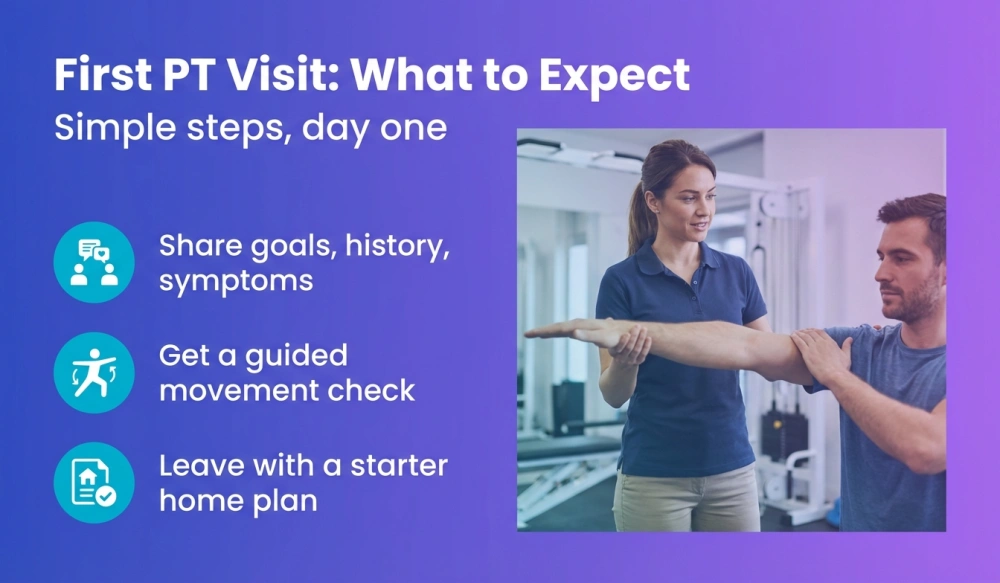
Your first visit is a conversation and a movement assessment. We will ask about your goals, your symptoms, your daily routine, and any prior imaging or consultations. Then we will evaluate how you move through simple tests such as posture, flexibility, strength, balance, and functional tasks like squatting or reaching. We will explain what we see, answer your questions, and outline a plan that fits your priorities and timeline.
You will usually begin with a few starter exercises or strategies on day one so you can leave with tools you can use. We will also talk through pain levels and safety, including how to pace activities at home and at work. If we see any signs that suggest a medical evaluation is needed, we will discuss referral options and coordinate with your physician when appropriate.
How do we create an evidence based plan of care?
Evidence based care means we bring together three essential pieces. First, we consider the best available research. Second, we use clinical expertise to choose techniques that match your presentation. Third, we center your values and goals to guide decision making [12] [3]. This combination helps us select strategies that are both effective and meaningful for you.
After the initial evaluation, we will agree on a plan that outlines session frequency, home activities, and milestones. Plans change as you improve. We reassess regularly, keep what works, and adjust what does not. Our goal is to make you the expert in your own recovery by explaining what we are doing and why at every step.
What services and techniques might be part of your treatment plan?
What is manual therapy and when is it used?
Manual therapy includes gentle joint and soft tissue techniques applied by your clinician. For many people, this can provide short term relief and make it easier to move into active exercise. Guidelines suggest manual therapy can be helpful as part of a package of care that includes exercise and education [5] [6]. We use these techniques when they fit your goals and when they help you progress to movement based solutions.
How do therapeutic exercise and neuromuscular training work?
Therapeutic exercise is the backbone of rehabilitation because it gradually restores strength, flexibility, and coordination. Well designed programs can reduce pain and improve function in people with persistent back concerns, and they are central to many orthopedic plans [7] [6]. Neuromuscular training refines how muscles and joints work together during real world tasks, which supports lasting change in the way you move.
How does balance and gait training reduce fall risk?
Balance training improves the way your body senses position and responds to changes in surface or direction. Gait training focuses on stride length, foot clearance, and turning. For older adults, programs that include balance practice, strength training, and activity planning can lower fall risk and improve confidence [4] [14]. We assess your current performance, then build a plan with progressive challenges that are both safe and achievable.
How does spine rehabilitation address back and neck pain?
Spine rehabilitation often blends education, movement rehearsal, strengthening, and lifestyle strategies. Clinical guidelines recommend staying active, using exercise, and considering hands on care when appropriate for people with neck or back pain [5] [6]. We will help you find positions and movements that feel better, then build tolerance over time so daily tasks become easier.
What is orthopedic physical therapy for joints and tendons?
Orthopedic care addresses joint stiffness, tendon pain, and post injury limitations. A graded loading plan helps tendons and joints adapt safely. We combine strength training, mobility work, and education about pacing so you can return to hobbies, work, and family life with more confidence [6].
How does pediatric physical therapy support growing bodies?
Pediatric care focuses on functional skills like crawling, walking, jumping, and play. Families are central to progress, so we create routines that fit into daily life and school. Guidance from pediatric professional organizations highlights the value of supportive, play based, family centered interventions that foster participation in age appropriate activities [15].
How does prenatal and postnatal physical therapy support comfort and function?
During and after pregnancy, your body changes in remarkable ways. Physical activity is considered safe and beneficial for most pregnancies, and it can help with common aches, posture changes, and energy levels. Any plan should follow medical guidance and account for your unique circumstances [8]. We focus on gentle mobility, core and pelvic floor coordination, and strategies for lifting, feeding positions, and daily comfort.
What does the research say about physical therapy outcomes?
Research supports the value of movement based care for many musculoskeletal problems. For example, people with persistent low back concerns often see meaningful improvements with supervised exercise programs compared to minimal care [7]. Guidelines also recommend combining education with manual therapy and exercise for neck and back issues [5] [6]. For adults with joint pain related to arthritis, regular physical activity is recommended to reduce pain and improve function [13].
Importantly, evidence points to the value of shared decision making. When patients and clinicians decide together, plans tend to fit life better, which supports consistent follow through and better outcomes [12]. That is why we take time to discuss options, explain trade offs, and match the plan to your goals.
What is the difference between acute and chronic pain management?
Acute pain is recent and often related to a specific event such as a new strain or fall. The focus is on calming symptoms, protecting healing tissues, and returning to activity in a graded way. Chronic or persistent pain lasts longer than expected healing time and often involves changes in how the nervous system processes signals. For ongoing pain, education, gradual exposure to movement, and building confidence in daily tasks are central to progress [6].
We will work with you to understand which stage you are in and which strategies fit best. You will learn how to pace activities, use positions that feel better, and build tolerance for the things you want to do, like walking, gardening, or work tasks. Clear guidance helps you make steady gains without flaring symptoms.
How does post surgical rehabilitation progress safely?
After surgery, your plan follows both your surgeon’s guidance and your physical therapist’s assessment. Early stages often emphasize swelling control, safe movement patterns, and gentle range of motion. As healing progresses, we layer in strengthening, balance, and functional drills that prepare you for daily life and your personal goals. For joint replacement, for example, structured exercise programs help restore motion and strength in predictable steps [9].
We always monitor your response and communicate with your surgical team as needed. If you are searching for post surgical rehabilitation in Santa Ana, CA, our team can help you understand your protocol and what milestones to expect in the weeks ahead.
How do we approach sports injury rehab for athletes of all levels?
Sports injury rehab starts with a careful look at how the injury occurred, your training history, and your performance goals. We manage swelling or pain, restore range of motion, and then build capacity with progressive strength and power. Return to sport tests help us confirm readiness for practice and competition. Coaching on warm ups, workload, and recovery helps reduce the chance of setbacks.
Whether you are returning to school sports, rec league play, or weekend hikes in Orange County, we will personalize your plan. We integrate manual therapy when helpful, then emphasize therapeutic exercise and skill development so you can move with confidence.
What should older adults know about fall risk and balance training?
Falls are not inevitable with age. Targeted programs that include balance practice, strength training, and home safety strategies can reduce risk for many older adults [4] [14]. We assess common risk factors such as leg strength, walking speed, medication changes, vision, and home hazards. Then we create a stepwise plan that fits your routines and preferences.
Training might include stepping drills, turning speed, single leg stance, and safe transitions on and off the floor. We also discuss community resources and how to keep up momentum between visits. If you have had a recent fall or near fall, balance and gait training can be an important part of returning to daily activities with greater assurance.
Do you need a referral to see a physical therapist in California?
California allows many people to begin physical therapy without a physician referral, a concept called direct access. State law outlines how physical therapists evaluate and treat patients and describes when a referral or sign off from a licensed provider is required after a period of care [1] [2]. Your therapist will explain how these rules apply to your situation during the first visit.
Even when direct access is available, some insurance plans may still ask for a referral or certain documentation before they cover services. We can help you understand your benefits and the steps involved so there are no surprises.
How do insurance and direct access work in Santa Ana?
Coverage varies by plan, so the best first step is to check your specific benefits for outpatient physical therapy. Many plans cover medically necessary rehabilitation when evaluation and progress notes show that care is helping you improve function. If a referral is required by your plan, we can coordinate with your physician’s office to keep the process simple.
People looking for physical therapy in Santa Ana, CA often ask how many visits they may need. The answer depends on your goals, how long you have had symptoms, and how you respond to each step of the plan. We will review expectations at the start and adjust based on your progress.
What safety, privacy, and professional standards do we follow?
Your care is delivered by licensed professionals who follow California law and the Physical Therapy Practice Act. California statutes describe the scope of physical therapy practice, including evaluation, treatment, and collaboration with other healthcare providers [1]. Consumer resources from the Physical Therapy Board of California explain direct access and other patient rights in clear terms [2].
Your information is protected by privacy rules, and our team follows federal guidance on the handling of health information [11]. We also use clean equipment practices and infection control procedures for your safety. If you have questions about licensure, training, or privacy, we are happy to discuss them with you at any time.
How do we support your care at home between visits?
Most progress happens between sessions, so we emphasize a home plan that is realistic and specific. We will select a few exercises that match your goals, provide clear cues for form and pacing, and offer tips for fitting them into your day. As you improve, we will update your plan so it remains challenging and effective. For many conditions, consistent physical activity supports better outcomes, including improved function and reduced pain in arthritis [13].
We also share strategies for work setup, sleep positions, daily movement breaks, and recovery. Small changes add up. If an exercise does not feel right, we will troubleshoot and modify it so you can keep moving forward.
What signs suggest you should seek care promptly?
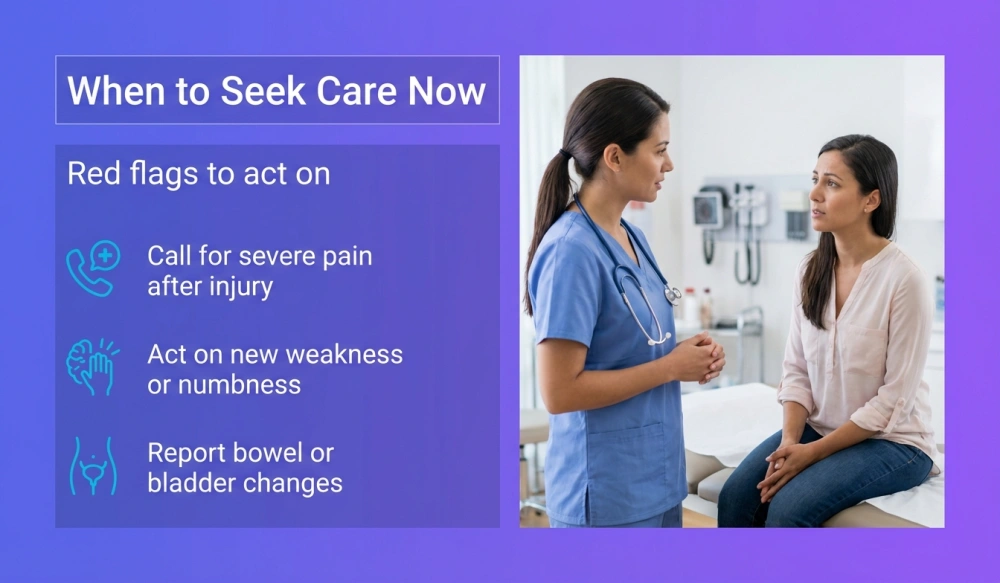
While most musculoskeletal issues improve with conservative care, certain symptoms may need timely medical evaluation. These include severe pain after trauma, sudden loss of strength or sensation, progressive weakness, new bowel or bladder changes, or symptoms that accompany fever or unexplained weight change. Back pain with saddle numbness or sudden changes in bowel or bladder control needs urgent attention [10]. If you notice any of these signs, contact your healthcare provider or seek urgent care.
How do we measure progress and adapt your plan?
We track progress using meaningful goals that you help define, such as walking a set distance, lifting your child, or returning to a favorite class without flare ups. We also look at strength, range of motion, balance, and your confidence in daily tasks. If you are improving steadily, we keep building. If progress stalls, we adjust the plan and, if needed, discuss whether imaging or a medical consult makes sense. Our aim is to keep your plan responsive to your life and results.
How do we coordinate with your surgeon or primary care?
Collaboration supports safer and more efficient care. With your permission, we will share updates with your surgeon or primary care clinician, especially after major milestones. Shared decision making is a proven approach to align care with your preferences and values, and it is central to how we plan and progress your program [12]. When each member of your team is informed, your plan can stay consistent across visits and providers.
Why choose OneAndOnlyChiro for physical therapy in Santa Ana?
At One & Only Chiropractic, our OneAndOnlyChiro team provides personalized physical therapy within a collaborative chiropractic clinic setting. We serve Santa Ana and the wider Orange County community with care that is thoughtful, educational, and centered on your goals. If you are unsure where to start, we make the next step clear and manageable.
Here is what you can expect when you work with us:
- Personalized evaluation that listens first, tests what matters, and turns findings into a practical plan you can use right away.
- Evidence based care that blends manual therapy, therapeutic exercise, and education in line with current guidelines and your preferences.
- Integrated team where physical therapists and chiropractors communicate and coordinate, so your sessions build on one another rather than repeating the same steps.
- One on one sessions focused on you, with clear coaching, form feedback, and steady progressions.
- Clear home programs that are simple to follow and updated as you get stronger and more confident.
- Thoughtful coordination with your surgeon or primary care when needed, especially for post surgical rehabilitation or complex cases.
- Local expertise that understands the demands of work, sport, and family life in Santa Ana, CA and across Orange County.
Our approach is built around education and empowerment. We explain why each exercise matters, how to dose it, and what signs show it is time to progress. We also monitor your response and make adjustments so you can keep moving forward. Many of our patients share that they feel more confident and capable after learning how to move well and pace activity. While every person is different, we are proud of the steady, consistent progress our community achieves with a supportive plan and regular follow through.
Common programs we provide include spine rehabilitation for back or neck pain, sports injury rehab for sprains and strains, orthopedic physical therapy for shoulders or knees, balance and gait training for older adults, and prenatal and postnatal physical therapy for comfort and function during and after pregnancy. If you are looking for a Santa Ana physical therapy clinic that values communication and clarity, we would be glad to help you map a path forward.
We operate in Santa Ana and serve nearby neighborhoods throughout Orange County. To learn more or to schedule an evaluation, you can call our office at (949) 800-8525. We will answer your questions about availability, insurance, and what to bring to your first visit. Our goal is to make getting started straightforward and supportive, from the first phone call to your last session and beyond.
Where can you find the sources used on this page?
- California Business and Professions Code section 2620 – California Legislative Information
- Direct Access to Physical Therapy Services – Physical Therapy Board of California
- Why Physical Therapy – ChoosePT
- STEADI Older Adult Fall Prevention – CDC
- Low back pain and sciatica in over 16s assessment and management – NICE
- Interventions for Low Back Pain Clinical Practice Guidelines 2021 – JOSPT
- Exercise therapy for chronic low back pain – Cochrane Library
- Physical activity and exercise during pregnancy and the postpartum period – ACOG
- Total knee replacement exercise guide – OrthoInfo AAOS
- Low Back Pain Fact Sheet – NINDS
- Summary of the HIPAA Privacy Rule – HHS
- Shared Decision Making Toolkit – AHRQ
- Physical activity for arthritis – CDC
- Exercise and physical activity for older adults Position Stand – ACSM
- Family Resources – Academy of Pediatric Physical Therapy
Benefits of Physical Therapy
- Reduces pain and discomfort
- Improves range of motion and flexibility
- Enhances nervous system function
- Alleviates headaches and muscle tension
- Supports overall wellness and prevention
What to Expect
Consultation
We discuss your health history and goals
Examination
Thorough assessment to identify problem areas
Treatment
Personalized techniques tailored to your needs
Follow-up
Ongoing care plan for optimal results
Ready to experience relief?
Schedule AppointmentFrequently Asked Questions
Does this treatment hurt?
Most patients find treatments comfortable and relieving. Mild soreness may occur and typically resolves within 24 hours.
How many sessions will I need?
Treatment plans vary by condition and goals. Some feel relief in a few visits; others benefit from ongoing care.
Is this service safe?
Yes. We use evidence-based, safe techniques delivered by trained professionals.
Ready to Feel Better?
Book your appointment today and take the first step toward pain-free living.