Infrared Therapy
- What is infrared therapy and how does it work?
- How do red light therapy near infrared therapy and photobiomodulation differ?
- Which conditions related to pain and recovery may benefit according to research?
- Is infrared therapy safe and who should avoid it?
- What happens during a session in a chiropractic clinic?
- How do we customize dose and wavelength for your needs?
- How can infrared therapy support chiropractic care and sports rehabilitation?
- How soon might you notice changes and how long do results last?
- How does infrared therapy compare with other modalities you may have tried?
- What regulations apply to infrared therapy in California?
- How should you choose an infrared therapy provider in Santa Ana?
- FAQs about infrared therapy at a chiropractic clinic
- About OneAndOnlyChiro in Santa Ana CA
- References
What is infrared therapy and how does it work?
Infrared therapy uses specific wavelengths of nonionizing light to interact with tissues in ways that can support comfort mobility and recovery. You will often see it described as infrared light therapy red light therapy near infrared therapy or by the scientific term photobiomodulation. These light wavelengths fall within the red and near infrared ranges of the electromagnetic spectrum which are known for penetrating soft tissue more effectively than shorter wavelength visible light [6]. When delivered at appropriate doses light can be absorbed by cellular structures that help regulate energy and signaling. This process may influence local blood flow oxidative stress and cellular activity that supports tissue repair and comfort [7].
Because the light is nonionizing it does not have enough energy to damage DNA the way X rays or ultraviolet light can. Devices used in clinical settings are typically designed to deliver controlled energy outputs within defined safety parameters and are subject to federal device regulations based on their intended use [2] [3]. For you as a patient that means sessions are usually comfortable and noninvasive with no downtime. You simply feel a gentle warmth or mild sensation at the treatment site and can return to normal activities right away.
People often ask whether Infrared Therapy Santa Ana options are appropriate for their situation. The short answer is that this approach is one of several noninvasive therapies that may be considered as part of a broader plan for musculoskeletal concerns. Your chiropractor can help evaluate whether light based care fits your goals and current care plan alongside exercise manual therapy and education [7].
How do red light therapy near infrared therapy and photobiomodulation differ?
These terms are related but not identical. Here is a straightforward way to think about them.
- Red light therapy usually refers to light within the visible red range often around 620 to 700 nanometers which tends to act on superficial tissues like skin and more shallow muscle layers [6].
- Near infrared therapy uses longer wavelengths often around 700 to 1000 nanometers or just beyond which can reach deeper tissues because of lower absorption and scattering in this band known as the optical window [6].
- Photobiomodulation is the broader scientific term that covers therapeutic effects of nonionizing light from red through near infrared delivered at low to moderate doses to influence biological processes. It can be delivered by LEDs or lasers depending on the device design and regulatory clearance [2] [3].
In a chiropractic setting both red light and near infrared light may be used depending on the target tissue. Superficial soft tissue discomfort may be addressed with red light while deeper muscle and tendon areas may call for near infrared settings. Your chiropractor will determine the approach based on your evaluation and goals.
If you have been searching for Infrared Therapy Near Me you will likely see all these terms appear. Knowing the distinctions can help you ask focused questions about wavelength output dose and the intended effect.
Which conditions related to pain and recovery may benefit according to research?
Infrared Light Therapy and photobiomodulation have been studied for various musculoskeletal complaints including neck pain tendon issues osteoarthritis and exercise related muscle fatigue. Evidence quality varies by condition and study design so your care team will interpret research cautiously and personalize recommendations.
For neck pain a well cited randomized trial and meta analysis reported that low level light therapy was associated with short term relief compared with controls though effects and protocols varied across studies [8]. Other musculoskeletal applications such as tendon pain and post exercise recovery have been explored in clinical trials and systematic reviews but outcomes depend on parameters like wavelength energy density and timing. Researchers continue to investigate optimal dosing and indications.
It is also helpful to remember how common musculoskeletal pain is and why many people look for nonpharmacologic options. Low back pain for example is a leading cause of disability and a common reason for healthcare visits. National institutes note that many nondrug therapies and education approaches play an important role in management for persistent or recurrent cases [6] [7]. Infrared therapy may be one tool within a broader plan that includes movement based care strengthening and self management strategies under professional guidance.
In our clinic discussions we also address fatigue and stiffness after activity. Some studies have investigated photobiomodulation applied before or after exercise to support muscle performance and recovery. The scientific literature on this topic is active and evolving so we focus on clinically sensible protocols and careful progress tracking while avoiding exaggerated claims. If you are an athlete or active individual we can incorporate Near Infrared Therapy during a phased return to sport based on your response and personal goals.
Is infrared therapy safe and who should avoid it?
Safety is our first priority. Devices that emit therapeutic light are regulated based on their intended use device classification and risk profile. The United States Food and Drug Administration provides guidance on general wellness products and sets regulatory pathways for medical devices including lasers and light based instruments [2] [3]. When used appropriately by trained professionals these modalities are considered low risk for many people.
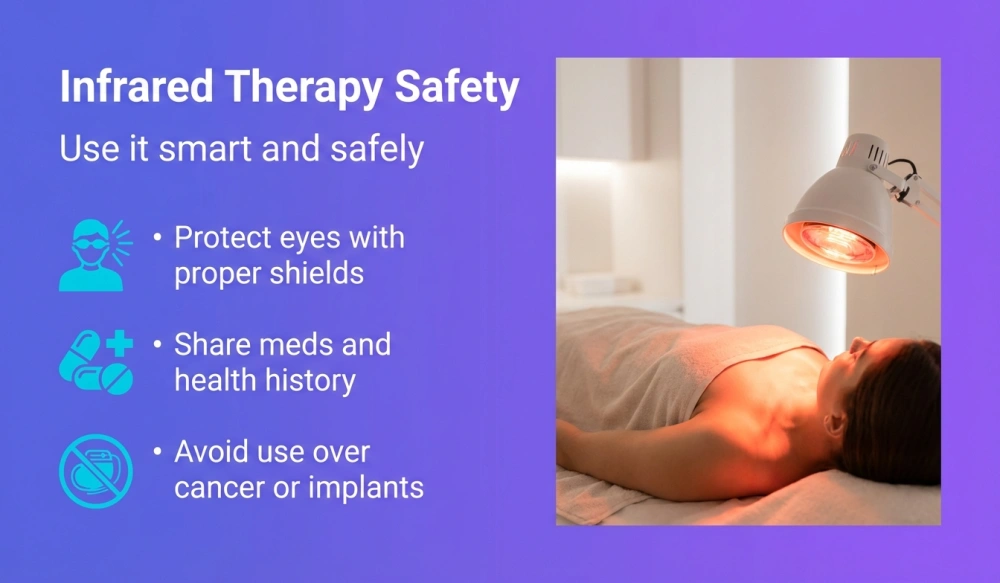
That said there are important safety considerations. Direct exposure of eyes to intense light can be hazardous so appropriate eye protection and correct device positioning are standard. Occupational safety resources also address laser and light safety for environments where higher power devices are used [9]. Skin sensation should be monitored during sessions and exposure time and dose should be controlled. If you have a condition that affects sensation or circulation or if you are taking photosensitizing medications please let your clinician know so parameters can be adjusted or therapy deferred as appropriate.
Certain populations require extra caution. People with active malignancy at the treatment site those who are pregnant persons with uncontrolled endocrine or metabolic conditions and individuals with implanted light sensitive devices should be screened carefully. While many light based wellness products are marketed as general wellness tools it is still important to discuss your medical history with your provider and follow evidence based clinical protocols tailored to you [2].
What happens during a session in a chiropractic clinic?
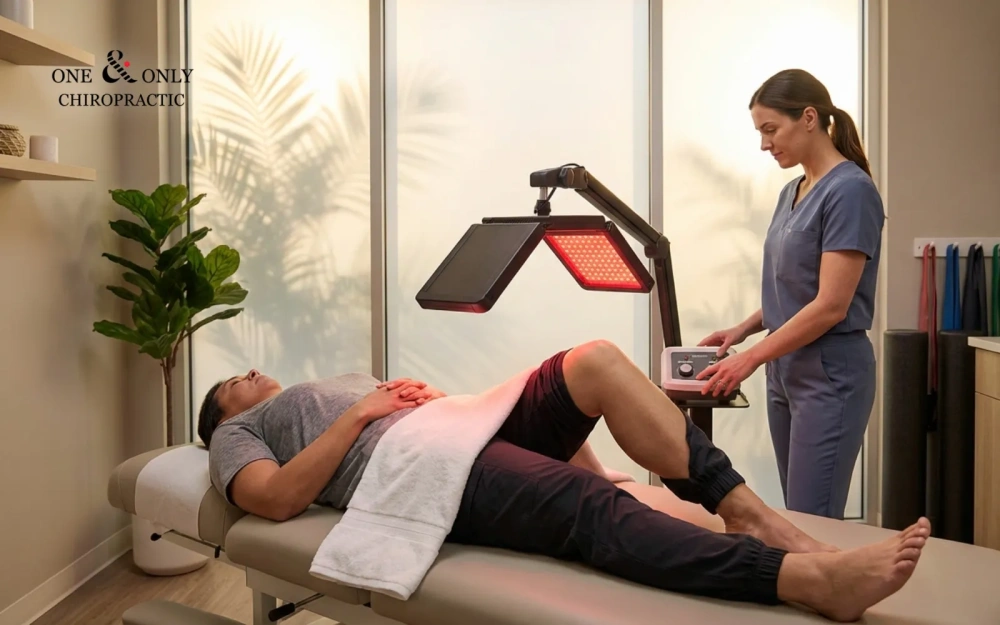
Your first visit involves a detailed history and physical examination to identify pain drivers and movement patterns. If Infrared Light Therapy is a good fit we will outline a plan that integrates light exposure with chiropractic adjustments soft tissue care mobility work and exercises. Here is what a typical session may include.
- Brief check in We review changes in symptoms goals and any new health information.
- Target mapping Your chiropractor identifies the specific area to address for example a tendon insertion point a trigger point within muscle or an area of joint related stiffness based on your assessment.
- Light application The device is positioned at a set distance and angle. Parameters such as wavelength output energy density and exposure time are selected based on the target tissue and current clinical goals [2].
- Adjunctive care Many plans integrate gentle manual therapy joint mobilization exercise cueing and education to support lasting benefits.
- Post session guidance You receive simple instructions such as hydration light movement and any activity modifications until the next visit.
Most people describe sessions as comfortable. Red Light Therapy will often feel warm at the skin surface while Near Infrared Therapy tends to be felt less but can reach deeper tissues. Sessions are usually short and can be scheduled alongside your main chiropractic appointment for convenience.
How do we customize dose and wavelength for your needs?
Light based care is most effective when adjusted to the individual. We look at several variables when designing your plan.
- Wavelength Red light tends to target more superficial tissues while near infrared light reaches deeper layers [6].
- Energy density The energy delivered per unit area is critical. Too little may be insufficient and too much may be counterproductive. We calibrate exposure using device specifications and clinical protocols supported by peer reviewed research where available.
- Treatment timing Some goals are better served by light application before exercise for warm up and others after activity for recovery. Your program may vary accordingly.
- Session frequency Plans often begin with more frequent visits then taper as symptoms improve and self care skills increase.
- Integration with movement Light exposure is paired with mobility and strengthening to reinforce gains in comfort and function.
Your chiropractor will revisit these variables as you progress. The aim is to provide a dose that supports tissue healing improved circulation and calm nervous system responses while monitoring your real world outcomes. Photobiomodulation can be a helpful adjunct but it is most effective within a comprehensive plan that builds strength and resilience over time [7].
How can infrared therapy support chiropractic care and sports rehabilitation?
Light based care can complement hands on treatment and exercise in several ways that matter to people recovering from pain or preparing to return to sport.
- Pain modulation Light may influence local signaling and nociceptive processing which can help reduce perceived pain intensity in the short term supporting movement based work during the session [8].
- Circulation and tissue support Gentle heat and light exposure can promote comfort and readiness for manual therapy and therapeutic exercise.
- Post session recovery For athletes and active individuals targeted Near Infrared Therapy may be scheduled around training blocks as part of a recovery stack that includes sleep nutrition and mobility work.
- Patient confidence Feeling less reactive sensitivity during movement practice can build confidence which is key for long term progress.
We emphasize that light therapy is not a standalone cure. It works best as one element of a well rounded plan designed around your goals. If you are unsure whether Infrared Therapy Santa Ana options align with your needs we can discuss your case and map out a sensible path that prioritizes education self care and progressive activity.
How soon might you notice changes and how long do results last?
Responses vary. Some people report immediate comfort during or after a session while others notice changes over several visits as part of a broader plan. If your goal is pain relief you may feel more comfortable sooner. If your focus is tissue remodeling and strength the timeline is usually longer because connective tissues adapt gradually.
Your chiropractor will set expectations based on your health history lifestyle and exam findings. We also track objective and subjective measures such as range of motion functional tests and daily activity tolerance. If we do not see meaningful progress we will adjust the plan or consider alternative approaches.
How does infrared therapy compare with other modalities you may have tried?
People often compare light therapy with heat packs TENS massage ultrasound and other clinic based tools. Each modality has its place depending on your goals. Light therapy is distinct because specific wavelengths and doses can target cellular processes rather than only heating tissue. That said many conditions benefit from a combination of approaches that support comfort and function while you strengthen and build capacity for your daily life and sports.
Noninvasive therapy options can be particularly attractive when you prefer to avoid medication side effects or when you are in a recovery phase that calls for gentle progressions. We will explain the options clearly so you can make an informed choice that fits your preferences timeline and budget.
What regulations apply to infrared therapy in California?
In California chiropractic practices operate under state laws and regulations that define scope of practice and professional standards. The California Board of Chiropractic Examiners provides access to current laws and regulations that govern chiropractic care delivery including use of supportive procedures such as physiotherapy modalities when appropriate [4]. Patients can verify licensure status through the California Department of Consumer Affairs online lookup tool [5].
Light based devices used for therapeutic purposes are regulated by the United States Food and Drug Administration. Depending on the device design intended use and risk classification manufacturers may pursue appropriate regulatory pathways for marketing. The FDA also publishes guidance on general wellness products which can include some low risk light emitting devices when they meet specific criteria and are not marketed for treating specific diseases [2] [3]. The FDA also oversees safety standards for laser products and instruments [1].
In some cases lasers used in workplaces must also follow safety practices that address eye protection training and administrative controls. Occupational safety resources outline these principles for environments where lasers are present [9]. In California additional information about laser safety and oversight is available through the state radiation health branch [10].
How should you choose an infrared therapy provider in Santa Ana?
Choosing a provider is easier when you know what to look for. Consider the following as you evaluate clinics in Santa Ana CA and Orange County.
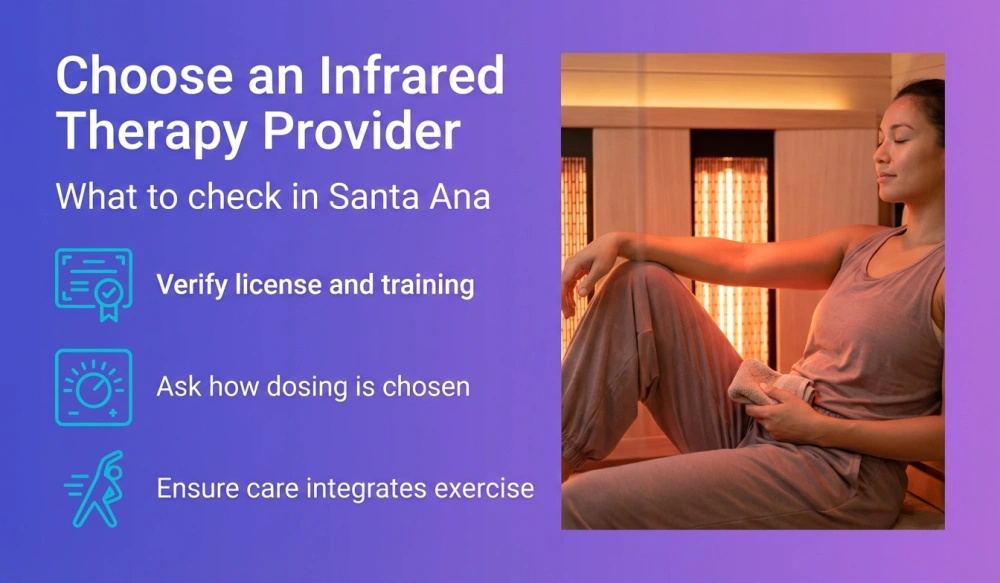
- Licensure and training Confirm that your chiropractor is licensed and in good standing using the California Department of Consumer Affairs lookup tool [5].
- Evidence informed approach Ask how the clinic selects wavelengths dosing patterns and progression strategies based on peer reviewed evidence and your specific condition.
- Integration with care Look for a plan that combines Red Light Therapy or Near Infrared Therapy with movement education and manual care rather than relying on a single modality.
- Clear communication Your provider should set realistic expectations explain risks and benefits and check your understanding every step of the way.
- Safety protocols Eye protection and device parameter checks should be routine. The clinic should follow federal and state guidance for device use and safety [1] [9] [10].
If you live or work in Santa Ana you can ask about scheduling options that align with your routine. Many people prefer short sessions that pair light based care with adjustments and exercise in one visit.
About OneAndOnlyChiro in Santa Ana CA?
At OneAndOnlyChiro we integrate photobiomodulation with chiropractic care to support pain relief inflammation reduction muscle recovery improved circulation and tissue healing. Our clinic serves Santa Ana California and the wider Orange County community. If you are seeking a wellness clinic Santa Ana that values personalized care and evidence informed methods our team is ready to help.
Here is what you can expect when you visit us.
- Personalized evaluation We begin with a thorough history and movement focused exam to identify what drives your symptoms. Your plan is designed around your activities work demands and goals.
- Integrated care pathway We combine Infrared Light Therapy with chiropractic adjustments soft tissue techniques corrective exercise and education so you build comfort and capacity together not in isolation.
- Clinical reasoning and transparency We explain why each step is chosen what the expected timeline looks like and how we will measure progress. You will always know the purpose behind your session.
- Modern technology Our light based devices deliver red and near infrared wavelengths with consistent output for dependable dosing. We calibrate parameters to match the tissue depth and goals for each session.
- Athlete and active adult support For sports rehabilitation we time sessions around training blocks to promote recovery and readiness while coordinating with your coach or therapist when needed.
- Patient centered communication You have direct access to qualified professionals who listen to your concerns answer questions and adapt your plan responsively as you progress.
Our approach is simple. We use noninvasive therapy where it makes sense we keep the focus on movement strength and education and we track what matters to you. If you are curious about Near Infrared Therapy or Red Light Therapy in Santa Ana CA we can schedule an evaluation and outline next steps based on your goals and current health. Call us at (949) 800 8525 to get started or to ask any questions about scheduling and options.
We are proud to support the Santa Ana community across a range of needs from acute sprains and strain injuries to chronic pain management and post event recovery. Our clinicians stay current with research and state and federal guidance so your care remains safe ethical and effective for your situation. Whether you are returning to sport caring for a family member or simply looking for a clear plan for everyday comfort our team is here to help.
References
- Laser Products and Instruments – U.S. Food and Drug Administration
- General Wellness Policy for Low Risk Devices – U.S. Food and Drug Administration
- Classify Your Medical Device – U.S. Food and Drug Administration
- Laws and Regulations – California Board of Chiropractic Examiners
- License Search – California Department of Consumer Affairs
- Infrared Radiation Overview – NASA
- Low Back Pain and Complementary Health Approaches – National Center for Complementary and Integrative Health
- Efficacy of low level laser therapy in neck pain – The Lancet via PubMed
- Laser Safety Topic Page – National Institute for Occupational Safety and Health
- Laser Program – California Department of Public Health
- Low Back Pain Fact Sheet – National Institute of Neurological Disorders and Stroke
- Chiropractic: In Depth – National Center for Complementary and Integrative Health
- Musculoskeletal Conditions Fact Sheet – World Health Organization