Acupuncture
- What makes acupuncture a helpful option for people in Santa Ana?
- How does acupuncture work from a modern perspective?
- Which concerns can acupuncture address and what does the research say?
- Which acupuncture techniques and related therapies might be used?
- What should you expect at your first visit and how can you prepare?
- How safe is acupuncture and who should take extra precautions?
- How do California rules and local licensing affect your care?
- How do we coordinate acupuncture with chiropractic and wellness care?
- Where do we provide care in Orange County and how soon can you be seen?
- Why choose OneAndOnlyChiro and what sets our acupuncture care apart?
- Which common questions can we answer right now?
- Where can you find the full references and resources used here?
What makes acupuncture a helpful option for people in Santa Ana?
Acupuncture is a time tested therapy that places very thin sterile needles at specific points to support the body’s natural processes. Many people seek it for pain, stress, headaches, sleep concerns, and recovery after injury. In recent decades, researchers have studied acupuncture using modern tools and methods. Several respected medical and public health organizations describe where acupuncture may help, particularly for certain types of pain and headaches, while emphasizing the importance of qualified practitioners and individualized care [1] [5] [6].
Chronic pain affects daily life for many people in our community. National data suggest that a large proportion of adults experience chronic pain, and a notable share live with high impact chronic pain that limits work or life activities [3]. If you are exploring options that fit your goals, values, and schedule, Acupuncture in Santa Ana CA can be a thoughtful part of your plan alongside medical care, movement, and self care routines.
At OneAndOnlyChiro, we deliver acupuncture in a chiropractic clinic setting with a focus on education, safety, and clear communication. We provide time for your questions, explain what the session will feel like, and discuss how your plan can adapt as you improve. If you are searching for Acupuncture Santa Ana and want a team that keeps you informed at each step, we are ready to help.
How does acupuncture work from a modern perspective?
Researchers propose several mechanisms for how acupuncture may influence comfort and function. Studies suggest that needling can modulate nerve signaling, stimulate the release of neurotransmitters and endorphins, and affect how the brain and spinal cord process pain. Local blood flow changes and immune signaling may also play a role [1]. While no single explanation accounts for every benefit, these biological responses help explain why some people feel less pain and greater ease of movement after a series of sessions.
Safety and materials matter. The United States Food and Drug Administration classifies acupuncture needles as medical devices and requires that they be sterile, nontoxic, and intended for single use by trained professionals [2]. That is why your practitioner will open new needle packages in the room before treatment and dispose of them in approved containers afterward.
Acupuncture is often included among non drug therapies in clinical guidelines for certain conditions. For example, it appears as an option for some types of back pain in recommendations from a leading internal medicine society, alongside exercise and other non drug approaches [4]. Your care plan should always reflect your health history, current medications, and personal goals, and we encourage you to share updates from your other providers so we can coordinate safely.
Which concerns can acupuncture address and what does the research say?
People come to us for a wide range of goals. Below are common concerns and a brief look at what major organizations and reviews say about acupuncture. We aim to be clear and practical so you can decide what fits you best.
Can acupuncture help with low back pain and sciatica?
Back pain is a leading reason adults seek care. Evidence reviews and clinical guidance indicate that acupuncture can be considered among non drug options for certain kinds of back pain, and some people report meaningful relief and improved function with a series of treatments [4] [5]. For sciatica or radiating leg pain, evidence is evolving. Some individuals notice benefit, while others may require additional medical assessment. We will coordinate with your primary clinician if red flags appear or if imaging and further evaluation are appropriate [5].
What about neck pain and everyday stiffness?
Neck discomfort can stem from posture, overuse, or prior injury. Acupuncture is used by some patients to reduce pain and muscle guarding, which can support movement and exercise tolerance. Because responses vary, we reassess periodically and update your plan to include active strategies like mobility and strengthening that fit your day. This balanced approach reflects current thinking about pain care that includes movement, education, and non drug options [5].
Could acupuncture reduce migraine days or tension headache frequency?
Systematic reviews report that acupuncture can help reduce the frequency of episodic migraine for some patients compared with usual care or certain control procedures [6]. For tension type headaches, evidence also suggests benefit for some individuals in reducing headache days and intensity over time [7]. We track your headache calendar together so we can gauge progress and adjust your care plan in coordination with your medical provider.
Is there a role for acupuncture in jaw discomfort or TMJ pain?
Jaw discomfort related to temporomandibular disorders can involve muscles and joints. Authoritative dental resources describe a range of conservative options and note that some people may experience short term relief with approaches such as acupuncture as part of a broader plan. Evaluation and care should be conservative and reversible whenever possible [8].
Can acupuncture support stress management and anxiety reduction?
Many people describe feeling more relaxed during and after acupuncture sessions. Research on acupuncture for anxiety is mixed, and more well controlled studies are needed. That said, routines that include breath work, movement, healthy sleep, and supportive conversations often work together. We approach this area with sensitivity, clear goal setting, and honest updates about what we observe session to session [1].
Could acupuncture improve sleep or insomnia symptoms?
Sleep is foundational to recovery. Reviews of complementary health approaches note that acupuncture may help some people with sleep quality, though findings differ across studies and conditions. We pair any acupuncture plan with sleep hygiene strategies and coordination with your medical provider for underlying conditions when needed [9].
How can acupuncture fit into sports injury recovery or post exercise soreness?
For athletes and active individuals, acupuncture is often used alongside rehabilitation to help with comfort, muscle tone, and readiness for training. We emphasize a progressive plan that coordinates with tissue healing timeframes and your performance goals. This may include specific exercise dosing and recovery practices so you can return to activity with confidence [5].
Is acupuncture appropriate during pregnancy?
Some people explore acupuncture during pregnancy for nausea, back pain, or pelvic discomfort. A respected obstetric organization notes that non drug strategies such as acupressure and acupuncture may be discussed for morning sickness and other concerns, with individualized guidance from your prenatal provider [10]. We will communicate with your obstetric team regarding points used and positioning, and we avoid certain points during pregnancy in keeping with safety traditions and modern guidance [1].
What about pediatric acupuncture?
For children and teens, family centered care and gentle techniques are essential. A pediatric health resource from the American Academy of Pediatrics offers practical information for parents considering acupuncture for children. Decisions should involve a qualified practitioner, age appropriate techniques, and coordination with the pediatrician [11]. We prioritize comfort and consent and will explain alternatives such as acupressure when needles are not preferred.
Which acupuncture techniques and related therapies might be used?
Your plan is tailored to your goals, comfort level, and medical history. Techniques are always explained in plain language, and you can stop or change course at any time.
What is electroacupuncture and when might it be used?
Electroacupuncture applies a gentle, adjustable pulse through the needles to create a steady stimulus. People often describe it as a soft tapping or buzzing sensation. It can be considered for persistent muscle guarding or certain nerve related pain patterns, always within your comfort level and with careful monitoring [1].
How does cupping therapy complement acupuncture?
Cupping uses controlled suction to the skin surface to create a lifting effect in the superficial tissues. Some people find it helpful for muscle tightness and post exercise recovery. Temporary circular marks can occur and usually fade within days. Research on cupping is growing and results vary, so we use it as a supportive option when appropriate and if you are interested [12].
Why might moxibustion be suggested?
Moxibustion involves warming specific areas with dried mugwort near the skin to create a gentle heat sensation. When used, it is performed with careful ventilation and safety protocols. This traditional method is part of the larger family of East Asian medicine practices and is used selectively based on your needs and preferences [13].
What is dry needling and how is it viewed in California?
Dry needling is a term commonly used in sports and physical rehabilitation settings to describe needling of trigger points. In California, state boards provide guidance on which licensed professionals may perform needling procedures. The California Physical Therapy Board explains that dry needling is not within the scope of practice for physical therapists in the state [14]. Our clinic ensures that any needling technique is performed by appropriately trained and licensed professionals, and we will use clear terminology so you know exactly what to expect.
How does chiropractic acupuncture fit into a care plan?
In our integrated setting, Chiropractic acupuncture Santa Ana refers to acupuncture services delivered within a chiropractic clinic environment by qualified practitioners as part of a broader plan that may include joint and soft tissue care, exercise, and education. This collaboration allows us to tailor timing and sequencing so that passive and active strategies reinforce each other in a way that feels manageable for you [5].
What should you expect at your first visit and how can you prepare?
Your first visit is a conversation and assessment. We will review your goals, health history, medications, and any imaging or test results you wish to share. We will then discuss whether acupuncture is a good fit and map out an initial plan. If you are looking for a Licensed acupuncturist Santa Ana team that values collaboration and clear expectations, our approach emphasizes both education and comfort at every step.
Here is a typical flow for a first session:
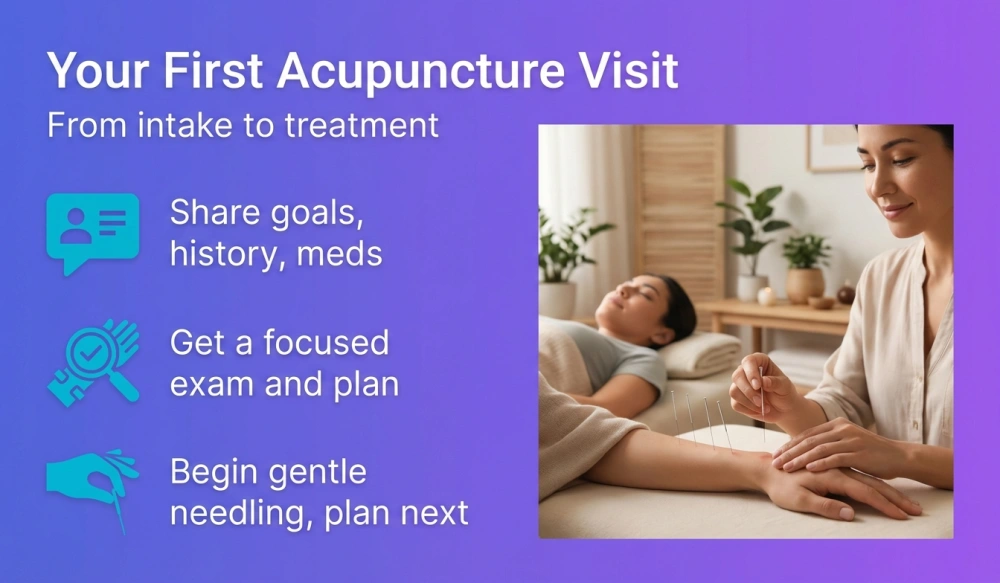
- Thoughtful intake We listen to your story and clarify your goals and day to day demands so that your plan matches real life.
- Focused exam We look at movement patterns, tender areas, and any nerve related signs to guide point selection.
- Personalized plan We outline how many visits to consider, what we will measure together, and how to combine acupuncture with movement and self care.
- First treatment We place sterile single use needles with your consent and explain each step so there are no surprises [2].
- Aftercare and next steps We review what to expect after the session and how to support your progress between visits.
Preparation tips are simple. Wear comfortable clothing that allows easy access to arms and legs. Have a light snack beforehand to avoid feeling lightheaded. Share any new symptoms or changes in your health since scheduling the appointment.
If your main focus is comfort and function, Pain relief acupuncture Santa Ana plans often include a short initial series, then a taper as you improve. We will check in continuously to confirm that your plan remains aligned with your goals.
How safe is acupuncture and who should take extra precautions?
When performed by a trained professional using sterile, single use needles, acupuncture has a low rate of serious adverse events. Minor effects may include temporary soreness, a small bruise, or mild fatigue. We follow strict infection control procedures and needle safety rules required of medical devices in the United States [2] [1].
Certain situations require special care or medical clearance:
- Blood thinning medications We may choose fewer or more superficial points and avoid areas with higher bleeding risk.
- Pregnancy We avoid points considered inappropriate during pregnancy and coordinate with your prenatal provider [10].
- Pacemakers and implanted devices We avoid electrical stimulation devices unless your cardiology team approves.
- Active infection or open wounds We will not needle through infected or compromised tissue.
- Unclear diagnosis or red flags We will refer or co manage if symptoms suggest a need for medical testing.
We welcome your questions about risk and benefit. Shared decision making is central to our process, and we will always help you weigh options in plain language.
How do California rules and local licensing affect your care?
California regulates acupuncture through a dedicated state board that oversees education, licensing, and consumer protection. Practitioners must meet specific training standards and pass examinations to use needles in practice [15]. These rules are designed to protect public safety and ensure consistent standards statewide.
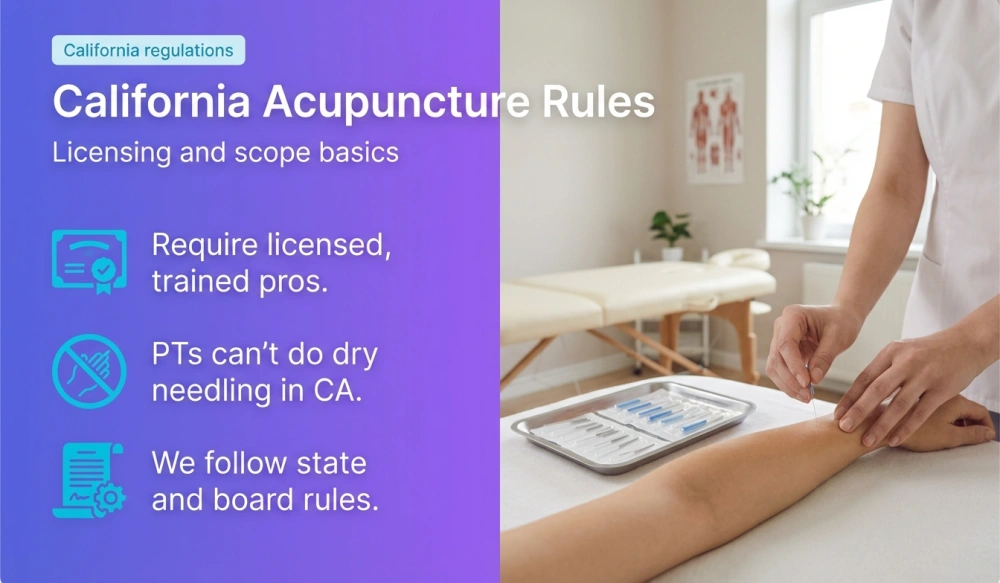
Professional boards also clarify which techniques fall within each profession’s scope of practice. The California Physical Therapy Board states that dry needling is not within the scope for physical therapists in the state [14]. The Board of Chiropractic Examiners publishes laws and regulations that govern chiropractic practice in California, and we follow those rules in all services provided within our clinic [16].
Our team follows all applicable local, state, and federal safety requirements for infection control and device handling. We also emphasize clear language about training and roles so you know exactly who is providing your care and what their qualifications are. For those seeking Holistic acupuncture Orange County services that place safety and clarity first, our procedures align with current regulations and professional guidance.
How do we coordinate acupuncture with chiropractic and wellness care?
People often do best when passive and active strategies reinforce each other. Our clinicians coordinate acupuncture sessions with chiropractic care and guided exercise so that you build momentum week to week. This integrated approach respects both immediate comfort and long term resilience.
- Education first We explain what we are doing and why, so you can make informed choices.
- Evidence based care We draw on guidelines and research to guide frequency, dosing, and progression while acknowledging that individual responses vary [4] [5].
- Active recovery We pair sessions with movement, breath work, and sleep support strategies to help you carry gains into daily life [9].
- Communication We coordinate with your primary care and specialty providers when needed for a cohesive plan.
Our goal is to help you move with more confidence and ease. Plans are adaptable, and we welcome your feedback so that your care evolves with your needs.
Where do we provide care in Orange County and how soon can you be seen?
We serve Santa Ana, California and the surrounding Orange County communities near Tustin, Irvine, Costa Mesa, Fountain Valley, and Garden Grove. Our scheduling team will help you find visit times that fit your routine, including options before or after work when available.
Whether you are navigating a new injury, working through recurring headaches, or simply looking for a steady routine that supports wellness and recovery, our team will guide you step by step. If you are searching for holistic support close to home, this is where Holistic acupuncture Orange County meets practical planning and approachable care.
Why choose OneAndOnlyChiro and what sets our acupuncture care apart?
OneAndOnlyChiro is a wellness and injury clinic dedicated to personalized, evidence based chiropractic and acupuncture care for patients across the lifespan. Our mission is to support long term comfort and mobility through minimally invasive treatments, patient education, and practical planning that fits real life.
How do our services help you understand next steps?
We make each step clear. Your clinician explains findings, sets shared goals, and outlines your plan in plain language. You will know how many visits to expect initially, what we are measuring, and how we will decide to progress or taper. If a different approach would serve you better, we say so and help you transition smoothly.
Where do we operate and whom do we serve?
We provide Acupuncture Santa Ana services to people across Orange County, including those near Tustin, Irvine, Costa Mesa, Fountain Valley, and Garden Grove. Our team welcomes recreational and competitive athletes, busy professionals, older adults focusing on independence, as well as prenatal and pediatric patients who need gentle, age appropriate care.
What is our unique approach or methodology?
- Personalized planning We tailor care to your goals and daily demands rather than a one size fits all template.
- Measured progress We track meaningful outcomes such as pain interference, activity tolerance, and sleep quality so you can see change over time.
- Team based coordination Chiropractic, acupuncture, and guided exercise plans are sequenced to reinforce each other.
- Clear communication We translate research into everyday language and cite credible sources so you can learn confidently.
Do we use any proprietary tools or processes?
We use a structured intake and outcome tracking workflow to map your goals to practical steps. Our clinicians apply consistent safety checklists for device handling, point selection, and aftercare review. These repeatable processes help keep your experience consistent and transparent.
What leadership, experience, and innovation guide our care?
Our clinicians bring years of combined experience in musculoskeletal care, sports injury support, and patient education. We stay current with emerging research and professional guidance, then integrate new insights only when we can apply them safely and pragmatically.
How do you access qualified professionals directly?
From your first call, you speak with team members who understand both scheduling and clinical priorities. You have direct access to qualified professionals who can answer questions about techniques, safety, and how to coordinate with your medical providers.
Can we share examples of past results and benefits without overpromising?
Patients commonly report reduced pain during daily tasks, better sleep quality, and increased confidence to move after a structured series of sessions. Many achieve their goals and transition to a maintenance plan as needed. We do not guarantee outcomes, and we are transparent about expected timelines and the role of active self care in sustaining progress.
How can you get started today?
Call us at (949) 800 8525 to schedule or ask questions. If you prefer, request a consultation so we can review your goals and outline a plan. For those looking for Acupuncture in Santa Ana CA with a team that values clarity and collaboration, we are here to help you take the next step.
Which common questions can we answer right now?
How many acupuncture sessions will I need?
Most plans start with one to two visits per week for two to four weeks, followed by tapering as your goals are met. The exact number varies based on your condition, how long you have had it, and how you respond. We will reassess regularly and adjust the plan together [5].
Does acupuncture hurt?
The needles are very thin. You may feel a light tap, a dull ache, or a warm heavy sensation known as de qi. Many people relax during the session and some even nap. We will check in often and adjust to keep you comfortable [1].
Is acupuncture safe if I take blood thinners?
Yes with precautions. We will use gentle techniques and avoid high risk areas. Always list your medications during intake so we can plan safely [1].
Can I do acupuncture and chiropractic care on the same day?
Often yes. We commonly pair them in a sequence that fits your goals. We will advise on order and timing so that treatments complement each other rather than compete.
Will my insurance cover acupuncture?
Coverage varies by plan and indication. Our front desk can provide documentation for you to check benefits or submit receipts. We will outline costs before you begin so there are no surprises.
What should I do after my session?
Drink water, keep moving gently, and avoid intense new activities on the same day unless you already tolerate them well. Note any changes in comfort or sleep and share them at your next visit so we can adapt the plan.
Who provides the acupuncture at your clinic?
Your care is delivered by qualified professionals trained in needling safety and technique. If you prefer to work with a specific clinician, let us know and we will do our best to accommodate your request in Santa Ana and surrounding areas.
Do you offer prenatal and pediatric friendly options?
Yes. We use gentle positions and techniques appropriate for pregnancy and childhood. We also offer acupressure when needles are not preferred. We coordinate with your obstetrician or pediatrician whenever helpful [10] [11].
What if I feel sore after treatment?
Mild soreness can occur and usually resolves within a day. Gentle movement and heat can help. If discomfort persists or you notice unusual symptoms, contact us and we will guide next steps.
How do you keep everything clean and safe?
We use single use sterile needles, disinfect treatment areas, and follow state and federal safety standards for device handling and sharps disposal. These steps align with Food and Drug Administration requirements and professional guidance [2] [1].
Where can you find the full references and resources used here?
- Acupuncture In Depth – National Center for Complementary and Integrative Health
- Acupuncture Needles – U.S. Food and Drug Administration
- Prevalence of Chronic Pain and High Impact Chronic Pain Among Adults – Centers for Disease Control and Prevention
- Noninvasive Treatments for Acute, Subacute, and Chronic Low Back Pain Guideline – Annals of Internal Medicine
- Low Back Pain and Complementary Health Approaches – National Center for Complementary and Integrative Health
- Acupuncture for the Prevention of Episodic Migraine – Cochrane Library
- Acupuncture for Tension Type Headache – Cochrane Library
- Temporomandibular Disorders TMD – National Institute of Dental and Craniofacial Research
- Sleep Disorders and Complementary Health Approaches – National Center for Complementary and Integrative Health
- Morning Sickness Nausea and Vomiting of Pregnancy – American College of Obstetricians and Gynecologists
- Acupuncture What Parents Need to Know – HealthyChildren.org American Academy of Pediatrics
- Cupping – National Center for Complementary and Integrative Health
- Traditional Chinese Medicine What You Need To Know – National Center for Complementary and Integrative Health
- Dry Needling Information – Physical Therapy Board of California
- Licensing and Examination Information – California Acupuncture Board
- Laws and Regulations – California Board of Chiropractic Examiners